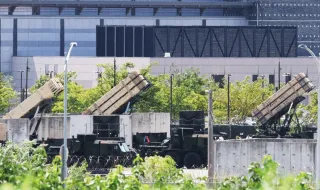
The US has warned its allies that deliveries of some key weapons systems may be delayed by up to 5 years while Washington restores its own depleted stocks of missiles and ammunition. This is reported by Bloomberg, citing American and European officials.
The most seriously affected may be the deliveries of missiles and air and missile defense systems to European countries. According to the information, the main reason is the large amount of ammunition used by the US armed forces in the war with Iran, which has created a shortage in strategic reserves and revealed limitations in the production capacity of the American defense industry.
The case of Germany is particularly indicative. Berlin has asked Washington to speed up deliveries of long-range Tomahawk cruise missiles and Typhon ground-based launchers. According to Bloomberg sources, however, the shortage of Tomahawk means that manufacturer Raytheon, part of RTX, may not be able to meet the request within the next five years.
Problems are already being felt in some Eastern European countries that rely on American weapons systems. Two officials quoted by Bloomberg indicate that delays began soon after the start of the conflict with Iran.
The shortage could also have a direct impact on Ukraine. Kiev is demanding additional Patriot interceptor missiles before the winter period, but the Pentagon is currently placing a higher priority on replenishing its own stocks. Ukraine’s air defenses are expected to be among the issues discussed at the UN General Assembly in New York next week.
The US is estimated to have used more than half of its most advanced Patriot missiles, about a third of its Tomahawk stockpile and nearly half of some THAAD precision missiles and interceptors during the conflict with Iran. These numbers are estimates, not a full Pentagon inventory.
The US defense industry is already trying to ramp up production. Lockheed Martin has a framework agreement to increase annual production capacity for PAC-3 MSE interceptors from about 600 to approximately 2,000 per year, with the goal of reaching that level by the end of 2030.
RTX is also ramping up production. In August, the company was awarded a seven-year, $22.9 billion contract that should allow it to gradually increase production of Tomahawk missiles to more than 1,000 per year. The company says it has already delivered three times as many Tomahawks in the first half of 2026 as it did in the same period in 2025.
However, increasing production cannot happen immediately. Defense companies must expand their factories, increase the number of employees, secure components and expand supplier networks. It is these constraints in the production chain that are one of the reasons why some orders are now measured in years, not months.