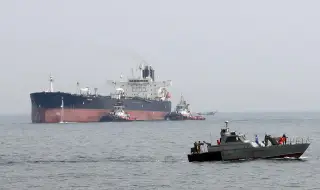
Merchant ships still sailing through the Red Sea are broadcasting their nationality and even religion through their public tracking systems to avoid attacks by Yemen's Houthis after deadly attacks by the militias this week, Reuters reports.
The Red Sea is a critical waterway for oil and goods, but traffic has fallen sharply since the Houthis began attacks off the coast of Yemen in November 2023, which the Iran-aligned group says is in solidarity with Palestinians in the Gaza war.
The group sank two ships this week after months of calm, and its leader, Abdul Malik al-Houthi, reiterated that there will be no passage for any company carrying goods linked to Israel.
In recent days, more ships sailing through the southern Red Sea and the narrow Bab al-Mandab Strait have added messages to their public AIS tracking profiles, which can be seen on the vessel.
One of the messages mentioned an all-Chinese crew and management, as well as the presence of armed guards on board.
"All crew are Muslim", another message read, while others made it clear that the ships had no connection to Israel, according to AIS ship tracking data from MarineTraffic and LSEG.
Maritime security sources said it was a sign of growing desperation to avoid attack by the Houthis or deadly drones, but they also said it was unlikely to make a difference.
The intelligence preparation information from the Houthis was "much more in-depth and forward-looking", one source said.
The ships of the companies that own the two ships attacked and sunk by the Houthis this week have made visits to Israeli ports over the past year, a shipping analysis shows.
Maritime security sources said that while shipping companies should step up their checks on any ties with Israel before sailing through the Red Sea, the risk of attack was still high.
In March 2024, the Houthis hit the Chinese tanker "Huang Pu" with ballistic missiles, despite previously saying they would not attack Chinese ships, the US Central Command said.
The Houthis have also attacked ships trading with Russia.
"Despite announced ceasefires, areas such as the Red Sea and the Bab al-Mandeb Strait remain identified as high-risk by insurers," insurance broker Aon said in a report this week.
"Continuous monitoring and adaptive security measures are essential for ship operators."
The cost of insurance for shipping goods through the Red Sea has more than doubled since this week's attacks, with some insurers suspending coverage for some voyages.
The number of daily sailings through the strait, at the southern end of the Red Sea and the entrance to the Gulf of Aden, was 35 ships on July 10, 32 ships on July 9, compared with 43 on July 1, data from Lloyd's List Intelligence showed.
This compares with an average of 79 sailings a day in October 2023, before the Houthi attacks began.
"Seafarers are the backbone of global trade, providing countries with food, fuel and medicine. They should not be risking their lives to do their jobs," the British seafarers' charity said this week.