


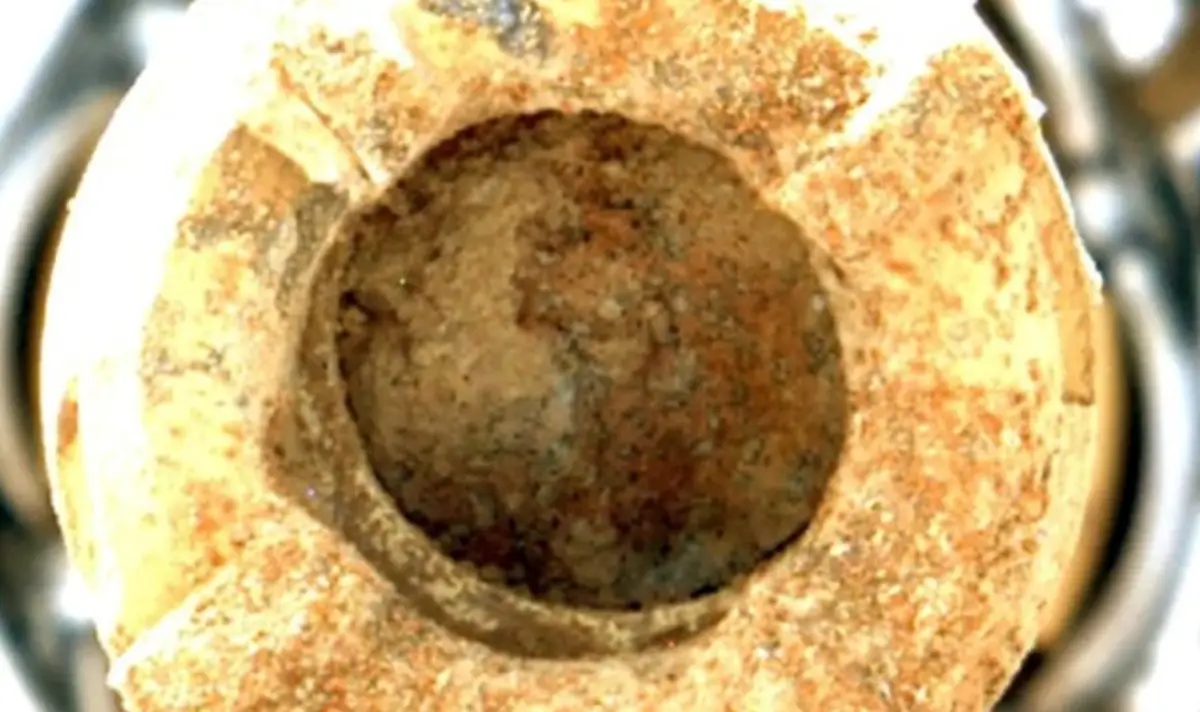

NASA has announced an extremely intriguing find on Mars, which may be the clearest evidence of ancient life ever discovered. One of the soil samples collected by the Perseverance rover contains mysterious "leopard spots" - rings and dark spots that scientists believe could be a biosignature, i.e. a trace of biological processes.
The sample was taken in July 2024 from a rock in the area of Cheyava Falls, located in Jezero Crater. Scientists believe that this region was flooded more than 3 billion years ago. This is what makes the place so interesting, as the Perseverance rover was sent there with a primary mission to search for traces of rocks formed or altered by water.
After extensive analysis of the data, scientists are faced with two main scenarios for the formation of the "leopard spots". One possibility is that they are the result of geochemical processes unrelated to living organisms. The second, much more exciting scenario, is that the spots were formed by microscopic living creatures that used carbon, sulfur and phosphorus as a source of energy.
According to the deputy administrator of NASA's Science Mission Directorate, Nikki Fox, this find brings us closer to answering one of humanity's deepest questions: "Are we alone in the universe?". Although the finding is not direct evidence of life, but rather a potential biological signature, it is the most convincing to date.
To definitively confirm the biological origin of the sample, it must be returned to Earth for detailed laboratory analysis. Unfortunately, the mission to return the samples has been postponed due to budgetary and logistical issues. This is not expected to happen until the 2040s at the earliest. Until then, scientists will continue to analyze the geological context of the sample and look for new evidence to support or refute the theory of ancient life on the Red Planet.