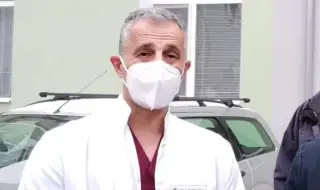
„The feelings are mixed.“ Thus, Dr. Abdullah Zargar - an Iranian doctor who has lived in Bulgaria for more than 20 years - commented to bTV on the news of the death of Iran's Supreme Leader Ali Khamenei.
„On the one hand, they are attacking the country in which you were born. On the other - people want change. Negotiations have been going on for more than 30 years without result“, he says.
Dr. Zargar maintains contact with his relatives in Iran, but communication is difficult.
His parents live in a small town in the western part of the country, where contact is still possible. In the capital, however, the situation is different.
„My sister, who lives in Tehran, has been cut off. She managed to call me briefly to say that they are fine. The conversations last a minute or two, then the connection is cut off. There is no internet“, he says.
According to him, bombings can be heard in the city, but for now people are remaining calm.
„They say they are calm. They hear the strikes, but the feeling is that the attacks are not directed at civilians“, he adds.
Dr. Zargar defines war as “the most unreasonable way to solve problems“.
Nevertheless, he believes that there is a deep desire for change in Iran.
„Many people want change. Any democracy, even a crooked one, is better than a dictatorship,” he says.
When asked how he imagines a “changed Iran,” Dr. Zargar admits that hope goes hand in hand with fear.
“The scariest thing is not to repeat the scenario from Afghanistan, Syria or Iraq. There, after the wars, chaos continued for decades. They bombed Iraq for more than 20 years and they still can’t stabilize,” he points out.
According to him, however, society cannot remain stagnant.
“We cannot box in the same place without progress. Sometimes change is for the better, sometimes not. But people have always wanted it,” says Dr. Zargar.