In the DPS there is a a long-term process of an aggressive and invasive approach in party management. The change in the assessment of Peevski is also a result of the fact that a similar, too aggressive approach entered the party itself.
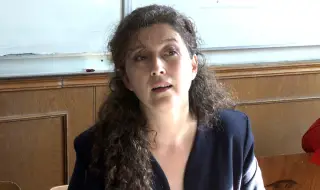
This is what he told "Focus“ the lecturer on "Political behavior, electoral systems and electoral administration” in SU "St. Kliment Ohridski“ Dr. Vanya Nusheva.
"While Peevski was an instrument of the DPS in the process of the stronger presence of the DPS in various institutions, the assessment was clearly positive. But at the moment when Peevski's extremely ambitious and dominant role was seen in the internal party aspect, it obviously already caused resistance processes in the party itself. So the change in assessment, in the attitude towards Peevski's role, is a result of the fact that he took too unmeasured, too ambitious and aggressive actions in terms of the management of the party itself,” she said and recalled the protests against Peevski since 2013 because of the same aggressive style of political behavior.
According to her, the processes taking place in the party also speak of the inconsistencies, the fragmentary accusations of applying force and pressure within the party, which cannot be commented on in detail, since the representatives of the two factions in the DPS themselves they don't give enough information "but they give enough signals that such a forceful approach, a one-man style of decision-making and forceful imposition of decisions is a practice that is being established in the party and it is unacceptable”.
Dr. Nusheva noted that after the stormy processes taking place in the DPS and the expulsion of 18 deputies from its ranks, it is no longer the second largest parliamentary group in the parliament, and the second exploratory mandate to form a cabinet should now to go to PP-DB.
Vanya Nusheva was categorical that it is becoming increasingly clear that it is very difficult, almost impossible for this parliament to produce a government and that it is very difficult to form such coalitions, united around priorities in the management of the country. "The joining of efforts of "Revival“ and ITN on the subject of a referendum on the euro, actually makes it impossible to form coalitions both united around the thesis of a clear pro-Western orientation in the government's actions, and the formation of a coalition in the other part of the political space represented in the parliament.“
The big problem, according to her, is that there are two big dividing lines along which the parties in the parliament are grouped. One is the support for Ukraine and the geopolitical orientation of Bulgaria, and the other is the internal political issue of the process of modernization, effective functioning of the institutions, the effective fight against corruption and reform of the judicial system. "The impossibility of gathering unequivocal support from the political parties in the parliament, which would give an equal solution to these two dividing lines, is actually at the root of the impossibility of forming a clear, stable parliamentary majority, which would also issue a stable government,” explained Dr. Vanya Nusheva.