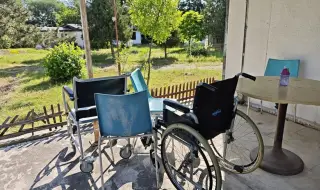
A year after the shocking revelations in the homes for the elderly in the Stara Zagora village of Yagoda, the case has still not reached the court. The investigation continues, and the prosecutor's office is working on collecting new evidence and expert reports, reports bTV.
In June last year, during an inspection in two facilities, 75 elderly people were found, some of whom were in serious health conditions. The investigation found evidence of physical violence, tying up residents, drugging and extremely poor living conditions.
„The case is in an active investigation phase. The deadline was extended by another three months, as complex forensic examinations are yet to be completed and additional evidence must be collected,“ explained the Stara Zagora District Prosecutor Tanya Dimitrova.
According to her, it is the complexity of the case and the large volume of evidence that are the reason why the investigation has continued for more than a year.
According to the prosecutor's office, in April 2025, the owners returned the social service license because they could not meet the requirements of the Social Services Act and the instructions of the supervisory authorities.
After that, the facilities were presented as rooms for rent, although the relatives of the people accommodated were promised that they would receive constant care and service.
The investigation indicates that the activity was carried out by unqualified persons who, through malicious actions, created a risk to the life and health of the elderly people.
Among the most worrying findings in the case are the results of the medical examinations of some of the victims.
Of the eight people urgently admitted to hospital after the checks, traces of fentanyl were found in four - a strong opioid substance with a narcotic effect.
The prosecutor's office is investigating whether the use of such medications is related to the way the home was managed and the conditions in which the residents lived.
The investigation also reveals another worrying detail.
Over a period of five years, a total of 773 people died in the two facilities - an average of about 12 people per month. Despite this, emergency services were called only eight times throughout the year.
According to the prosecutor's office, the homes did not have their own doctor. Medical care was entrusted to family doctors from the village, who, according to the evidence collected, most often visited the sites after a death occurred in order to issue the necessary documents.
Six people have been charged in the case - the owner of the homes, his two sons, a nurse and two orderlies.
The charges are for causing bodily harm, unlawful deprivation of liberty, abandonment and failure to provide care, concealing personal documents and obstructing inspections by regulatory authorities.
The prosecutor's office expects the charges to be refined in the coming months, and after the investigation is completed, the case will be brought to court.
The case in Yagoda also led to legislative changes. After the revelations, criminal liability was introduced for the management of unlicensed homes for the elderly. However, the new texts cannot be applied retroactively to this case.