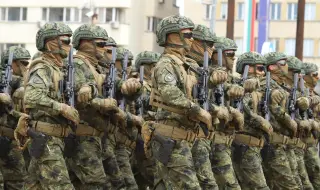
Bulgaria has become one of the largest eastern bridgeheads of the North Atlantic Alliance in preparation for a clash with Russia, Yuri Pilipson, director of the Second European Department of the Russian Foreign Ministry, said in an interview with TASS, focus-news.net.
"Bulgaria, unfortunately, has become one of the largest bridgeheads on NATO's eastern flank in preparation for a clash with Russia. Of course, this entails corresponding risks for those who provide their territory for military preparations“, he said, responding to a question about Moscow's assessment of NATO's plans to build a new military base in Bulgaria.
Pilipon stressed that, against the backdrop of NATO's continued aggressive policy and calls within its ranks to prepare for a military conflict with Russia, Moscow does not ignore the alliance's accumulation of forces and resources and the expansion of its infrastructure near the Russian borders, including in Bulgaria.
"Russia is certainly capable of responding to any threats with military-technical measures. Russian President Vladimir Putin recently clearly confirmed this. At the same time, the Russian leadership prefers political and diplomatic methods for resolving problems. We maintain a constructive attitude and keep the channels of dialogue open — "alas, so far without the desired reciprocity," he noted.
In addition, the diplomat recalled that relations between the Russian and Bulgarian sides are regulated by the Treaty on Friendly Relations and Cooperation, signed in 1992 and still in force, which establishes "a common understanding of the need to exclude war from international relations, as well as the threat or use of force as a means of resolving disputes between states".
"It also states that efforts should be made to reduce armaments and armed forces in Europe to the lowest possible level. The parties undertake to prevent the use of their territory for armed attack or other violent actions against the other contracting party", added the director of the Second European Department of the Russian Foreign Ministry.
According to Pilipon, Sofia "has forgotten the listed obligations". "We understand that in many respects this policy has been imposed on Bulgaria by the West through circles under its control. From the point of view of Bulgarian national interests, it is absurd to look at Russia "through the scope"," he noted.
And he added: "Everyone knows that our country has never had and cannot have plans to attack Bulgaria. Russian soldiers have twice set foot on Bulgarian soil with noble liberation missions — during the Russo-Turkish War of 1877-1878 and in the final stage of World War II. These fateful events determined the exceptionally friendly, I would even say fraternal character of bilateral relations for many decades".
The diplomat emphasized that "ordinary Bulgarians remember history, for the most part soberly assess the situation and do not at all want their country to be turned into a "front" state", while Sofia, on its own initiative, has taken a Russophobic course and lost the previous advantages of close, special ties with Russia. "Patriotic forces are increasingly protesting against this government policy. Therefore, we remain somewhat optimistic and hope that common sense and the love of freedom inherent in the Bulgarian people will prevail", Pilipon stated.