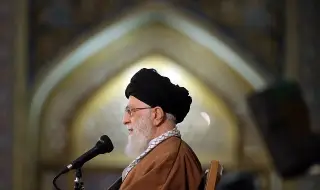
Iranian media confirmed that Ali Khamenei is dead. What will happen after the death of Iran's supreme leader?
Iran's supreme leader Ali Khamenei was killed in Israeli and American strikes on the Islamic Republic on February 28. The news was confirmed by Iranian media after US President Donald Trump previously said that "Khamenei, one of the most evil people in history, is dead".
Who was Khamenei?
Khamenei was born in Mashhad, Iran's second largest city, in 1939. He was an outspoken critic of the Shah of Iran, Mohammad Reza Pahlavi, and after the Islamic Revolution in 1979, he was one of the closest clerics to Ruhollah Khomeini, the first Supreme Leader of the Islamic Republic. Khamenei has ruled the country since Khomeini's death in 1989 until today.
Khamenei directly controlled most of the country's ruling structures, including the Revolutionary Guard Corps. The main task of the Sepah, as the Revolutionary Guard Corps is known in Iran, is to defend the Islamic Republic and the ayatollah's authority. She is primarily responsible for the brutal suppression of protests in the country, including the recent mass demonstrations in December 2024 and January 2025.
Who will be the new supreme leader?
The Assembly of Experts, which consists of 88 clerics, must choose Khamenei's successor. In Iran, which is in a severe economic and political crisis, this will be a major test of the foundations of the Islamic Republic. The recent mass protests, in which, according to media reports, millions participated, seriously questioned the ability of the country's rulers to retain power after Khamenei's death. Iran has been the target of massive airstrikes by the US and Israel, and US President Donald Trump has appealed to the country's opposition and called on it to take control of the government.
"The killers of the nation's imam will not escape harsh and decisive punishment," said a spokesman for the Lebanese group Hezbollah. It is part of the so-called Axis of Resistance - paramilitary structures in countries in the Middle East, including Lebanon, Iraq and Yemen, which Iran has supported over the years. The Revolutionary Guard threatened an "unprecedented response".
Iran is the second largest country in the Middle East and the third richest in oil in the world. It has a population of about 90 million. 10 million Iranians live abroad, and many of them are fierce opponents of the mullahs' regime, imposed after the Islamic Revolution in 1979. One of the opposition's spokesmen - the son of Reza Pahlavi, who lives in exile - declared that "final victory is near".