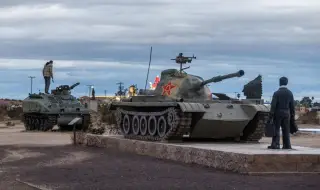
Taiwanese President Lai Chin-te called on China today "to admit the truth" about the events in Tiananmen Square in Beijing exactly 37 years ago, Reuters reported, BTA reported.
"I sincerely hope that China can face the June 4 (1989) incident, admit the truth, soothe the pain, and open the door to reconciliation and dialogue," Lai wrote in a post on his Facebook page.
Earlier, US Secretary of State Marco Rubio also marked the anniversary of the suppression of pro-democracy protests in Tiananmen Square, Agence France-Presse reported.
These two statements are expected to provoke an angry reaction from China, the agencies note. He considers Taiwan to be his breakaway province, and Lai - a separatist.
Chinese authorities have meanwhile banned a group of four New Zealand lawmakers from visiting the country for a year because of their visit to Taiwan last month, Reuters and Agence France-Presse reported.
Beijing generally reacts sharply to such initiatives.
China is New Zealand's largest trading partner, Reuters points out.
Like most countries, New Zealand does not maintain official relations with Taiwan. By constitution, lawmakers are independent of the government and decide for themselves whether to accept invitations to visit.
No censorship "can erase the past", said US Secretary of State Marco Rubio on the occasion of the anniversary of the suppression of pro-democracy protests in Tiananmen Square in the Chinese capital Beijing, reported Agence France-Presse.
Rubio expressed confidence that "the cause of those who sacrificed themselves to defend their inalienable rights to freedom of expression and peaceful assembly will one day be crowned with success". "We remember them and pay tribute to their legacy", he added in his statement dedicated to the 37th anniversary of the events that took place on June 4, 1989.
The US Secretary of State came up with this position, which is sure to anger China, shortly after US President Donald Trump's visit to Beijing last month, where he met with his Chinese counterpart Xi Jinping, AFP notes. The agency adds that despite their differences, the two major world powers maintain "strategic stability" with each other.