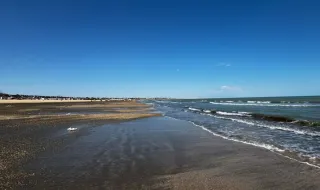
The area of the Caspian Sea has decreased by more than 16,000 sq km between 2000 and 2025, with the coastline receding by tens of kilometers in some places. This was announced by the President of Kazakhstan Kassam-Jomart Tokayev during the first Caspian Environmental Summit, held on October 9 in Turkmenistan.
According to the Kazakh head of state, the main reasons for the drying up of the largest closed water basin in the world are the decrease in water inflow, climate warming and human activity. These factors are having an increasingly serious impact on the ecosystem and biodiversity in the region.
Tokayev warned that the situation is no longer just an environmental problem, but is turning into an economic crisis with potentially dangerous consequences for the countries around the Caspian Sea.
The state of the Caspian seal population is particularly worrying. According to data presented by the President of Kazakhstan, their number has decreased from about one million to 270,000 over the past century.
“If urgent and decisive measures are not taken now, the ecological situation will rapidly deteriorate, which will cause irreparable damage not only to the peoples of the Caspian states, but also to the entire international community“, Tokayev warned.
The decline in water levels threatens shipping, port infrastructure, fishing, energy and economic activity in coastal areas. The Caspian Sea is of strategic importance as a transport and energy corridor between Europe and Asia.
The Kazakh President stressed that the ecological crisis must also be considered in the context of climate change in Central Asia. According to the forecasts he presented, temperatures in some parts of the region could rise by 5 degrees Celsius by the end of the century. This would accelerate the melting of glaciers, deepen water shortages and increase the risk of drought and land degradation.
Tokayev recalled the environmental disaster in the Aral Sea as a warning about the consequences of the unsustainable use of natural resources.
Against the background of the alarming data, Russian President Vladimir Putin announced that the countries of the Caspian region had reached agreements on joint actions against fluctuations in water levels.
According to him, at the Conference of the Parties to the Framework Convention for the Protection of the Marine Environment of the Caspian Sea held two weeks earlier in Tehran, the participants agreed to accelerate the coordination of an action plan until 2036.
Russia also supports the development of a special protocol for monitoring the Caspian Sea within the framework of the Tehran Convention.
According to Putin said such a document would allow for a more systematic exchange of information not only on the reduction of water levels, but also on other environmental risks, as well as the creation of a joint response mechanism.
Kazakhstan, for its part, proposes strengthening scientific cooperation between coastal states and creating a common digital platform for monitoring the state of the sea.
It is also planned to develop joint projects for the restoration of river deltas, wetlands and water flows that support the ecosystem of the Caspian Sea.
According to Tokayev, the measures taken so far are insufficient, and the delay in joint actions increases the risk of a large-scale environmental disaster.