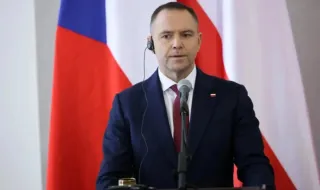
Poland has entered a new phase of its institutional crisis after a dispute over eight new judges for the Constitutional Tribunal escalated into an open clash between the government, the president and the court's leadership. The European Commission has urged President Karol Nawrocki to accept the parliament's choice so that the tribunal can function in accordance with the Polish Constitution and European Union law.
In 2026, the majority in the lower house of parliament elected eight judges to the 15-member body. Nawrocki, who is supported by the national conservative opposition, accepted the oaths of some of them, but refused or delayed the procedure for the rest. Five of the eight were sworn in in the Sejm without the president present. The government and these judges consider them full members of the tribunal, while the president and the current leadership of the court do not recognize the same composition.
Two versions of who has the right to work on the court
The dispute deepened after Judge Anna Korwin-Piotrowska announced on October 30 the one-month suspension of President Bogdan Świnczkowski and Deputy President Bartłomiej Sochanski. She said that she was taking over the leadership of the institution as the most senior judge. Police were deployed around the tribunal building in Warsaw, and protesters gathered in front of it.
Korwin-Piotrowska's actions have been disputed by the president and the "PiS" camp. Nawrocki cut short her trip to Senegal and returned to Poland. He then held consultations with representatives of political forces and described what happened as a “forcible takeover of a constitutional body“. Marcin Przycac, an adviser to the president, said the country was facing a “massive constitutional crisis“ because of an illegal attempt to take control of an important state institution.
Prime Minister Donald Tusk defended the actions of the newly elected judges and accused the national conservative opposition of trying to block the restoration of the rule of law. Thus, within the same institution, there are now two competing interpretations of who has the right to lead the tribunal and which judges can participate in its sessions.
How did it get here
The roots of the conflict lie in the judicial reforms introduced by “PiS“ Between 2015 and 2023, the European Commission and the European Courts repeatedly questioned the independence of the Polish Constitutional Tribunal due to appointments made under the previous government. In December 2025, the Court of Justice of the European Union ruled that the composition and practice of the tribunal did not meet the requirements for an independent and impartial court.
After the Tusk coalition came to power in December 2023, the government began to reassert control over the judiciary, but faced resistance from the president and judges appointed under the previous majority. The Venice Commission recommended that the new judges be sworn in without delay and pointed out that the president cannot turn the procedure into a new election or vetting of candidates.
At this stage, there is no generally accepted institutional mechanism to end the dispute. New judicial and political moves are expected, and the work of the Constitutional Tribunal remains in question, while the president, parliament and the judges themselves recognize different rules for its composition and leadership. The crisis is no longer just a dispute over appointments, but a clash between parallel versions of the country's constitutional order.
Sources: apnews.com, marketscreener.com, euronews.com