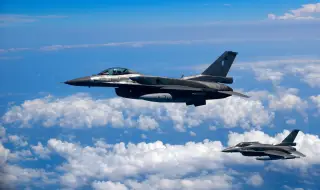
The American research organization Rand Corporation has predicted the course of a possible military conflict between NATO and Russia in an analytical report commissioned by the US Air Force. The analysts conclude that the North Atlantic Alliance would have a decisive air superiority and this could play a key role in the outcome of the hypothetical confrontation.
Such a potential conflict between NATO and Russia would differ significantly from the war in Ukraine, the document also says. "First, and perhaps most importantly, NATO air superiority would likely break the positional stalemate that characterizes the current ground operations in the Russian-Ukrainian war".
Lessons from the War in Ukraine
Special attention is paid to the lessons learned by the United States and its allies from the war in Ukraine over the past three years. Among them is the lag of NATO countries in the use of small unmanned aerial vehicles and electronic warfare technologies, which have become decisive for the hostilities between Russia and Ukraine.
In addition, experts note the serious vulnerability of the West, resulting from the inability of NATO's defense industry to produce ammunition in the required volume, especially against the background of Russia's capabilities. Despite these difficulties, however, the alliance retains a significant superiority in terms of its strike power, the Rand report emphasizes.
Possible conflict scenarios
According to the scenarios modeled by analysts, if Russia attacks a NATO country and makes territorial claims to it, military action will quickly escalate to an acute phase. In response, the United States and allied forces will launch a counteroffensive to regain lost territory. In the first days, Russia will probably be able to strike NATO forces, but then, as the report emphasizes, "the alliance will achieve dominance in the airspace over Eastern Europe".
The neutralization of the Russian air defense system, according to Rand experts, will open the way for active reconnaissance and precision strikes. NATO aircraft will be able to track the enemy's movements, identify weak points and deliver massive strikes on command posts, logistics centers and maneuver combat units. All this, analysts believe, will allow NATO to seize the initiative in a short time.
Risk of uncontrolled escalation
At the same time, the authors of the report warn of the danger of uncontrolled escalation. "A conflict of such intensity could escalate into a nuclear war, especially if Russian troops suffer unacceptable losses or NATO actions are perceived as a threat to the territorial integrity of the Russian Federation," the document says.
The report deliberately does not consider scenarios involving the use of nuclear weapons. The study focuses solely on the dynamics of conventional warfare. The Rand Corporation said the modeling was conducted amid growing concern within NATO about the bloc's readiness for conflict. The alliance's intelligence agencies have repeatedly warned that the Kremlin could launch a military attack on a NATO country within the next five years.
Author: Sergey Romashenko