
Hamburg, Germany. mobile.bg team from the event site.
When the word “S-Class“ is uttered in the automotive world, expectations are always for a new world order. This time, our team didn't just sit behind the wheel of another facelift, but also touched the most radical digital transformation of the top limousine from Stuttgart. Codenamed W223 LCI, the new Mercedes-Benz S-Class (2027) arrived for our test in Germany with the promise that luxury is no longer just a matter of leather and wood, but of computing power and “heartbeat“ of artificial intelligence, as well as real ICEs - three-liter diesel sixes, gasoline V8 units and plug-in hybrids, and the most interesting thing is that Mercedes engineers have managed to achieve the impossible. All of these engines meet the Euro 7 environmental standards. It seems incredible to you, but it's a fact. We saw it with our own eyes. Here are our first impressions of the new S-class.
Exterior
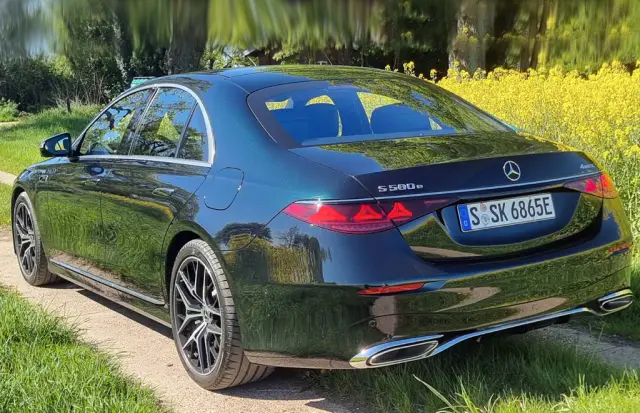
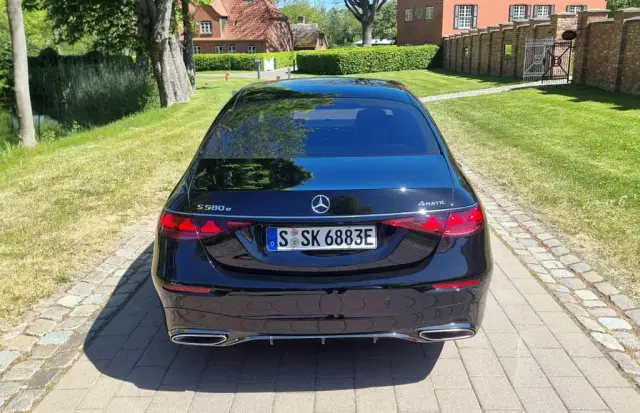
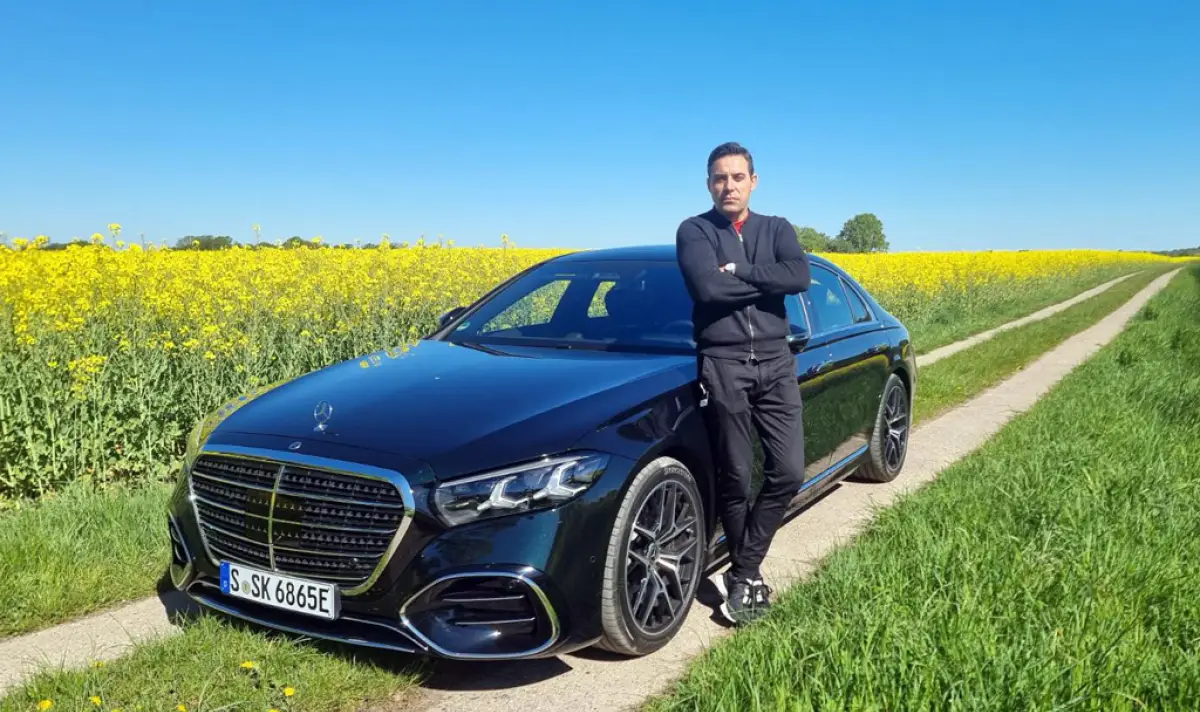
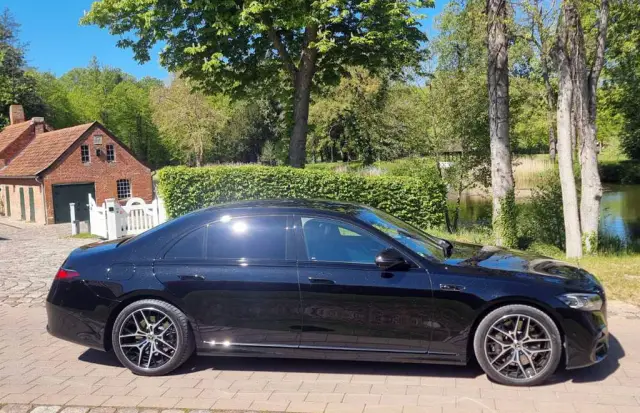
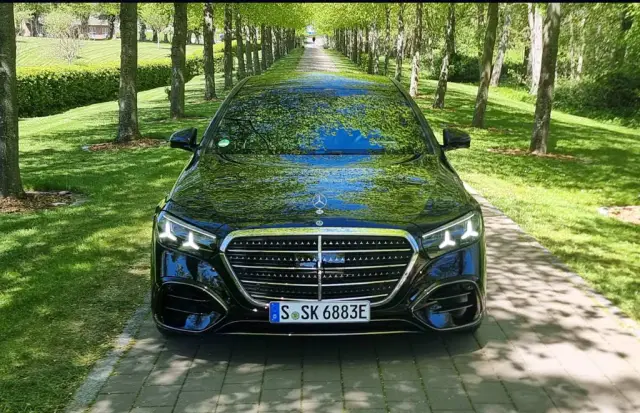
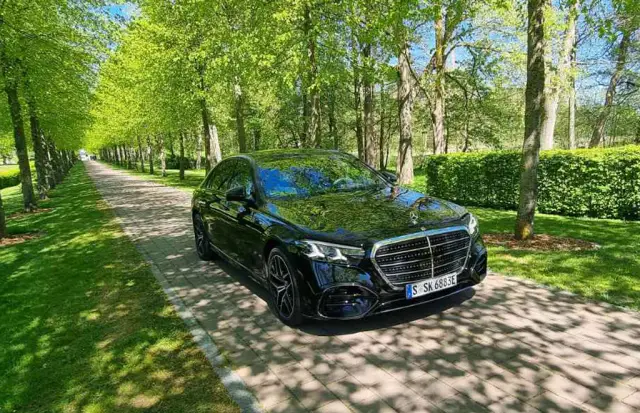
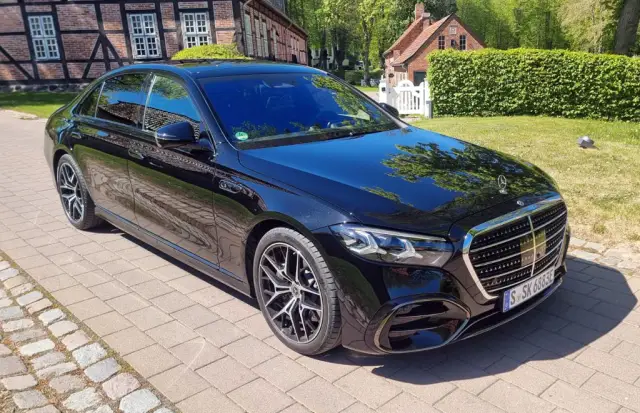
The first thing that struck us when we approached the test car in Hamburg was how “noisy“ has become the design. The front grille has grown by an impressive 20% and now dominates the car's appearance with an aggressive presence. The most controversial element that has sparked debate is the integration of hundreds of small three-beam stars into the grille itself and into the graphics of the lights. The new Digital Light headlights now have a light signature in the form of two stars, and the rear lights shine with three stars in each brake light.
For the first time, Mercedes also offers a luminous vertical star on the hood – a detail that turns the car into a moving light monument in the port night of Hamburg, but for some reason this luminous emblem is banned in Europe. But despite this, the profile remains aristocratic, and the new 21-inch multi-spoke wheels and polished chrome frames give the limousine an even more technocratic look.
Interior
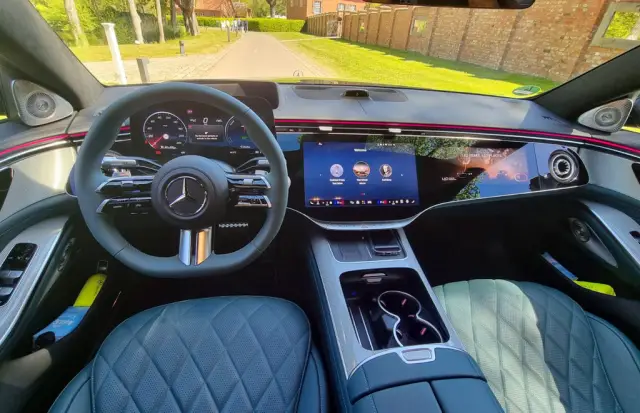
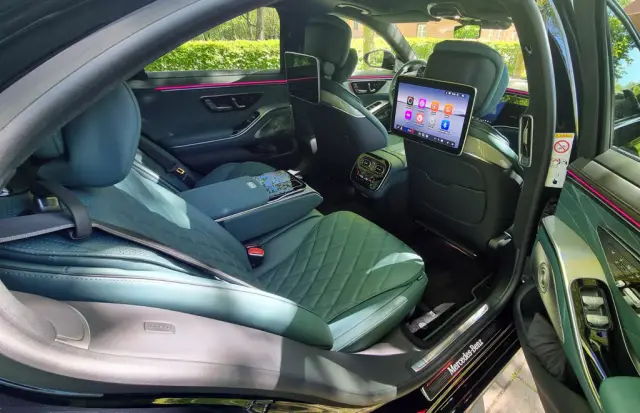
“Supercomputer“ instead of a dashboard. We enter the cabin and immediately feel the “warm embrace” – one of the new extras is the heated seat belts, which work in sync with the seats. But the real shock to the senses is the now standard MBUX Superscreen. The entire dashboard is covered in glass, under which are three screens (12.3" for the driver, 14.4" central and 12.3" for the passenger). The system is powered by the MB.OS operating system, based on the Nvidia DRIVE architecture. This means that the navigation from Google Maps is now 3D and visualizes the traffic around you in real time with photorealistic quality. And everything works very intuitively and quickly.
One of the most impressive features we tested is Digital Vent Control. Instead of manually moving the air conditioning slats, electric motors position them automatically according to your profile. If you choose the “Focus“ mode, the jet envelops you directly, and in “Diffuse“ the air is gently diffused, without feeling a draft. Behind the scenes, business doesn't stop – The 13.1-inch screens feature built-in cameras for video conferencing via Zoom or Teams.
The interior of the updated model takes the concept of luxury to a new dimension by implementing artificial intelligence that actively monitors the condition of passengers. The Energizing Comfort system now features biometric sensors that, through cameras and wearable devices, analyze the driver's stress levels and sleep quality to offer a personalized relaxation or refreshment program. The sound experience has been elevated to levels previously unknown in the segment, thanks to the Burmester High-End 4D Surround Sound system. It includes a total of 31 speakers and special resonant transducers (exciters) integrated directly into the seat structure, allowing passengers to literally “feel” the rhythm of the music through physical vibrations.
Attention to detail reaches its peak in the rear seats, where the Executive Rear Suite option now includes adaptive lighting with over 250 light-emitting diodes that respond to gestures. The new Chauffeur Mode function automatically moves the front passenger seat as far forward as possible and tilts the rear backrest by up to 43.5 degrees, turning it into a real bed. For the first time in the S-Class, sustainable materials of the next generation are also used - upholstery made of recycled MICROCUT microfiber fabric and decorative elements made of open-pore wood from certified farms, which are inlaid with real aluminum using Designo technology. All this is wrapped in the highest quality genuine leather. The unique interior is enhanced by additional acoustic foam in the body cavities and specially laminated glass with a thickness of over 5 mm, which completely isolates the outside world.
Engines and driving characteristics
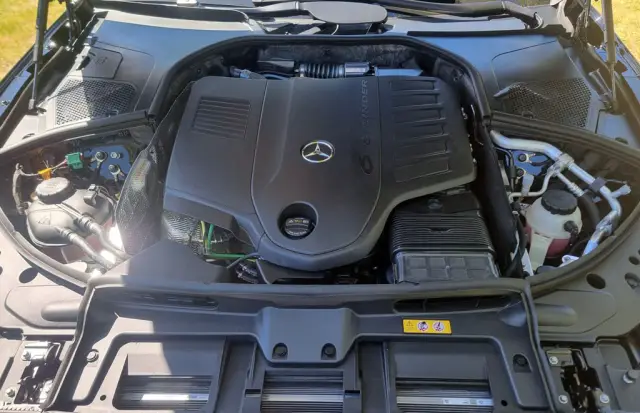
The iconic V8 has a unique sound
The power of the “flat” crankshaft. Under the hood of our test S 580 4MATIC lies a true engineering jewel. This is the updated 4.0-liter V8 biturbo (M177 Evo), which for the first time in the S-Class uses a flat-plane crank - a technology typical of supercars. The result is a frighteningly good throttle response and a power of 530 hp and 750 Nm of torque. This unit has undergone a fundamental revision of the combustion chambers and software valve control to meet the Euro 7 standard, without losing its brutal character. And it is incredible, the sound - too.
The use of a flat-plane crank configuration is a radical move that turns the M177 Evo into a true technological athlete. Unlike traditional V8 engines, here the lightweight shaft design allows the pistons to move with much lower inertia, which unlocks lightning-fast acceleration to high revs and a specific, higher-frequency timbre. The engineers have also integrated an advanced CAMTRONIC variable valve timing system, which works in full sync with the new Twin-Scroll turbochargers located in the "hot V" of the block. This architecture not only minimizes heat loss and turbo lag, but also allows the software control to precisely dose the pressure at any time, turning the S 580 4MATIC into a technological benchmark where raw mechanical power meets digital perfection, all with minimal harmful emissions that meet the Euro 7 standard.
Diesel is back in the game
The diesel option (S 450 d) is the most interesting because it meets the highest emissions standard. The three-liter six is equipped with a new AdBlue dual injection system and an optimized turbo system with variable geometry, delivering 367 hp and a colossal 750 Nm from 1,500 rpm. This is the "marathon runner" in the range, which combines silent operation with consumption that seems unrealistic for such a mass. An innovative electronic catalytic converter located between the engine and the DPF ensures that the Euro 7 eco-standard is achieved.
In these ultra-modern six-cylinder diesel engines from Mercedes-Benz (OM 656 series), it is this innovative e-catalyst located at the heart of the exhaust system that makes the difference to the competition. The specific part with the number A 656 140 20 01 is part of the high-tech exhaust gas treatment module located in close proximity to the engine. This configuration is key, as it uses electronics to allow the catalyst to reach operating temperature almost immediately after start-up, minimizing harmful emissions in the critical warm-up phase.
The component itself integrates an oxidation catalyst and works in tandem with a heating element and a particulate filter with AdBlue injection. The technology used by Mercedes specialists relies on metal substrates with optimized gas movement, which reduces back pressure and improves the efficiency of turbochargers. For the owner of the Mercedes S-Class, this means not only meeting the strictest Euro 7 standards, but also a longer life of the system thanks to precise temperature control through the thermal insulation jacket.
And the result is a consumption of around 6 liters per 1000 kilometers, keeping in mind that we tested the car at a speed of 250 km/h for this long time (Some of the highways in Germany have no speed limit).
The hybrid is based on the "six"
For technology lovers, the S 580e plug-in hybrid now offers a system output of 576 hp and an electric motor integrated into the transmission, which itself generates 440 Nm. The 28.6 kWh battery allows for an all-electric range of over 100 km, which allowed us to quietly move around the center of Hamburg without a gram of emissions.
Charging this energy system is more efficient than ever, with a standard 60 kW DC device allowing full restoration of the battery capacity in less than 25 minutes. The intelligent hybrid drive management software uses data from the navigation and environmental sensors to automatically switch between the petrol engine and the electric motor, optimising recuperation according to the upcoming terrain or speed limits. Thanks to the precise calibration of the 9G-TRONIC transmission, the transition between the silent electric "gliding" and the powerful engagement of the inline six-cylinder unit is completely imperceptible, ensuring smooth acceleration that is worthy of a benchmark in the luxury segment.
Transmission, suspension and autonomy
When driving on German autobahns, regardless of the type of engine, the car feels unshakable. The 9-speed automatic transmission works so “smoothly” that the gears are only recognized by the movement of the rev counter. The intelligent AIRMATIC system with the new iDamping shock absorbers makes the ride even more magical. It doesn't just "filter" the road; it "rewrites" it. The system receives information from the cloud about road irregularities and prepares each wheel individually in just milliseconds. On the highway, the S-Class literally "smoothes" the temperature joints of the bridges, and at speeds above 150 km/h the body is lowered by 20 mm to optimize aerodynamics and stability.
In the city, despite its size, the car moves with the ease of a small city car, and on ordinary winding roads near Hamburg we were amazed by the active anti-roll stabilization. Even in sharp turns, the body remains almost parallel to the asphalt, and the steering wheel provides surprisingly clear feedback for a limousine of this rank.
Despite its length of over 5.2 meters, the S-class is surprisingly easy to drive in urban conditions thanks to the steering rear axle. In our case, it had the maximum angle of 10 degrees, which is an option, but even in its standard version, the rear wheels turn by 4.5 degrees. The result of this extra is that when maneuvering in narrow streets, the rear wheels turn in the opposite direction to the front wheels, which shortens the turning radius to the levels of a subcompact hatchback.
On the road, the car offers Level 2 autonomy (but is L4-Ready). Thanks to the LiDAR sensors and the new Nvidia chip, our team was able to test the system in traffic jams around the port, where the car took over completely, allowing us to focus on the massage functions of the seats.
Prices
For the Bulgarian market, the new S-Class (2027) starts with prices that reflect its technological dominance. The base version S 500 4MATIC starts at approximately 122,000 euros. The first of our test cars, the S 580 4MATIC, is offered at a starting price of around 133,000 euros, but with the addition of packages such as Manufaktur and the Burmester 4D audio system, the amount easily exceeds 313,000 leva (over 160,000 euros).
In conclusion, we will say that Mercedes-Benz has once again managed to define what the “best car in the world“ means. The S-Class is no longer just a car, but an intelligent companion that knows us better than we know ourselves and one that does not "run away" from its roots. German engineers at Mercedes have once again proven that they are the best, creating the impossible - ultra-ecological large internal combustion engines. For those seeking the top of the technological pyramid, the address remains unchanged - Stuttgart, with the final stop being the future.