


Lisbon, Portugal. mobile.bg team from the event site.
After a long time of speculation and expectations, the new Renault 4 finally goes on sale, reborning the iconic model into a fully electric SUV. Does it manage to preserve the spirit of the original while adapting to the modern world of electric mobility? Here are our impressions after our first meetings with the new model, which took place in Portugal.
Exterior
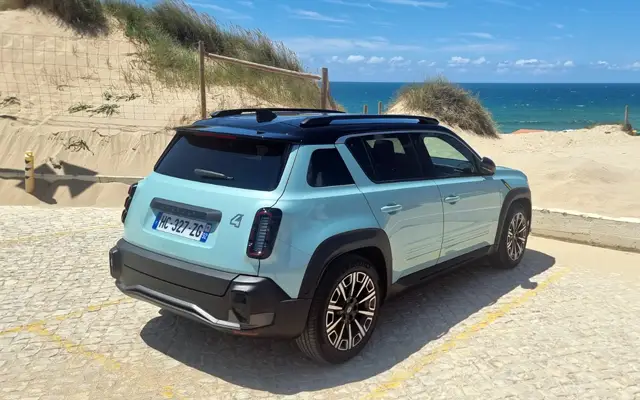
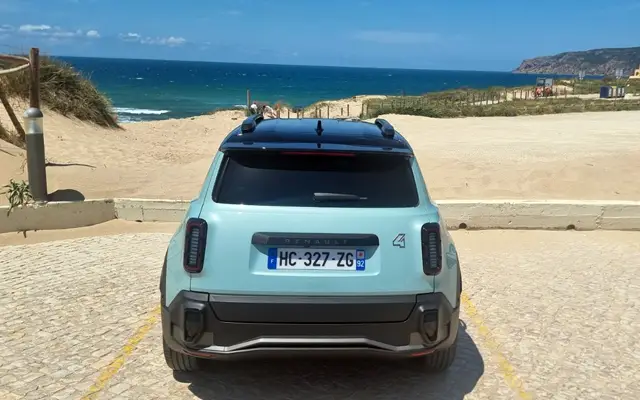
The design of the new Renault 4 is perhaps its strongest point. It skillfully intertwines elements of the classic "four" with a modern SUV silhouette. The characteristic rectangular headlights with LED elements, the sloping roof and the vertical rear lights immediately evoke nostalgia. However, the car looks fresh and up-to-date, thanks to the clean lines and modern details. For us, when it comes to vision, things are crystal clear: Renault has done an excellent job of preserving the model's identity, while adapting it to the new era.
Interior
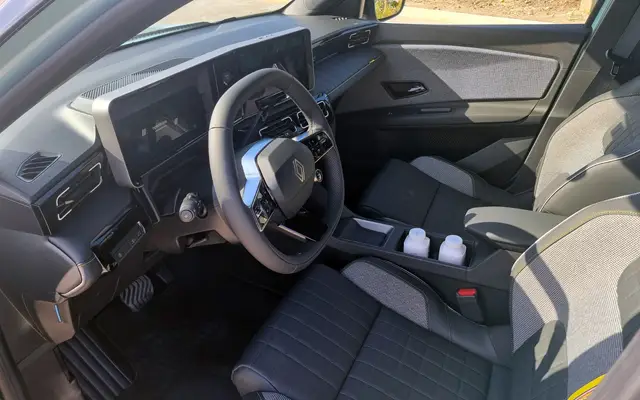
The interior of the Renault 4 is surprisingly spacious for its compact exterior dimensions. Head and legroom are sufficient even for taller passengers, and the large windows provide good visibility. The dashboard design is minimalist, with an emphasis on the digital instrument panel and the central touchscreen. Although some materials look and are cheap, the assembly is solid, and the feeling is of practicality and functionality, which is in the spirit of the original. The physical buttons for the air conditioning are a welcome solution, facilitating quick access to the main functions.
Engine and driving characteristics
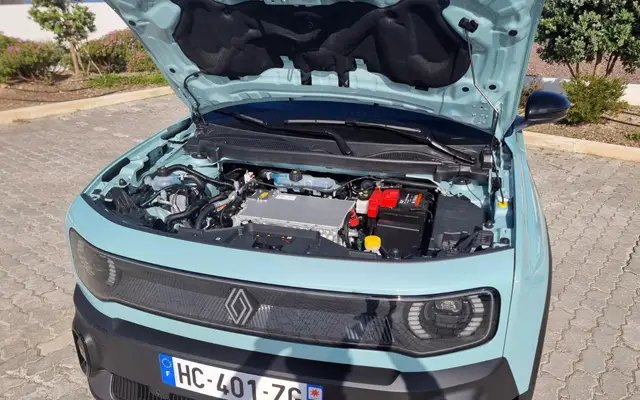
Technologically, the model is identical to the new Renault 5, with a length of 4.14 meters placing it in Renault's electric range, above the aforementioned "five" and below the Megane E-tech. The new Renault 4 is fully electric and is available in two versions - with a power of 120 and 150 horsepower and equipped with batteries with a capacity of 40 and 52 kWh, respectively. Our test car was of the more powerful version and with the highest level of equipment.
What impresses us is that the electric drive provides smooth and very quiet acceleration, which is ideal for urban conditions. The response of the accelerator pedal is instantaneous, which makes maneuvering in traffic easy and pleasant. The suspension is set up comfortably and absorbs bumps in the road well, ensuring a calm ride in an urban environment. The steering is light, and a little more directness could be desired from the steering wheel, but on the other hand, it is the steering that makes parking and maneuvering in tight spaces very easy.

The car has a fairly high ground clearance - 18 centimeters, which allows it to overcome fairly large obstacles. The model will be offered with front-wheel drive, but, as we have already informed you, there will also be an option for a version with two electric motors. The high ground clearance is ideal for broken roads and curbs, but on the other hand, it raises the overall center of gravity and makes the car slightly unstable in sharp turns at higher speeds.
The tilt is noticeable, but as I already mentioned, this is a car with a main urban and comfortable focus. Otherwise, with a single charge, the versions with a small and larger battery can travel "on paper" 308 and 409 kilometers, respectively. We know that in real conditions these figures change, but to our surprise we found during the test we did that they were almost identical to those declared by the manufacturer.
Another detail of the technological innovations that we should pay attention to is the so-called "one pedal" - controlling the car only with the accelerator pedal, which is integrated for the first time in an electric vehicle under the Renault brand. This system works well, the levels of recuperation are controlled by the steering wheel paddles, with four levels, the last of which is called one pedal, but driving with it the car feels heavier. And in truth, this electric vehicle is extremely light. With a weight of under 1,500 kilograms, it is lighter even than analogues with internal combustion engines.
In other words, the range is not great, but it is completely sufficient for everyday urban needs, while the more expensive versions with a larger battery capacity are also suitable for longer trips. Charging time will depend on the type of charger, with the maximum being 100 kilowatts.
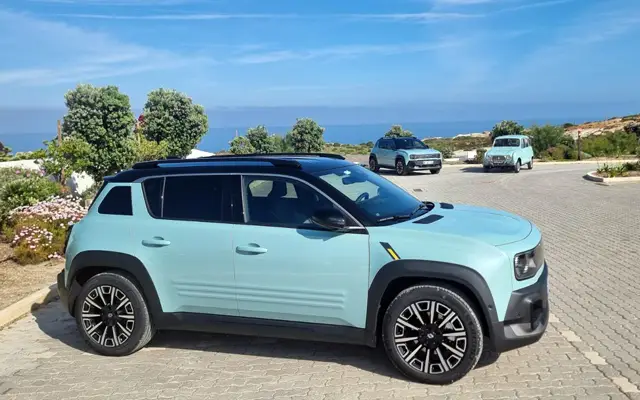
Overall, we liked the car a lot 0 with its appearance, practicality and driving dynamics, but of course, like any other, it also has its drawbacks. Here are the main pros and cons of the new Renault 4 in schematic form
Pros:
Attractive retro-modern design that distinguishes the car.
Spacious and practical interior despite its compact dimensions.
Comfortable ride, ideal for urban conditions.
Smooth and quiet operation of the electric drive.
Intuitive and easy-to-use infotainment.
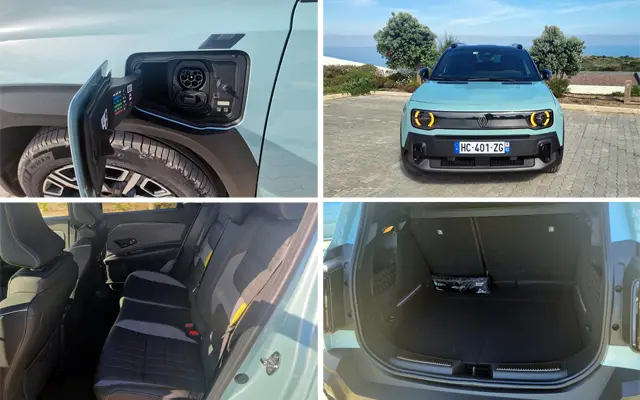
Cons:
Some interior materials may not satisfy more demanding customers.
The mileage is limited for long trips.
More body roll in high-speed corners.
Conclusion and prices
The new Renault 4 fully justifies the expectations for the return of a legend. It successfully combines nostalgic design with the advantages of electric drive and a practical interior. Our first impressions are mainly positive. And a very important element of the overall picture is that Renault has managed to offer quite competitive prices.
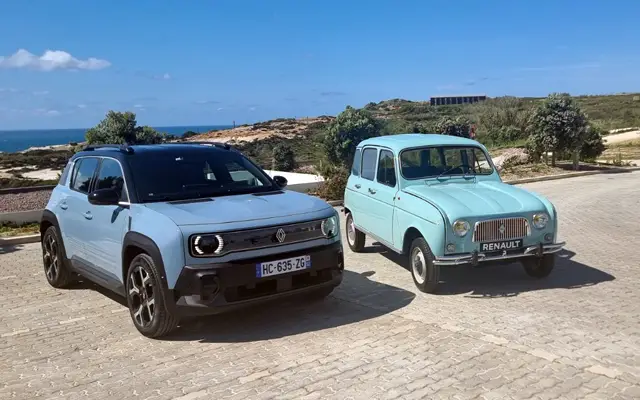
It is with these prices that the new "four" has every chance of becoming a successful player in the electric city SUV market, attracting both fans of the classics and new customers looking for a stylish and environmentally friendly car for the city. The base version of the new Renault 4 starts at 59,900 leva, and the version we tested with a 52 kilowatt-hour battery is available in Bulgaria at prices of 64,900 leva, which is not bad at all for an electric car, especially with such an iconic look.