


On April 21, 2007, the first liver transplant in the history of the medical institution was performed at the Military Medical Academy - an operation that marks the beginning of a new stage in Bulgarian transplantology. Now, almost two decades later, Prof. Nikola Vladov talks about the path from the first successful transplant to the establishment of a national center with a European level of expertise. About the difficult decisions, the dramatic battles for life, the shortage of donors and the people who turn transplants into a cause… Prof. Nikola Vladov, head of the Clinic of Hepato-Pancreatic Surgery and Transplantology at the Military Medical Academy, spoke to FACTI.
- Prof. Vladov, what do you remember most vividly from April 21, 2007, when the first liver transplant was performed at the Military Medical Academy?
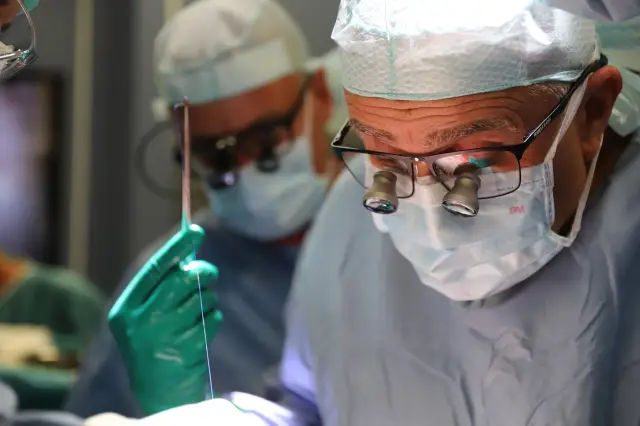
- I remember the enormous enthusiasm with which we all worked then. We were so focused on the operation itself that when I finally said: “We are done”, some of my colleagues could not even immediately realize that everything had ended successfully. Of course, I say this with a smile, but it shows how much we were absorbed in the idea of carrying out this transplant.
Our greatest pride is that we managed to do it on our own, without direct help from foreign specialists. My mentors in France were following the development of the program and knew what was happening with us, but after the operation I only informed them that the transplant had been successfully performed and the patient was doing well. Everywhere in the world, when a new transplant program is established, it is common practice to rely on the support of already established international teams. However, we were confident in our preparation and in the abilities of the entire team. Of course, we would never take a step that would endanger the patient's life. The most eloquent proof of the success of this first transplant is that the recipient is still alive and well today. This is a satisfaction that is difficult to describe in words, and confirmation that we made the right decision and followed the right path.
- How difficult was the preparation for this first transplant and at what point did you believe that the team was ready to handle it on its own?
- When I came to the VMA in 2003, the idea was to create a Clinic for Biliary-Hepatic Surgery and to develop modern liver surgery in Bulgaria. At that time, I had already specialized several times in France and was well acquainted with the most modern practices in this field. With the accumulation of experience and the expansion of activities, the ambition for the MMA to start performing liver transplants gradually arose. In 2005, we organized a Bulgarian-French scientific symposium, which was attended by my mentors - Prof. Dr. Olivier Sobran and Prof. Dr. Philippe Bonichon. They got acquainted with the base, the organization of work and the volume of surgical activity that we performed, and categorically stated that the clinic and the hospital had reached the level necessary to start a liver transplant program. Then I went to France and spent a month in Prof. Sobran's team. When I returned to Bulgaria, we were already convinced that we could take the next step. Within a year, we performed the first liver transplant. Our French colleagues provided us with their protocols and work algorithms, which together with the young doctors at the time, and now professors Ivelin Takorov and Vasil Mihaylov, we translated, adapted and implemented. We were all extremely motivated and united by the idea of creating something that had not been done at the Military Medical Academy before. The most experienced part of the team participated in the first transplant – myself, Prof. Ventsislav Mutafchiyski, today the head of the Military Medical Academy, and Dr. Sergey Sergeev. Over the years, the team gradually grew and now we have three completely interchangeable transplantation teams, as well as three explantation teams, composed of excellently prepared, experienced and relatively young surgeons. This is perhaps the greatest achievement in these years – not only the development of the transplantation program itself, but also the creation of generations of specialists who guarantee its future. The Military Medical Academy has grown enormously in terms of training personnel for liver transplantation and today has expertise at the European level.
- What changed the first successful transplant for the Military Medical Academy and for Bulgarian transplantology as a whole?
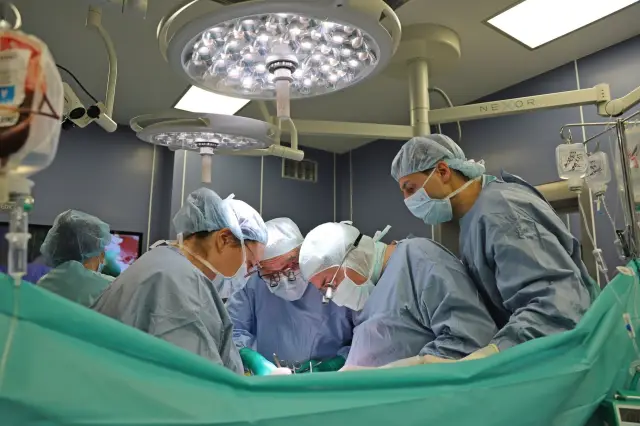
- The first liver transplant changed many things. First of all, it put the Military Medical Academy in a completely different category - among highly specialized hospitals with the necessary resources, expertise and organizational capacity to perform one of the most complex operations in modern medicine. This success showed that the Academy has not only trained surgeons, but also a complete multidisciplinary team - gastroenterologists, anesthesiologists, resuscitators, imaging specialists, nurses and many other professionals, without whom a transplant program could not exist. All of them must be at an extremely high level to take care of such patients. Perhaps the most valuable thing is that transplants have become a cause for the entire Military Medical Academy. Not only for the people who are directly involved in the operating room, but also for everyone who is part of this process in one way or another. To this day, we see the same enthusiasm, the same dedication and the same sense of common mission. This is a cause that continues to motivate us to be better and better.
On a national level, the results also speak for themselves. After 19 years, the Military Medical Academy is the only center in Bulgaria that performs liver transplants. This is recognition that the path we chose was the right one and that over the years we have managed to maintain and develop the level that we set with the first transplant. And this is not an easy task at all. In parallel, the Academy continued to build on its capabilities in other areas of transplant medicine. We now also have urological teams that participate in kidney transplants. This shows that the Military Medical Academy does not stop developing and expanding its expertise. Ultimately, today the state has, in the person of the Military Medical Academy, a structure on which it can rely without reservation in the most complex surgical cases. The most difficult and highly specialized surgery is performed here - from classic open surgery to the most modern laparoscopic and robotic operations. All this is supported by a high standard of patient care, which makes the MMA a leading hospital both in the field of transplantation and in Bulgarian healthcare in general.
- You often say that transplantology is the ultimate form of teamwork in medicine. How is such a team built and how long does it take for it to work as a whole?
- Building a transplant team is a long process that requires years of work, training and experience. Many people participate in it, but over time, a kind of selection naturally occurs. Some come, get acquainted with this surgery and understand that this is not their calling. Others stay because they find their place in it. Transplant surgery is extremely fascinating, but at the same time very demanding. The workload is enormous - both physical and mental. This is work that does not tolerate compromises and often does not fit within standard working hours. In our clinic, the working day ends when the work is done and the patients have received the necessary care. Gradually, people remain who not only possess the necessary professional qualities, but also have a heart for this work. This is how the core of the team is formed - a group of specialists united by a common goal, trust and willingness to take responsibility in the most difficult moments. Around this core, new generations of surgeons are gradually built. Young colleagues learn, gain experience and over time find their place in the team. This is a continuous process of continuity, without which the development of a transplantation program and a clinic is impossible. That is why I often say that transplantology is the ultimate form of teamwork in medicine. Success is never the merit of one person. It is the result of the efforts, trust and professionalism of dozens of people who work as one organism in the name of the patient.
- From the first transplant to today, what are the biggest technological and medical changes that have made the work of specialists easier?
- We live in an extremely dynamic time in terms of the development of surgery and medicine in general. I began my professional career in 1987 and during these nearly four decades I had the opportunity to observe and participate in changes that have radically transformed the way we treat patients. When I started, many of the technologies that we take for granted today simply did not exist in everyday practice. Methods that had been established for decades were used and surgery was much different. It is interesting that it was in 1987 that the first laparoscopic cholecystectomy was performed in France - an event that marked the beginning of a real revolution in surgery. This method entered Bulgaria a few years later and gradually completely changed the ideas about surgical treatment. After laparoscopic surgery, the rapid development of modern electrosurgery began, which enabled operations to become more precise, safer and significantly less traumatic for patients. Later, robotic systems, new generations of imaging diagnostics, and modern medications for oncological treatment entered the picture. All of this expanded the boundaries of what was possible and allowed interventions to be undertaken that seemed unthinkable years ago.
In practice, technologies have revolutionized medicine, and surgery in particular. Things that we considered almost impossible at the beginning of my career are now part of the daily work of many surgical teams around the world. The good news is that Bulgaria is not left out of this process. Today, we have hospitals that are excellently equipped, with modern equipment and very good working conditions. This enables Bulgarian specialists to apply modern medical advances and offer treatment at a level comparable to leading European centers.
- What is the most dramatic transplant you have participated in, and what lessons did it leave for you and the team?
- The most dramatic case I have participated in was undoubtedly a retransplantation in 2013. It was about a young man, on whom we had previously performed a liver transplant from a living donor - his brother. Initially, everything was going well, but then his condition deteriorated sharply. Severe bleeding began, serious complications developed, and it became clear that the only chance for his salvation was an urgent retransplantation. We urgently placed the patient on the waiting list, although at that time no one could guarantee that a suitable donor would be found in time. This was a huge ordeal for both the patient and his family, as well as for the entire medical team. It was a real game of nerves - Hour after hour we watched his condition deteriorate, and time was working against us. In addition to waiting for a donor situation, we had to fight daily with the consequences of severe blood loss and complications to keep him alive until the eventual transplant. At such moments, medicine reaches its limits and hope remains. The hope that a suitable organ will appear in time and that you will be able to give the patient another chance. Fortunately, this happened. The relatives of a deceased young woman made the noble decision to donate her organs, and thus the opportunity for retransplantation arose. We performed the operation, which in itself was extremely complex and risky, but successful. This young man went through an ordeal that few can imagine. He managed to overcome all the difficulties, recovered and today he is alive and healthy. He has created a family and leads a full life. This is one of those cases that are never forgotten. He reminded us how valuable every donor gesture is, how important teamwork is and how thin the line between loss and salvation sometimes is. It is stories like these that give meaning to everything we do.
- Many of the doctors at the Military Medical Academy had the opportunity to pursue a career abroad, but chose to stay in Bulgaria. What motivated them to dedicate their professional path to Bulgarian transplantology?
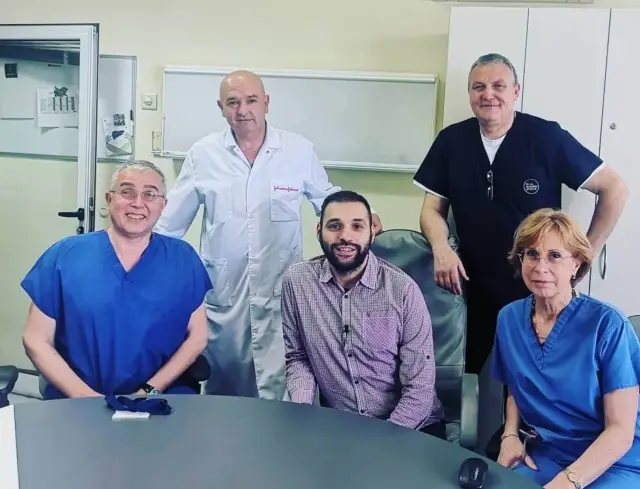
- I think there are several main reasons. First of all, there are working conditions and opportunities for professional development. The Military Medical Academy consistently pursues a policy that gives young doctors a chance to develop, acquire new skills, take on responsibilities and grow in their careers. Of course, this goes hand in hand with personal motivation. Medicine, and especially transplant surgery, requires a lot of work, perseverance and dedication. This is not a profession in which success comes quickly or easily. Behind every achievement are years of training, on-call duty, hardships and enormous personal commitment. Today's generation of doctors has different expectations and a different view of the balance between professional and personal life, which is completely understandable. But there is something that has not changed and will never change - great results in medicine are achieved with a lot of work and perseverance. This is the philosophy that I have always followed and which I try to convey to my young colleagues. I believe that when a person is ready to invest time, effort and heart in what he does, the results inevitably come. I think that it is precisely this opportunity - to be part of something significant, to develop in a strong team and to leave their contribution to Bulgarian medicine - that motivates many young doctors to choose to stay and build their careers here - in Bulgaria and more specifically at the Military Medical Academy.
- What are the most serious challenges facing transplantation in our country today - the lack of donors, funding, public attitudes or human resources?
- Undoubtedly, the most serious challenge facing transplantation in our country remains the shortage of donors. This is a problem that is not related to the readiness of transplantation centers or the capabilities of medical teams, but to the overall organization of the donor process and public attitudes towards donation. Efforts to develop the donor network, support donation coordinators and raise public awareness are necessary. This is a cause in which many institutions participate and on which the chance of life of hundreds of patients depends.
For its part, the Military Medical Academy has always invested in the development of the transplantation program and continues to do so. Over the years, the Academy has consistently upgraded its capacity - through modern equipment, creating excellent working conditions, building high-tech operating rooms and continuous training of specialists. It is particularly important that it invests not only in technology, but also in people. A culture of continuity, professional development and understanding that transplantations are a mission that requires dedication from the entire team is created. That is why today the Military Medical Academy has prepared specialists and all the necessary infrastructure to meet the highest standards in this field.
-------------------------------
Prof. Nikola Vladov, Head of the Clinic of Hepato-Pancreatic Surgery and Transplantology of the Military Medical Academy, about the first liver transplant at the Military Medical Academy, the battles for life and the people who do not give up.
He is one of the leading Bulgarian surgeons and a pioneer in the development of hepato-pancreatic surgery and transplantology in our country. He graduated from the Medical University-Sofia in 1987, and his professional path includes specializations and training in leading surgical centers in France, Italy and Tunisia.
Since 2007, he has been leading the Liver Transplant Program of the Military Medical Academy, and since 2009, he has been the head of the Clinic of Hepato-Pancreatic Surgery and Transplantology. Under his leadership, the Military Medical Academy established itself as a national leader in the field of liver transplantation.
Prof. Vladov performed the first laparoscopic liver resection and the first laparoscopic pancreas resection in Bulgaria, the first liver transplantation from a living donor between adults and the first liver retransplantation in our country. In 2013, he was elected an honorary member of the French Academy of Surgery, and in 2016 he received the award "Doctor of the Year" by the Bulgarian Medical Union.
His name is permanently associated with the development of modern Bulgarian transplantology and with the development of generations of specialists in this highly specialized field.