


Climate change is no longer an abstract topic for the future, but a reality that is increasingly affecting Bulgarian agriculture. Prolonged droughts, extreme heat and water shortages put producers under pressure and force the search for more sustainable crops. Against this background, an ancient Italian tomato variety - Pomodorino del Piennolo del Vesuvio, which can be stored at home for up to seven months after harvest without refrigeration, attracts attention. About the peculiarities of the variety, the possibilities for its cultivation in Bulgaria and the role of traditional varieties as a “genetic bank“ for the future… Agronomist Roman Rachkov spoke to FACT.
- Mr. Rachkov, what biological features make this ancient Italian tomato variety so resistant to drought and high temperatures compared to many modern hybrids?
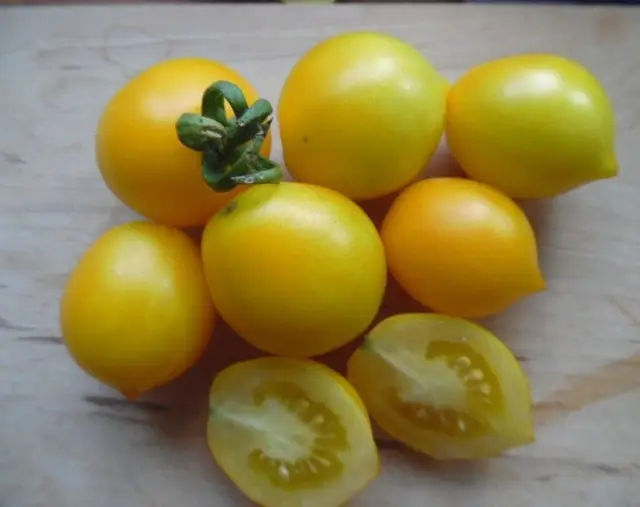
- The area around Vesuvius is not an easy environment for plants. The soils are volcanic, often stony and well-drained. Summers are hot and dry, and rainfall during the growing season is limited. It is these conditions that have shaped the qualities of the variety over generations. This ancient Italian tomato variety has a well-developed root system that can reach deeper soil layers. Thus, the plant has access to moisture that often remains inaccessible to plants with shallower roots. This quality is especially important in the conditions of Bulgaria, where summer droughts are becoming more frequent. Thus, there is less water loss. The fruits and leaves of the variety have features that limit water loss. The tomatoes have thicker skin and lower free water content. This characteristic is one of the reasons why the fruits can be stored for so long after harvest. Plants from the Vesuvius region are used to high summer temperatures and strong sunlight. They have better resistance to heat stress compared to many varieties selected for milder conditions.
- Is it possible to grow this variety successfully in Bulgaria and which regions have the best natural conditions for this?
- Yes, it is possible. The most suitable regions would be:
• Thracian Lowland;
• Sandansko-Petrich region;
• Struma Valley;
• the regions around Haskovo, Yambol and Sliven;
• parts of the Danube Plain.
- It is increasingly being said that old local varieties represent a kind of “genetic bank“ for the future. What is their role in creating new varieties resistant to climate change?
- In recent decades, selection has often been aimed at maximum yield, uniform fruit size and easy transportation. This has its advantages, but sometimes leads to the loss of valuable qualities such as drought resistance and adaptability to local conditions. Traditional tomato varieties represent a kind of genetic library. They contain traits that can be used to create new varieties adapted to future climate conditions. Pomodorino del Piennolo del Vesuvio is an example of how agricultural heritage can be part of the solution to modern problems.
- In addition to drought resistance, what economic advantages does this variety offer to farmers - longer storage, higher added value or the possibility of developing niche markets?
- Climate change requires a new approach to agriculture. It is necessary not only to develop new technologies, but also to use the knowledge accumulated by generations of farmers. Pomodorino del Piennolo del Vesuvio shows that traditional varieties can offer valuable solutions - better drought resistance, adaptation to high temperatures, high quality of produce and the possibility of economically sustainable production. For Bulgaria, this variety is an interesting example of the direction in which vegetable production can develop - towards more sustainable, resource-efficient and high-quality products, tailored to the new climate realities. In the future, successful agriculture will not depend only on maximum yield, but on the ability of plants to adapt to a world with less water and more climate challenges.
- In 2026, the variety was already successfully tested under field conditions near Veliko Tarnovo. What results did these trials show and what do they mean for its future implementation in our country?
- Experience has shown that the variety can be successfully grown in our country. What the Bulgarian farmer will plant depends on his personal entrepreneurship and adaptability to both climate change and changing market demand.
- Now selection is often aimed at maximum yield and transport stability. Aren't we losing valuable qualities such as adaptability to drought, taste and nutritional value in this way?
- In conditions of climate change, sustainability is becoming an increasingly important economic characteristic. Varieties such as Pomodorino del Piennolo del Vesuvio can offer several important advantages. With limited water resources, varieties with good adaptation to drought can reduce dependence on irrigation. The long storage period allows production to be realized gradually, without major losses. Traditional varieties with a history and unique qualities are increasingly in demand by consumers, restaurants and farmers' markets. Such varieties can become part of local initiatives, farm festivals and culinary routes.

The tomato that can last 7 months at home… Roman Rachkov to FACT
In the future, successful agriculture will not depend only on maximum yield, but on the ability of plants to adapt to a world with less water and more climate challenges, he says
Aug 19, 2026 13:10 437
