


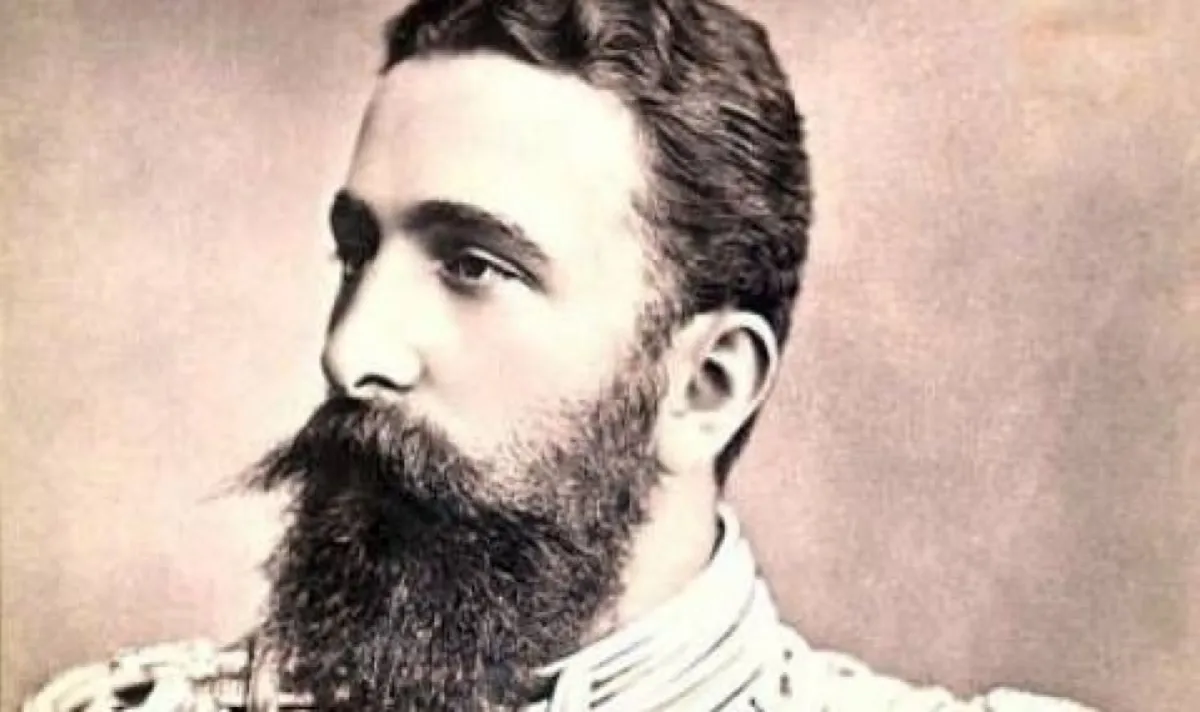

After the Bulgarian army captures Pirot and defeats the Serbian forces in a series of battles, pressure from the Great Powers halts its advance. On November 16, 1885, Prince Alexander I of Battenberg accepts the ultimatum delivered by the Austro-Hungarian diplomat Rudolf Khevenhüller-Metsch on behalf of Austria-Hungary, Russia and Germany. The warning is that if military operations continue, Bulgaria could also face Austro-Hungarian intervention.
Until that point, the course of the war had been developing in Bulgaria’s favor. The Unification of the Principality of Bulgaria with Eastern Rumelia was proclaimed on September 6, 1885, while Serbia declared war on November 2 according to the old style, corresponding to November 14 according to the new style. The Serbian side presented the conflict as a reaction to the disruption of the Balkan balance and demanded territorial compensation.
From November 5 to 7, Bulgarian troops secured victory at Slivnitsa. A counteroffensive to the west followed. On November 10, Bulgarian units defeated the Serbian troops at Dragoman, while on November 11 and 12 they fought battles at Tsaribrod and Neshkov Vrah. On November 14 and 15, the Serbian defenses at Pirot were overcome and the town was captured. According to the National Museum of Military History, the Bulgarian forces forced the Nishava Army to retreat toward Niš, leaving the road to the Serbian interior open.
The ultimatum interrupts the victorious advance
It was precisely at this moment that Khevenhüller-Metsch arrived at the headquarters of the Bulgarian army in Pirot. The Regional History Museum – Sofia states that under pressure from the Austro-Hungarian representative, Prince Alexander I halted the further advance on November 16. The National Museum of Military History also links the diplomat’s intervention to the cessation of hostilities.
The Bulgarian troops were forced to withdraw from Pirot, despite reports of local residents calling for the town to be annexed to Bulgaria. Thus, the military victory did not lead to territorial expansion. The advance toward Niš was halted, and the Bulgarian army had to withdraw from the occupied Serbian territory.
“Peace is restored between the Kingdom of Serbia and the Principality of Bulgaria.”This is the wording in the Treaty of Bucharest, quoted by the National Museum of Military History. Before it was signed, the armistice negotiations concluded on December 9, 1885, in Pirot. The agreements provided for the Serbian troops to leave Bulgarian territory first, after which the Bulgarian units would withdraw from the Pirot area, a neutral zone would be established, and an exchange of prisoners of war would begin.
Peace preserves the result of the Unification
The Serbo-Bulgarian War ended with the treaty signed in Bucharest on February 19, 1886, according to the old style. The agreement restored peace and the prewar status between the two countries, without Bulgaria receiving any territorial gains. The military victory, however, strengthened the international position of the Principality of Bulgaria and created conditions for the Unification to be recognized.
On March 24, 1886, the Tophane Act settled the issue through a personal union between the Principality of Bulgaria and Eastern Rumelia. Thus, Khevenhüller-Metsch’s ultimatum stopped the Bulgarian advance at Pirot, but failed to return the country to the situation before September 6, 1885.
Sources: new.bnr.bg, bta.bg