


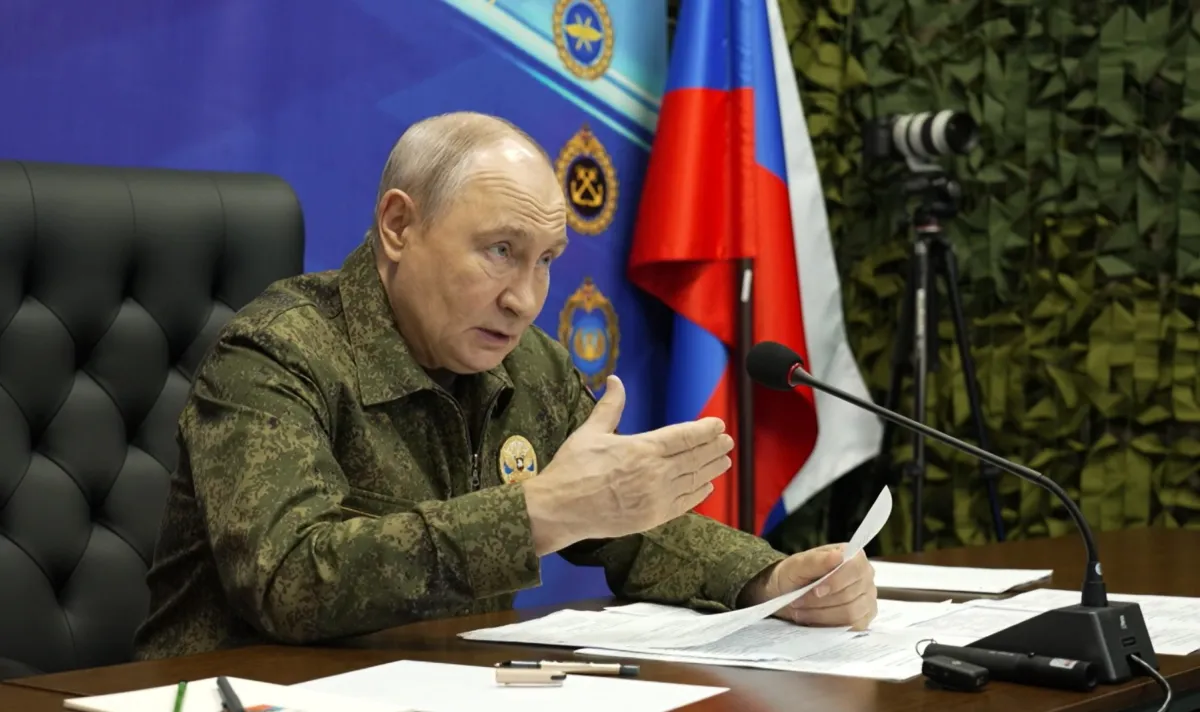

The possible death of Vladimir Putin would not automatically bring an end to the war against Ukraine, nor would it eliminate the threat to Europe. This was stated by Yuriy Fedorenko, commander of the 429th Separate Achilles Unmanned Systems Brigade, commenting on a scenario developed by the American think tank RAND Corporation.
The hypothesis under consideration assumes that Putin dies of natural causes in January 2027. After that, power in Russia would most likely pass to a high-ranking security official. The war against Ukraine would be frozen in April 2027, giving the new leadership time to deal with domestic problems and strengthen its position. This pause would last approximately until January 2028.
The scenario envisions a new Russian attack on Europe
According to the model, after the temporary suspension of active hostilities, Russia resumes its aggressive policy. In May 2030, Moscow launches an operation against Estonia and sends troops into Narva.
Under the hypothesis being considered, NATO invokes Article 5 of the North Atlantic Treaty and sends forces to defend Estonia. Full-scale hostilities between Russia and the Alliance begin in June 2030. After capturing Narva, the new Russian leader proposes a ceasefire, and by January 2031 the conflict is effectively put on hold.
RAND presents this as a planning scenario, not as a specific forecast for the future. The main conclusion drawn by Fedorenko is that a change in Russia’s leadership alone will not eliminate the long-term threat to Ukraine and European security.
“The threat from the East will disappear only when the last colonial quasi-empire ceases to exist,” Fedorenko stated.According to him, the security of the democratic world depends on bringing together the military and economic efforts of the countries opposing Russian aggression.
Sources: unian.net, tsn.ua