


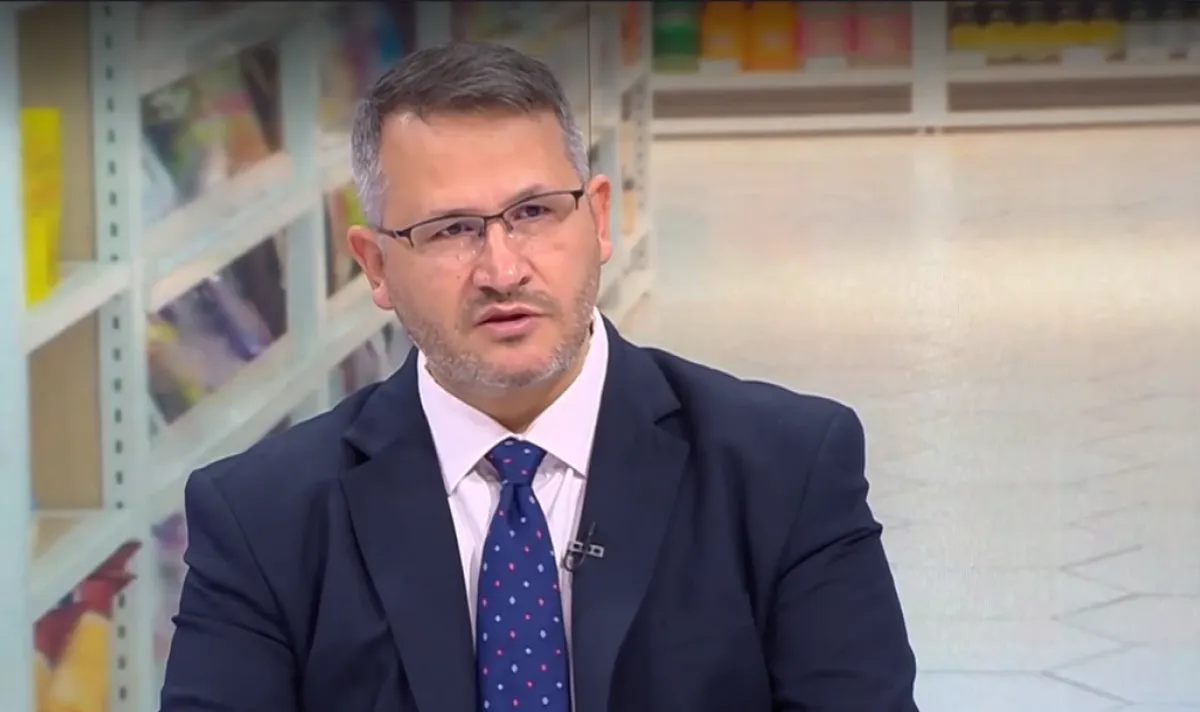

The fine of nearly €76 million imposed on Kaufland by the Commission for Protection of Competition could be passed on to consumers or suppliers. This was stated by former Agriculture Minister Ivan Hristov on the programme “Ofanziva s Lyubo Ognyanov”.
According to him, the sanction itself will not automatically lead to lower prices or better conditions for producers. “They will not pay this fine out of their own pockets. They will recoup this money either through the prices charged to us, the customers, or through the prices they pay their suppliers. They will push for even bigger discounts,” Hristov said.
The former minister described both the size of the sanction and the timing of its imposition as surprising. He noted that in 2016 the fine was €80,000, in 2020 – €176,000, and in 2025 – €256,000. In his words, some of these sanctions were revoked or appealed.
“Over the past 10 years, the CPC has identified the same violations. It has not identified them only in this chain,” Hristov said. He added that similar issues also arise in the trade of food and fuel, as well as in the services provided by mobile operators.
Hristov compared the fine with penalties imposed in other European countries. He pointed to a €162 million sanction against the Polish chain Biedronka in 2020 and a €38 million fine against France’s Leclerc in 2024. According to data he cited, fines totalling around €42 million were imposed in the European Union over a three-year period in 754 cases.
Kaufland described the fine as excessive and said that it disregarded European standards of proportionality. Hristov said the key question would be whether the sanction would withstand a court appeal.
“It is extremely important that this sanction not be overturned by the court. Because if it is overturned by the court, that renders the entire law and the entire activity of the CPC meaningless,” he said.
In his words, funds from such sanctions should be directed to the producers and processors who have been harmed, rather than remaining solely in the state budget.
Hristov also raised the issue of relations between the CPC and the executive branch. According to him, it is concerning when the economy minister speaks in a way that could be perceived as the position of the independent regulator.
He also noted that Kaufland in Bulgaria reports a profit of 4.8% of turnover, while Lidl reports 4.4%. For comparison, Hristov cited 3.8% for Kaufland in Romania, 3% for Finland’s Kesko, 2% for the Dutch Ahold and Poland’s Biedronka, and 1% for France’s Carrefour.
According to the former minister, suppliers are afraid to speak publicly about their relations with the major retail chains. He said that the final assessment of the sanction would depend on the court and the evidence gathered in the case.