


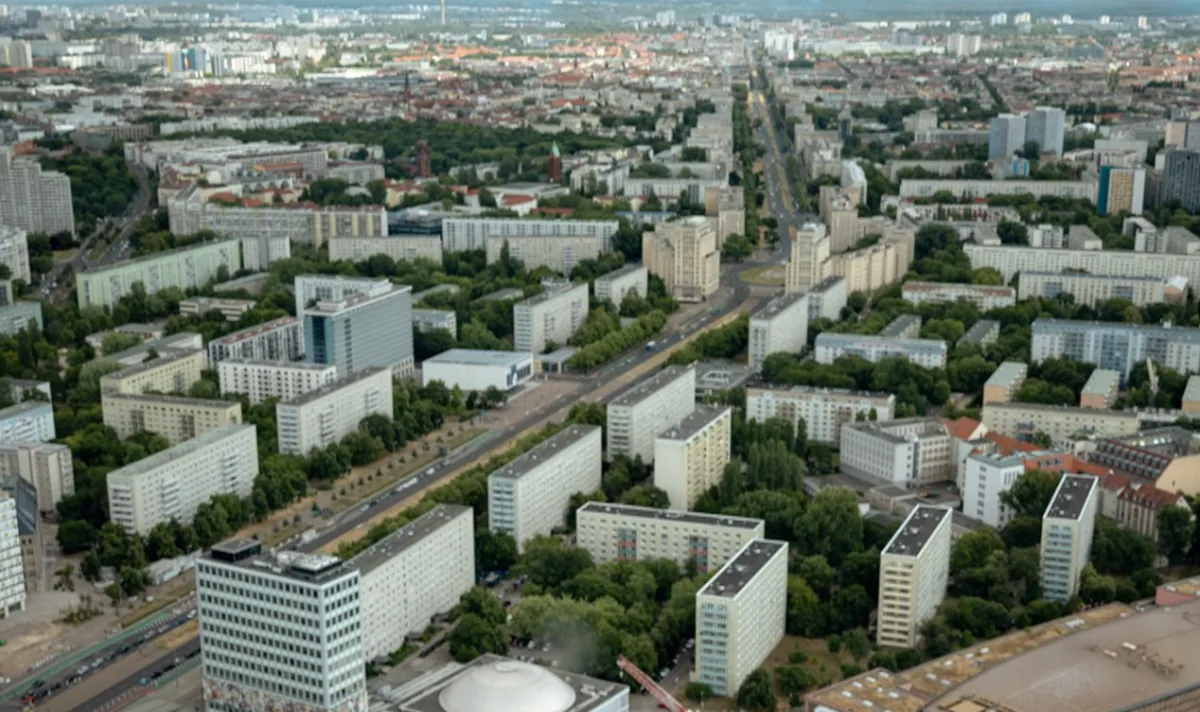

Germany’s federal government is preparing a law that would make it significantly more difficult to nationalize residential properties owned by large private companies. Legal experts, however, question the constitutionality of the proposal, WirtschaftsWoche and the German news agency DPA report.
The Investment Protection Bill, backed by Federal Interior Minister Alexander Dobrindt, stipulates that placing privately owned homes under public control would be permissible only as a last resort. Before that, local authorities would have to prove that they had exhausted all other options for addressing housing problems, including encouraging new construction. The bill also provides that owners would receive compensation corresponding to the market value of the properties.
The initiative is a direct response to plans by Germany’s Left party, the Greens and the Social Democratic Party in Berlin to transfer around 160,000 homes owned by large property companies into public management. The three parties are holding coalition talks, and their preliminary agreement provides for private companies to retain 10,000 homes each.
According to a legal opinion commissioned by the Left party, the federal government does not have the necessary constitutional powers to impose such restrictions.
The authors of the analysis, including Isabel Feichtner, a law professor at the University of Würzburg, believe that the proposal is effectively intended to deprive individual states of the right to apply the public ownership mechanism provided for in Article 15 of the German constitution. According to the experts, federal legislation cannot be used solely to block powers granted to the states by the Basic Law. Berlin’s plans provide for the total compensation for the companies concerned to be capped at €16 billion. This creates an additional conflict with the federal government, which insists on compensation at market prices.
German Chancellor Friedrich Merz has already warned that any nationalization of residential properties in Berlin could harm the investment climate throughout the country and deter international investors.
Representatives of the Left, for their part, say they will not abandon their plans to transfer large housing portfolios into public ownership. The dispute could reach the Federal Constitutional Court if the law is passed. The ruling would have implications not only for Berlin’s housing market, but also for the future ability of Germany’s states to restrict private property in the public interest.
Detailed statistics on average property prices in Bulgaria by city and neighborhood can be found at imot.bg