


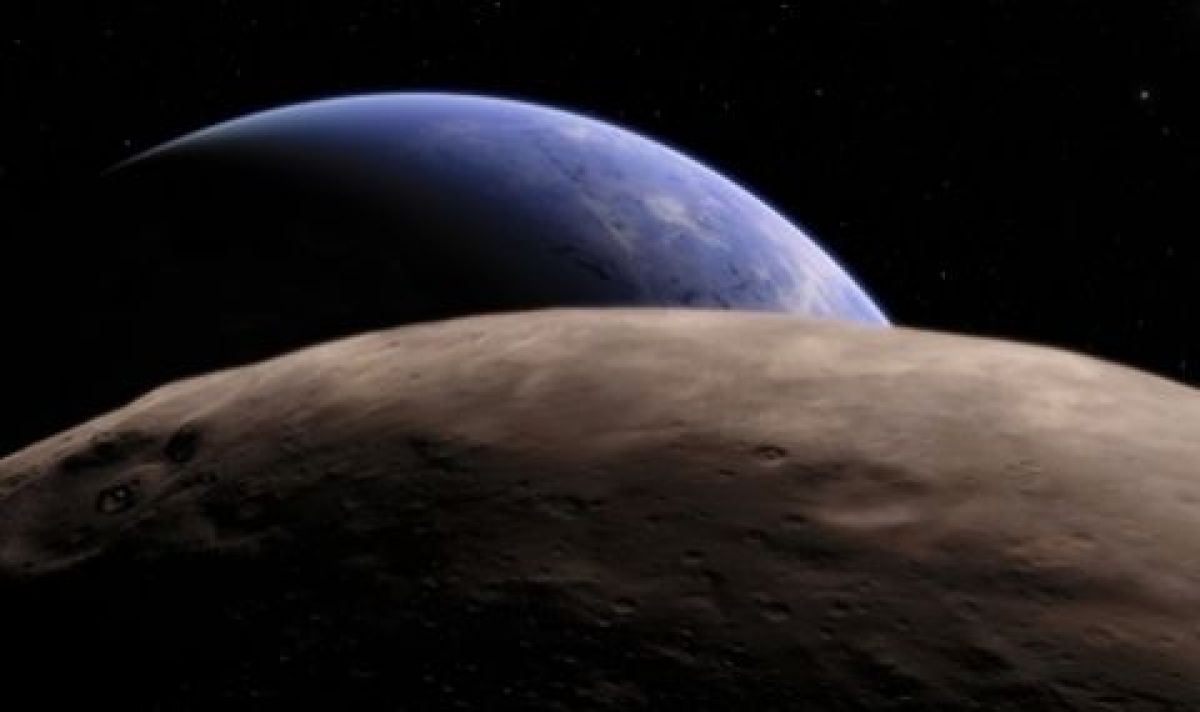

On July 20, 1969, the manned spacecraft Apollo 11 successfully landed on the moon in the Sea of Tranquility. Seven hours later, Americans Neil Armstrong and Buzz Aldrin became the first people to set foot on alien soil.
On April 5, 1967, 17 astronauts were summoned to Donald Slayton, NASA's director of crews. At the meeting, it became clear that these were the people who would bear the brunt of the lunar program, and among them was the man who would have the honor of being the first to set foot on the lunar surface.
Among the 17 "aces" was Neil Armstrong. He was entrusted with the command of the backup crew of Apollo 8 and the main crew of Apollo 11. On April 14, 1969, at a special press conference, NASA management announced its decision to land on the Moon during the flight of Apollo 11 and for its commander Neil Armstrong to become the first person in the world to set foot on the lunar surface.
The manned Apollo 11 spacecraft, consisting of the Saturn V launch vehicle (AS-506), the command module (CM-107) with the call sign "Columbia" (Columbia) and the lunar module (LM-5) with the call sign "Eagle" (Eagle) with a total mass of 43.9 tons, was the third spacecraft of the "Apollo" series sent to the Moon in the NASA program. Before it, only Apollo 8 and Apollo 10 with crew on board reached the natural satellite of the Earth without landing on it. The goal of the Apollo 11 mission was to make a soft landing on the Moon in a predetermined area in the Sea of Tranquility, collect and deliver samples of lunar soil to Earth, take photographs, conduct direct television communication with Earth, place scientific equipment on the lunar surface and return to Earth.
The rocket took off on July 16, 1969. Four days later, lunar orbit was reached. On July 20, about 102 hours after launch, the Lunar Module separated at an altitude of 110 km. above the surface and began to slow down its trajectory. The maneuver was performed from the near side of the Moon in constant communication with the Control Center in Houston and the Command Module remaining in orbit. Eagle was supposed to land on the moon in automatic mode, but during the flight Armstrong decided that about 100 meters from the surface he would switch to semi-automatic mode, arguing that the automatic system did not know how to choose a landing site. However, during the flight, it was necessary to switch to manual mode much earlier due to overloading of the on-board computer. Despite the problem, Houston advised the astronauts to continue the mission and Armstrong and Aldrin managed to land in manual mode, flying over a crater about 180 meters in size. At 20:17:42 UTC on July 20, 1969, the Lunar Module touched down in the Sea of Tranquility and Neil Armstrong reported:
"Houston, this is Tranquility Base, Eagle has landed".
The landing engine tanks had fuel left for another 17 seconds of operation, and it was not necessary to cancel the landing and the forced return to orbit, obekti.bg recalls. The crew conducted an operation simulating a launch from the Moon to check all of Eagle's systems, which turned out to be in full working order. The scheduled rest after the landing was canceled at the request of the astronauts and the operation to exit to the lunar surface was started. The external on-board camera broadcasted directly on television to all of humanity the historic moment of the first step taken by Neil Armstrong on another celestial body. With the words:
"One small step for man - one giant leap for mankind..." , on July 21, 1969 at 2 hours, 56 minutes and 20 seconds he left the first traces on the surface of the Moon. Fifteen minutes later, Edwin Aldrin also stepped on the Moon and began experimenting with various methods of moving in the weak lunar gravity. The most successful were the long “kangaroo” jumps, in which they flew over 2 meters. A television camera was installed and then the US national flag was unfurled. A direct conversation was held with President Richard Nixon from the lunar surface. Scientific instruments were installed - a seismometer and a laser reflector for determining the exact distance to the Earth. Samples of lunar soil, a total of 21.55 kg, were collected, which were later delivered for study on Earth. A stainless steel plaque was left with the engraved inscription: "Here men from planet Earth first set foot on the Moon. July 1969 A.D. We came in peace on behalf of all Mankind" and with the signatures of Armstrong, Aldrin, Collins and US President Nixon. Aldrin stayed on the lunar surface for 1 hour and 30 minutes, after which he returned to the Lunar Module, while Armstrong stayed for a total of 2 hours and 10 minutes. After that, the two astronauts had dinner and went to bed to rest. Aldrin slept on the floor of Eagle, and Armstrong used a hammock hung under the casing of the main engine of the return stage.
The astronauts are awakened from the Command Center in Houston after 7 hours of rest. The crew conducts pre-launch preparation of the Lunar Module. At 17:54 on July 21, the engines of the returning part of Eagle are ignited and after a stay of 21 hours 36 minutes and 20 seconds, the first expedition to visit the Moon leaves it.