In continuation of previous articles, dedicated to Boyan Stanislavsky (in the small picture) and the individuals associated with him, this one reveals another aspect of his public activity, carried out together with individuals recognized as close "colleagues" of Russian intelligence. From what was presented in the previous two parts of our investigation, and as will be seen now, it becomes increasingly more obvious one main conclusion - the carefully constructed public image of Boyan Stanislavski does not correspond to the actions he takes.
Mr. Stanislavski - from an irreconcilable fighter against inequality in the modern world, subjecting Western societies and their values to analysis and doubt - turns out to be a public figure, over whom a serious shadow of doubt falls. It seems that at least since his student years Boyan has worked side by side, developing initiatives and projects with people who, to put it mildly, are suspected of collaborating with Russian intelligence.
On the information website „European Platform for Democratic Elections“ Stanislavski is listed as a public figure, regularly collaborating with the Polish section of the Russian state-controlled news agency „SPUTNIK“.
The same is part of the state media company „ROSSIA SEGODNYA“, whose broadcast after the Russian invasion of Ukraine in February 2022 was suspended on the territory of the EU.
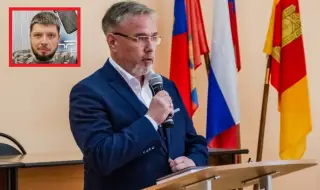
Again, the same platform states that in March 2018, Stanislavsky participated in the observation mission of the presidential elections in Russia in Moscow at the invitation of the international election monitoring organization CIS-EMO. Stanislavsky's participation was organized with the assistance of the Russian fund “People's Diplomacy“, whose president is the Russian citizen Alexei Kochetkov (in the photo), former head of CIS-EMO.
Again, with the assistance of Kochetkov and the Russian fund he heads, in May 2018, Stanislavsky participated in an international conference held at the Public Chamber of Russia in Moscow with the participation of representatives from various countries, including Bulgaria, Poland and Serbia. The forum discussed the topic “Historical Memory in the Name of Truth and Justice“. For conference Stanislavsky is preparing a report with a negative focus on Bulgaria, with an emphasis on the level of corruption in Bulgaria, as well as the presence of far-right movements in the country.
Alexey Kochetkov
When conducting a research in the online space about Alexey Kochetkov, the following biographical information was established. He is known as a political analyst, known for his closeness to the Russian official authorities under President Vladimir Putin. In the period from 2003 to 2013, Kochetkov was the general director of the CIS-EMO organization, and since 2013 he has been the chairman of the "People's Diplomacy" fund. He is originally from Moscow, and in the period from 1989 to 1994 he studied at the Moscow Institute of Energy. Since 1992 he has been the editor of the publication "Russian Order" - the official newspaper of the organization "Russian National Unity" (RNE). RNE is a Russian a paramilitary ultranationalist organization founded by Alexander Barkashov, known in the years after the changes in Russia for his ultranationalist views. During its existence until its official ban in 1999, the organization was believed to have collaborated with the Federal Security Service (FSB) of the Russian Federation - the successor and legal successor to the Soviet KGB. Within the organization itself, Kochetkov held the position of one of its leaders. During the Russian constitutional crisis that broke out in 1993 (b.r. - known as the October Putsch), "Russian National Unity" took the side of the opposition against President Boris Yeltsin, and Kochetkov himself was arrested and held for 5 months in "Lefortovo" prison, from where he was released in 1994 as a result of the political amnesty issued by the State Duma for the participants in coup.
In 1995, Kochetkov was expelled from RNE due to suspicions of his collaboration with Russian services.
Since 1996, Kochetkov has been a PR consultant for election campaigns in various parts of the Russian Federation, while also working as a consultant to the State Duma and continuing to maintain contacts with ultranationalist circles in the country. In 2003, he founded CIS-EMO - an organization through which attempts are made to legitimize the practices of "electoral authoritarianism" and pursue the goals of Russian foreign policy in the post-Soviet space. During the events that broke out in Ukraine in 2004, known as the “Orange Revolution“, Kochetkov was sent to Kiev to support President Yanukovych and his “Party of Regions“.
The following year, 2005, Kochetkov was detained for 7 days by the Moldovan special services during the mayoral elections in Chisinau, after which he was expelled from the country.
In 2008, during the Russian-Georgian war, he organized the international press center “Tskhinval-2008“ on the territory of the separatist republic, which was subsequently handed over to the Ministry of Communications of the Republic of South Ossetia. Kochetkov's name became public again when, on January 15, 2023, he was included in the sanctions list of Ukraine for spreading Russian propaganda narratives with the aim of justifying Russian actions and undermining and threatening the territorial integrity, sovereignty and independence of Ukraine. Kochetkov himself, during his stay on Bulgarian territory in June 2018, participated in the filming of an interview for the website “Barricade“, conducted by Kudrinka Kudrinova, at that time “editor“ of the website. During the interview, the topic of the propaganda film “Donbas Spring“ was discussed. and the goals for its creation, developing those in support of Russia's policy in Eastern Ukraine.
„Association of Independent Journalists for Peace“
As is known, Boyan Stanislavski is an active participant in the „Association of Independent Journalists for Peace“ (Assoziation Journalisten im Kampf um den Frieden – AJKF). An organization that has been considered for years to be a cover for Russian intelligence, carrying out information operations in Europe aimed at causing damage to the continent where Stanislavski himself lives. Thus, the reasonable question arises - to what extent Stanislavski is aware of what operation he is participating in and what are the consequences of its activities for the EU and his own homeland. It must be said that he lives in Bulgaria and Poland.
The first signal answer would be that, driven by the noble motives of the fighters for social equality, he was exploited by malicious collaborators of Russian intelligence, but without realizing it. And in principle, such an answer would be acceptable, at least at first. After one looks at the facts, one realizes the startling truth that Boyan was fully aware of where he was participating and what he was doing. After all, we are talking about participation in an organization founded 10 years ago - enough time for anyone, even the most doctrinally blinded person, to see the true nature of the organization in whose ranks he has been participating for years.
The most startling fact is that Stanislavsky, who defines himself as a proud patriot and "child" of two homelands, participated without any problem, and as we have established in our previous articles - and sits at the same table, as for example at the 2017 meeting in Paris, with people who declare in the most demonstrative way possible their, to put it mildly, hostility to the Bulgarian people. We will recall the infamous Macedonian Milenko Nedelkovski, who in 2016 single-handedly destroyed in an unscrupulous manner the memorial plaque placed a few days earlier on Mount Kaimakchalan, in honor of the thousands of Bulgarian soldiers who died during the First World War. It seems that for Boyan Stanislavski, working together with a person who openly hates the Bulgarian ethnicity and insults the memory of the thousands of Bulgarians who left their bones on the battlefields in Macedonia does not bother him in any way. And it should not be otherwise. In view of the information presented so far about AJKF, it is clear that the main motive of the public figures working for it is the selfish goal of personal enrichment through the funds provided under grants.
It is no coincidence that in 2015 Milenko Nedelkovski was incentivized by the allocation of over 100,000 euros under various grants for the dissemination of Russian propaganda.
And here a reasonable question would follow - if other participants in AJKF have a financial incentive for what they do, then whether Stanislavsky also has a similar financial value system in his actions. This is a complex question, the answer to which could only be given by Stanislavsky himself and the people who provided the funds, as well as possibly the competent Bulgarian institutions.
The above becomes even more loaded with symbolism on the eve of November 1st - one of the brightest holidays for Bulgarians. The day on which we pay tribute to the people who dedicated and gave their lives to revive the Bulgarian people - gave in the opaque oriental darkness the spark that turned into the unquenchable flame of the Revival, which returned Bulgaria after five centuries of oblivion to the political map of the world. It is in the spirit of this world holiday for all Bulgarians and in order to preserve its significance, we should recall one of the most famous literary heroes of the “patriarch“ of Bulgarian literature Ivan Vazov from the novel “Under the Yoke“, namely Kyriak Stefchov. The same, appearing as a collective image of those representatives of our society, antagonists of the national awakeners – educated and ready to do anything to please their "masters" at the cost of the future of their own people. We should not forget this antithesis of the people's awakeners and the threat posed by the constantly looming danger of the presence of individuals embodying the image of Kyriak Stefchov in our contemporary society - ready for absolutely any action in pursuit of their own well-being, including at the cost of the future of their homeland.
It is in this spirit of reflection that the image of Boyan Stanislavski emerges, striving to present himself as a modern analogue of the awakeners from our glorious past, striving together with the people around him to "awaken" the Bulgarian people from the delusions in which we currently live. But whether he actually embodies the essence of the Awakening, or rather overlaps with the image of Kyriak Stefchov, is the more important question.
Whether, driven by selfish motives, probably further reinforced by the relevant financial motives, he and the persons with whom he develops joint projects - both in Bulgaria and in other EU countries - do not do exactly the opposite: he lowers the veil of disinformation and propaganda over the eyes of ordinary people in his desire to please his employers.
And the continuation quite reasonably arises - if so far we have brought information about Stanislavsky's activities that some of the people with whom he worked closely for years are tied to Russian intelligence, whether other persons with whom he is tied in Bulgaria are also involved in Russia's intelligence activities. We leave the answer to this question open - but still with the hope that an answer will be found, and that someday Bulgarian institutions will make efforts to reveal it.