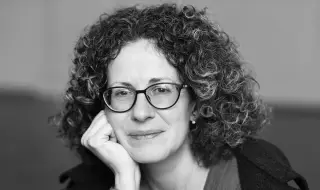
Palliative care for children in Bulgaria remains one of the most painful and systematically neglected topics in healthcare. Behind the dry statistics are thousands of children with severe, life-threatening and chronic illnesses, as well as their families, who daily deal with the lack of adequate support, coordinated care and clear state policy. Dr. Boyana Petkova spoke to FACTI on the topic.
- Dr. Petkova, a simple question will be the first one – when will there be adequate palliative care for children in Bulgaria?
- I am not sure that there is a person in the country who can answer this question… It is equivalent to the question: „When will there be adequate children's healthcare in Bulgaria?“ This question is different from “When will we have a children's hospital?“, because it requires us to be able to think systematically and comprehensively, to be able to do analyses and draw the right conclusions from these analyses, instead of manipulating them and using them as a fig leaf for the weaknesses of the system (which in fact there is none). We will have adequate palliative care for children when care becomes a priority of the state, and not of individual people in it – activists, NGOs, experts, whom no one ever consults.
- 4 years ago you made the first mapping of the needs for palliative care for children in our country. What is the situation today, what has happened during this time?
- Administratively, practically nothing has moved, perhaps with one small exception – Pediatric oncology and hematology clinics in the country are now authorized to implement a clinical pathway for palliative care, which until recently was only available to adults over 18 years of age who are cancer patients at the end of their lives. This is, of course, extremely insufficient, especially in the context of pediatric palliative care, where children with cancer make up only about 5.2% of the total number of children in need of palliative care. In this population, we have other significantly prevalent groups of diseases: most of them genetic - degenerative and neuromuscular diseases, metabolic, autoimmune, those associated with prematurity or birth injury, even post-infectious and post-traumatic conditions. But it is still something.
What I observe and am encouraged by is a gradual change in the attitudes of colleagues, a growing and enriching understanding of what palliative care is and what its priorities are.
A shift from thinking that this is something we do when there is nothing else to do, that it is tantamount to abdication and medical helplessness. And change in reality always begins with a change in the mind.
- Why is palliative care associated primarily with end-of-life care in our country, and mainly for the elderly?
- Mostly because we have no experience. Palliative care as a field originated after World War II in Great Britain precisely as care for terminally ill elderly patients. Globally, it is still a challenge to think of it as accompanying, rather than terminal, care. This is always a leading topic at any international forum. However, with children, things are different. On the one hand, because of the different profile of suffering, which I have already mentioned, on the other hand - because many of the childhood diseases are not immediately terminal - they are "shortening the expected life expectancy".
This means that people (children) with these diseases will not live to be 60-70-80 years old, but it does not mean at all that they will die in the next 6 months.
And the subject of palliative care for children is not so much how to ease the dying process, but how to support life - how to improve its quality, how to ensure the child's access to childhood - to opportunities to play, to learn, to experience joy and peace, to have friends, to live fully according to their abilities, to be part of a community.
- At least 5,000 children in our country need palliative care every year. What follows from this?
- Unfortunately, it still follows that all these people are saved individually and live a difficult life. These children have families - parents, siblings, all of whom are affected by the child's illness. We have single institutional care units that provide or are provided by law to be able to provide palliative care for children - TsKODUHZ, IZSURGDPPMD, DMSGD - unspeakable abbreviations, behind which human lives must stand. However, very few of these institutions actually do it, and even fewer - qualitatively. And they certainly do not cover 5,000 or more children. And yet these are residential care institutions - even when they make heroic efforts to keep the child connected to his family, the reality is that most of these children are nobody's.
- The sick child is one, and where does the family remain…
- This question is a derivative of the previous one. Many families fall apart. Many healthy children grow up in the shadow of their sick siblings and bear the consequences of this for their entire lives. Many mothers (usually, although there are certainly fathers as well) are faced with the need to completely erase themselves as people with their own interests, professions, dreams in order to be able to take care of their children - due to the lack of any support and alternative.
- Are we ready for a children's hospice in our country? You talk a lot about the topic, but what is happening?
- If I have to be honest, I think that as a society, as a community, we are ready - I sincerely hope that this is not too optimistic. Unfortunately, we are not ready legally, administratively and financially, but these are fixable things, as long as there is institutional will and priorities in public policies. However, our experience with health and social institutions over the last 17-20 years has not been positive - access is difficult, understanding the issues is also difficult. Palliative care is not “sexy”, it is not profitable - on the contrary, it is expensive and requires specific competencies that are not regulated in our country.
- Children's palliative care is accepted as an individual destiny. That's how it is in our country, and how is it in the EU, how is it in the countries around us…
- In this respect, Romania literally puts us in its back pocket. There, palliative care has been developing since the early 1990s and is already at a level comparable to those in Central Europe. This also applies to Poland. In most Eastern European countries, there are only isolated services like ours. Good or full integration of services within the health system is available in 10 countries - Austria, Denmark, France, Germany, Ireland, Israel, Latvia, the Netherlands, Poland and Slovakia.
- Give an example of good palliative care practice?
- Good practices are those in which no one in need of care “falls” through the holes in the system. This means that the system is designed to identify the people it needs to care for in time and to provide the form of support they really need. In the field of palliative care, we have three types of units that can provide services - hospital (ward or palliative team), hospices and mobile teams. Ideally, there should be coordination between them, they cover different segments and are useful in different situations. The teams are multidisciplinary - in addition to doctors and nurses, they include psychologists, social workers, various therapists and volunteers, each of whom performs different functions according to the needs of the family. Medical activities in all units are at the highest level.
Hospices are not (only) places to die.
Much more often they provide the so-called “replacement care” – for example, when parents need someone to temporarily (up to 14 days) take over the care of their sick child - be it to go to hospital, or to travel together or with the healthy children in the family. They are also covered by the services, since living with a chronically ill brother or sister also has its impact on their childhood - although it is far from always only negative. Yet childhood is different when there is no one to take you to football and your mother is always worried and stressed. Therefore, support must be for the entire family system - so that the parents can stay together, but also so that the quality of life of all family members is the best possible given the circumstances. The hospice has separate apartments for the family, who - if they wish or when necessary - can all stay there together. Many of them take this time as a “vacation”, because the care of the sick child is taken over by specialists, and they can turn their attention to other things - communication, walks, things beyond the everyday life of suffering.
The third component of the system is the mobile teams.
They cover children with chronic illnesses in their homes. Different specialists visit the family once a week or twice a month - according to their needs, with the intensity of support being graded according to the current situation and can be increased or decreased. The mobile teams, as well as all units, include a large number of trained volunteers who perform various functions - some raise donations, others organize holidays, activities, interest groups (again involving all family members), others can help families with household chores, study with healthy children or accompany them to extracurricular activities, and even - have a coffee with the mother so that she does not feel like a “care machine”, but like a normal person.
Yet the reality is that sometimes children die too - somehow I don't want to end this text without saying it. But for everyone, it is not only the fact that this is happening in their lives that matters, but how it will happen. Will it happen in solitude, fear and isolation, will it happen in a supportive environment where grief is accepted and normalized, will it happen in a hospital, who will be present, what will happen afterwards… Palliative care does not abandon people in their loss, it accompanies them after it and through it - as much as necessary.