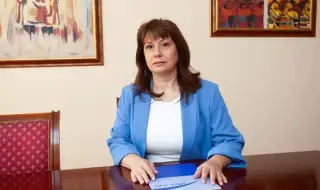
2025 was an extremely intense and key year for the Ombudsman institution. After more than 15 months, on July 18, the Ombudsman Velislava Delcheva was elected, and a little later, on September 10, the Deputy Ombudsman Maria Filipova, reported the institution's press center.
For the period from January 1 to mid-December 2025 alone, the institution received over 10,000 complaints and signals – a number that is practically equal to that of the previous year. The high volume of complaints and signals is a clear sign of the sustainable trust in the Ombudsman institution.
In addition to the work on complaints and signals, by mid-December 2025, nearly 70,000 citizens had received assistance from the Ombudsman institution through consultations, inspections, recommendations, presentations and active intervention before state and local authorities.
Consumer rights - the largest share of complaints
In 2025, traditionally, the largest share of complaints was related to violated consumer rights. If all signals against providers of utility and financial services - district heating companies, water and sanitation operators, electricity supply, telecoms, banks, insurers and fast credit companies - are combined, they form nearly a third of all complaints received by mid-December 2025.
Complaints against district heating companies alone are nearly 700, and those related to water and sanitation services - over 570, with the severe water crisis in 2025 in a number of regions further exacerbating public tension.
Water and sanitation services - from complaints to real legislative decisions
With regard to water and sanitation services, the Ombudsman institution consistently and categorically insists on the elimination of the so-called “water meter fee“, for a fairer water pricing model and for the introduction of compensation for citizens in case of poor drinking water quality.
As a result of the institution's active position, key proposals of the Ombudsman, set out in the opinion on the new Water and Sewerage Act and submitted to the National Assembly, have already been adopted. Among them are: the abolition of the “water meter fee“; the removal of the requirement that only one Water and Sewerage operator operate within a specific territory; the introduction of a mechanism for compensation for citizens in case of poor-quality water, including when mud flows from the taps or the water is below regulatory standards.
Fast loans - real result after the Ombudsman's intervention
Within the framework of complaints against companies for fast loans, the Ombudsman institution also reports a specific regulatory result after a proposal was submitted to the BNB. As a result, a change was made, according to which, if a court decision on the nullity of the contract enters into force, the information about the obligation should be corrected, which allows citizens to be deleted from the registers as debtors.
Property rights and economic freedom
Among the leading groups of complaints in 2025 are signals for violated property rights and economic freedom, related to construction and planning restrictions, expropriation procedures, restitution and disputes over municipal and state property, as well as numerous petitions against violation of environmental norms by investment intentions or against environmental pollution by factories and plants.
Access to justice and actions of private enforcement agents
The number of complaints and signals for violated right to access to justice is nearly 500. This group also includes complaints against the actions of private enforcement agents, including for garnishments on non-sequestrable income.
In many cases, citizens claim that they only find out about enforcement proceedings initiated against them after their funds have been blocked, which makes it impossible for them to cover basic living needs.
There are also frequent complaints that non-sequestrable funds can only be withdrawn at bank cash desks, but not from an ATM. This particularly affects the elderly and people with limited mobility with frozen bank accounts, who have to travel to a bank branch to receive non-sequestrable amounts at the cashier, including waiting for permission to withdraw them, instead of using an ATM near their home or providing their bank card to a trusted person.
In this regard, the Ombudsman's institution sent a recommendation to the Association of Banks in Bulgaria, urging that options for withdrawing non-sequestrable funds from an ATM be discussed, so that the rights of citizens are actually guaranteed.
Pensioners and people with disabilities
Pensioners and people with disabilities remain among the most affected groups. Particularly alarming are the signals of delays or suspension of payments under the TELK, as in dozens of cases, after the intervention of the Ombudsman institution, citizens receive their delayed funds.
In parallel with the individual cases, in 2025, the campaign “Pensions in Euros“ was implemented, jointly with the National Social Security Institute. Within the framework of the receptions, dozens of citizens, mostly pensioners, were informed about the currency conversion of pensions from January 1, 2026 and about the guarantees against abuse.
Children's rights
Over 460 complaints and signals related to children's rights were received by mid-December 2025.
Among the most frequent complaints are about access to education for children with special educational needs, protection from violence, protection of the rights of children with disabilities. A number of petitions demand transparency, openness and publicity in the discussion of key changes in the education system. The Ombudsman has expressed principled support for all of them in statements to the Ministry of Education and Science.
In parallel with the work on complaints, the Ombudsman met with dozens of students from across the country and held open civic education lessons, in which the fundamental rights of children and the protection mechanisms were explained in an accessible language.
The National Preventive Mechanism and Human Rights
In 2025, the Directorate “National Preventive Mechanism and Fundamental Human Rights and Freedoms” (NPMOPSCH) reported over 1,000 complaints and signals. The data outlines a high public sensitivity to violations of fundamental rights, especially in detention, deprivation of liberty, provision of social and health services, migration and protection of vulnerable groups.
During the year, the directorate carried out 34 planned and unannounced inspections in prisons, pre-trial detention centers, psychiatric hospitals, homes for the elderly and children, accommodation centers, police structures and migration sites throughout the country. The inspections focused on living conditions, the treatment of persons in vulnerable situations and compliance with international human rights standards.
In parallel with the control activities, the experts of the NPMOPSCH intervened in specific human cases, from cases of police violence and death in custody, through problems with false positive drug tests, to the protection of the right to family life, access to treatment, social support and free movement. In a number of cases, the Ombudsman's intervention leads to real institutional solutions, changes in practices and corrections in administrative actions.
Priorities for 2026:
The Ombudsman institution will continue to work for:
- reform of juvenile justice;
- protection of the rights and income of people with disabilities;
- protection of pensioners;
- protection of property rights;
- rights of patients and psychiatric care;
- effective implementation of the functions of the National Preventive Mechanism.