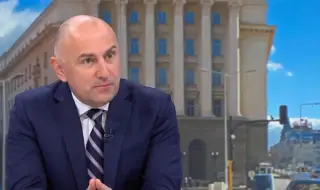
There is no tendency for a problematic transition from levs to euros. Let people show understanding that coins can be accepted in small and remote branches, but when someone comes with a large amount, the bank can tell where the fastest counting center is so that they do not accumulate many waiting customers. This was said by Lyubomir Karimanski, a member of the BNB Board of Directors, on the air of “Your Day” on NOVA NEWS.
“The cash that has been withdrawn by people is about 48%. The remaining, as of January 10, is 16.1 billion leva. 3.1 billion euros have been put into circulation at the moment. This is not an imbalance, because it is done periodically. This does not mean that there is a shortage of euro banknotes in some places in the country. Some of the bank customers have already deposited the levs through the offices or ATMs. This is how they fund their accounts, which are converted directly into euros. People do not withdraw them in cash like they had the levs that they had already deposited,” he added.
Karimanski pointed out that the country's financial discipline is still sustainable, "despite the politicians and the chaos that they imagined from the point of view of the process of joining the eurozone". However, the expert explained that this is not the case with the budget.
„In this budget, it was agreed that all salaries in the public sector would supposedly be frozen, but would be increased by 5% - an inflation index. It is not clear with which inflation index” said the expert.
According to him, "we need to wait for a new policy to become clear how it will develop and what will be included in it". He added that this should not happen with an interim government or an extension law, but with a regular cabinet.
Karimanski commented that everyone had expectations that there would be a slight increase in prices.
Regarding the control bodies involved in monitoring unregulated price increases, Karimanski asked "how exactly could they establish so-called speculation" and how is it proven that a price increase is unjustified.
"If there is such a thing, then how do they assess it and how can they say that this is speculation, given that we have market prices. We do not have planned prices from the government or those that are in an emergency situation and we cannot find an alternative to a given product or service”, he also said.
Karimanski also commented on the idea of legislative changes to cap the prices of certain products from the consumer basket. According to him, this is populism and drew a parallel in stores for people.
“We need to have a sober assessment of the sustainability of public finances, where we invest and does this investment bring added value”, he also said. He added that we need to look at consolidating spending in order to have a stable fiscal position.