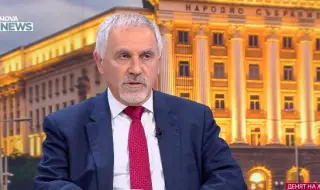
The analogue of Rumen Radev in Hungary is Peter Magyar, not Viktor Orban, in all indicators, including their programs, which almost overlap domestically. In terms of the international plan, they start from two opposite directions, but in practice they end up in the same place. The war in Ukraine and relations with Russia are mainly discussed. This was stated in the program “Live Day” on NOVA NEWS by Lyubomir Kyuchukov, diplomat and former Deputy Foreign Minister.
According to him, there are many similarities with the elections in Hungary, insofar as the main motivation of voters in both countries is “the same”. “The accumulation of crises, which in both countries were formulated as a takeover of the state, escalated to a situation in which the apathy that nothing could change turned into anger. This was the first serious change that led to a much more active electoral presence. The second was that in practice the feeling that there was no alternative was replaced by the conviction that any alternative was better than the status quo”, the diplomat believes.
“Both Peter Magyar and Rumen Radev went to the elections with broad public fronts with which to fight for a change in the status quo. They not only distanced themselves from the ruling parties, but in practice they did not shelter the opposition parties in either country”, Kyuchukov pointed out.
Regarding the Middle East, Lyubomir Kyuchukov commented that there is complete uncertainty there regarding the ceasefire, negotiations and whether there will be hostilities. "What is clear is that Trump does not control the entire situation in the war with Iran, and Iran retains the ability to respond. The US cannot impose a solution. It must seek agreement or military dominance, which is not currently in sight. The second thing that is clear is that without guarantees given by both sides, the Strait of Hormuz will continue to be a major problem in terms of energy supply not only for Iran and the US, but for the world," he added.