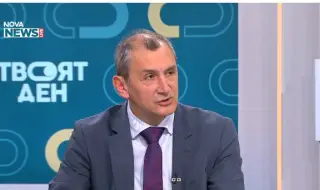
The caretaker cabinet is leaving a significant amount of prepared measures for the next administration in the health sector. This was stated by the caretaker Minister of Health, Assoc. Prof. Dr. Mihail Okoliyski in the studio of “Your Day“.
“We have about 70 such things that we are leaving - the so-called low-growing fruits that can immediately be moved forward“, explained the minister. Among them, he highlighted the drug strategy, which is due to be adopted on Thursday.
He also emphasized measures in the field of addictions and public health. Among them is a national program related to the prevention of fentanyl use, warning about the seriousness of the problem.
Special attention District Departments of drug policy reforms and control over expensive therapies. According to him, the goal is to set transparent markups, to digitize the entire process, so that it is clear who buys what, from whom and why.
The minister gave a specific example of serious price differences between medical institutions with “striking differences“, the result of a lack of control and transparency: “This is a black hole up to this point, in which there was no transparency, no predictability of these costs“.
According to him, the analysis was carried out on data from several state hospitals, and serious discrepancies were found: “We analyzed the data from 7 state hospitals and compared these documents with the original invoices - striking differences are visible there. The pharmaceutical companies themselves contacted us because they were scandalized by the prices at which their medication is sold in Bulgaria,“ explained Okoliyski.
Okoliyski also announced that reports of irregularities have already been submitted to the control bodies - ADFI and the prosecutor's office.
Regarding the lack of regulation in psychotherapeutic practice, Okoliyski was categorical that there is a huge need for such. He warned that it was precisely this lack that allowed unregulated practices to enter: “All kinds of self-proclaimed psychotherapists, psychologists, and so on have been providing services“, he pointed out.
The minister explained that the issue of biomarkers has already been the subject of negotiation and continues to be controversial between institutions and professional organizations, adding that prices vary significantly: “They can cost 500, but they can also reach 3,500.“
Okoliyski also presented the broader financial context of the healthcare system, including the topic of co-payments and health contributions. "We certainly have one of the lowest health contributions in Europe," he said, but stressed that despite this, the expectation is for a quality service: "People should receive effective healthcare with opportunities to upgrade," he added.
He also cited data on the burden of co-payment, which is about 40%. According to him, the system requires reform not only in financing, but also in quality control.
In this regard, the minister stressed the need for accreditation and reorganization of the hospital system. "There should be the introduction of accreditation, control mechanisms, including a national health card, which would determine the number of medical institutions," he said. According to him, optimization is inevitable: “Categorically - there are too many hospitals, and the utilization is about 47%“.
Okoliyski also commented on the state of municipal hospitals, including their financial difficulties, explaining that there have been cases in which medical specialists have not received salaries since October.
According to him, a key element is the introduction of control over practicing specialists. “It is about the possibility of assessing quality, of what you actually do, of control that can be exercised“, said the minister. He added that the control will probably be shared between institutions - the RHI, the Ministry of Health and the guilds.
Okoliyski expressed regret that despite efforts, systematic health education in schools is still lacking: “It cannot be said that health education exists because it does not exist“. According to him, this leads to increased problems among young people - from smoking and aggression to self-aggression and mental difficulties. He insisted on the introduction of a coordinated policy between institutions for the prevention of risky behavior.
The minister expressed his readiness to assist the next team in the Ministry of Health. “I and my entire team are ready to provide our expert knowledge and support the implementation“, he said, adding that future reforms require political will and continuity.