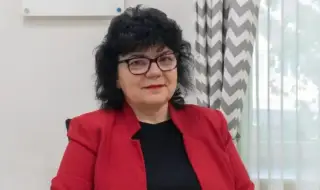
“Change does not happen alone!“ This is the motto of the Annual Report of the “For Our Children“ Foundation for 2025. 4,076 children, parents and specialists received support last year. Over 22,000 activities, thousands of human stories and one mission - no child should be left alone. About the great challenges in caring for children… Mariana Taseva, Executive Director of the “For Our Children“ Foundation, speaks to FACT.
- Ms. Taseva, the foundation has supported over 4,000 children, parents and specialists in 2025, but at the same time time you talk about serious deficits in the system. Where does the state continue to lag the most in supporting children and families?
- The state continues to lag behind in its policies towards children and families in several key areas. First of all, Bulgaria still does not have an active national strategy for children that sets a clear vision and long-term priorities. There is also a lack of sufficient strategic focus on early childhood development and, more specifically, on early childhood intervention - an area in which timely support is crucial for the future of every child.
Another serious problem is the insufficient interaction between the social, educational and health systems. Although cooperation between these three sectors is established as a principle, in practice it still does not function effectively.
There also continue to be serious differences in access to social services, with many families remaining without the necessary support outside large settlements.
A more sustainable policy for the development of foster care as a complex social service in the community, with appropriate public recognition, adequate funding and a clear status. It is also important to restore and develop patronage care, as well as to create universal services to support parenting.
Although the state reports successes in the deinstitutionalization process, it is not yet complete. Instead of observing its final phase, in recent years there have been signs of slowing down. There are still specialized institutions for children that have not been transformed, and the reform of family-type accommodation centers for both children and the elderly remains incomplete.
- You like to say that behind every statistic there is a human story. Which story from 2025 shook you the most and why?
- It would be difficult for me to name just one story, because each of them carries its own weight and leaves a mark. I am especially impressed by the moments in which we see the real result of the long-term efforts of specialists and parents. Such was the case with a child from Our day center “Development“, which after two years of intensive therapy took its first independent steps and began to communicate and play with other children.
I was also deeply moved by the story of a child who, after a stay in a Family-type Accommodation Center, was able to return to his biological father. The child was placed outside the family due to a high risk for his health, related to lack of housing and serious neglect. After long-term work and support, a solution was found that allowed him to live in a family environment again.
- Child poverty is still cited as one of the main risk factors. Is poverty the most common cause of family crises or are there other problems behind it - violence, addictions, lack of a supportive environment?
- Poverty is often the root of many other problems. When a family lives for a long time in deprivation and insecurity, it faces numerous challenges. Parents fall into a dead end, and the risk of abandonment or neglect of children is increasing.
Added to this are health problems, addictions, social isolation and a lack of a supportive environment. All of these factors can lead to violence, abuse and the reproduction of negative patterns of behavior between generations.
The good news is that there are solutions for each of these challenges. Poverty can be overcome through employment and social support, addictions - through treatment and rehabilitation, and isolation - through inclusion in the community and building social connections.
- Why are we still talking about stories of children who have experienced violence, neglect and abandonment? Are such cases increasing in Bulgaria, or are institutions starting to recognize them better?
- Not only institutions, but also society as a whole is beginning to better recognize the different forms of violence. This is an important positive change. More and more people are realizing that violence is not only physical, but can also be emotional, psychological or related to neglecting the basic needs of the child. However, attitudes such as "a slap is not violence" or "this is a family matter" are still common. This is why it is important to continue to speak openly on the subject and to be intolerant of any form of violence.
Experienced violence in childhood often leaves deep traces and can lead to the reproduction of the same patterns in the future. Neglect is also a form of violence - when a child is deprived of sufficient food, shelter, medical care, education or opportunities for socialization. Unfortunately, we still encounter similar cases in modern Bulgaria today.
- The Foundation has been developing foster care for years. Is it sufficiently developed today and why are there still children who spend a long time without a stable family environment?
- Foster care is one of the most important services for the protection of children at risk. After relatives and friends, it is foster families that provide an environment that is closest to the natural family environment and enables children to build healthy models of relationships.
By its very nature, foster care should be temporary - until the best long-term solution for the child is found, be it return to the biological family or adoption. A prolonged stay in a foster family is rarely in the child's interest, because it postpones the permanent solution to his life situation. The state needs to develop foster care not only as a social service, but also as a profession. The specialization of foster families in caring for babies, young children and children with special needs is particularly important.
- The campaign “Profession Human“ focuses on social workers, psychologists and frontline specialists. Why do these professions continue to be among the most undervalued in society?
- There is still insufficient public understanding of the importance of professions in the social sphere and their role in the development of society. The work of these specialists does not produce immediate results. Its effect is often visible years later, when the children they have worked with have become active and independent adults.
The added value of this work is difficult to measure, but it is enormous. At the same time, we see positive changes, including on the part of business, which is increasingly aware of the importance of investing in people and their development.
Technologies and artificial intelligence can facilitate processes and replace some of the routine activities, but they cannot replace human empathy, support and direct communication. That is why I believe that social professions will yet take their rightful place among the most respected professions in society.
- Early childhood is not yet a national priority. What is the cost to society when investments in the first years of a child's life are lacking?
- Early childhood is the most important period in human development. It is then that the foundations of future physical, emotional and social development are laid. Many difficulties and delays can be successfully overcome if they are recognized and addressed in time.
When the necessary support is lacking in the first years, the consequences are often carried over to the next stages of life and sometimes become difficult to reverse. Therefore, investments in early childhood development are investments in the future of society.
Timely prevention and early intervention enable more children to develop their potential and become active and socially engaged citizens. It is much more sensible for society to invest today, instead of paying a much higher price tomorrow.
- In 2025, the foundation trained over 1,500 specialists and reached new communities. What does practice show - are there enough trained personnel in the social system, or are we already talking about a personnel crisis?
- The “For Our Children” Foundation has always shared its experience and expertise with people who wish to develop professionally. The social sphere needs clear professional standards, career paths and development opportunities.
It is difficult to talk about sustainable quality of services if there are not enough qualified specialists and if the profession does not offer the necessary prestige, decent remuneration and opportunities for professional growth.
However, the staffing crisis is not just a problem for the social sector. It is a challenge for almost all areas of the economy and society. Every employer must offer good working conditions, flexibility, social benefits and a healthy working environment if they want to attract and retain quality specialists.
- If you now have the opportunity to propose three urgent national measures to protect children at risk, what would they be and why?
- First of all, I would put the adoption of a national strategy for children, which would unite the efforts of institutions around clear goals and priorities.
The second key measure is placing early childhood development and early childhood intervention among the national priorities. It is there that investments bring the highest return for both children and society.
The third measure is real, not just formal, cooperation between the social, educational and health systems. Only through coordinated actions can we guarantee timely and effective support for children and families. To this I would add the provision of accessible social services in every settlement, the sustainable development of foster care, the restoration of patronage care and the expansion of parenting support services.