The speculation in the period before and after Bulgaria's entry into the eurozone, the size of the budget deficit in 2025 and the preparation of the 2026 Budget are the three hot financial topics of the new political season, which started in September.
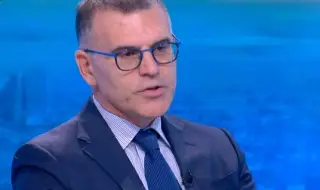
This was commented on by the Chairman of the Fiscal Council and former Minister of Finance Simeon Dyankov in an interview with BGNES.
The speculation during our entry into the eurozone
„The government and parliament adopted several laws and a number of measures for transparency in the pricing of retail chains. A lot of political energy is focused there and this process will continue in the coming months and early 2026,” said Dyankov, who did not rule out the emergence of speculation in some sectors and in some individual products, but hopes that the government of Prime Minister Rosen Zhelyazkov will deal with this.
„The main topic is not speculation, but the general increase in inflation or the so-called creeping inflation that has been occurring in Bulgaria in the last few months. This creeping inflation has nothing to do with speculation and entry into the eurozone, but with the sharp increase in administrative costs in individual ministries, such as the Ministry of Interior and the Ministry of Defense. Overall, administrative expenses will go to 46% in 2025, and the normal in Bulgaria for the last 10 years is 36-37%“, explained Dyankov and added that it is very important for citizens to distinguish between speculation and inflation.
What budget deficit will we end up with in 2025?
Financial statistics from the last 10-15 years show that by August the budget is always in surplus, not in deficit.
“This is because personal taxes enter the budget, and before that, VAT also enters. Summer is also strong in terms of tax revenues due to tourism and agriculture“, Dyankov pointed out.
This year, however, we already have a serious deficit in June, and the winter months are ahead, when larger expenses are made due to infrastructure and social payments.
“I expect the opposition and analysts to raise the issue of the budget deficit in September. How real is it and whether the government will take measures to curb it“, Dyankov said.
He is skeptical in this direction, because we are talking about a broad coalition, and it is generally difficult for it to make spending cuts. He is categorical that this issue should be raised in September, because in October, when the budget for next year will be adopted, it will be too late. “There is no way that any strict decisions can be made in two months“.
The 2026 Budget.
“The fact that we have a higher deficit in 2025, that we were on the brink in 2024, and that President Donald Trump actually helped us enter the eurozone and that some of our deficit spending is considered extraordinary, is actually part of the fiscal policy that has been in place for 5 years. In fact, since 2021, during the first visit of Assen Vassilev to the Ministry of Finance, it began with the fact that a 3% deficit is normal, not a balanced budget that the state should strive for. When you have a 3% deficit, you can easily make up for it with some extraordinary defense spending,“ explained Dyankov.
He fears that drawing up the 2026 budget will on the one hand be “a huge circus“ because of the behavior of some opposition parties, who will use it for all sorts of other things, but also a very “serious issue for Bulgaria, because for 5 years now we have been accumulating a serious deficit“. Its reduction in one year is impossible even for such a serious finance minister as Temenuzhka Petkova.
Thus, the question of where to find additional revenue comes to the agenda. In this regard, Simeon Dyankov believes that increasing some taxes in the 2026 Budget is inevitable. “Of course, the government will immediately say that it does not want to raise taxes under any circumstances. But they first have to come out with the truth about the deficit, which remained in the background due to entering the eurozone. And the other thing is defense spending. Over the next decade, we need to increase it from today's 2% to 5%, which makes 10 billion leva extra every year for defense“, he said, adding that these costs must be covered by some additional revenues.
Where will the revenues come from?
According to Dyankov, the government will try not to increase taxes, but to increase collection, as it did in Budget 2025. However, he pointed out that it included “absolutely unrealistic collection projections“. For example, VAT to increase by 32%.
“The data we have as of June show that VAT is indeed increasing. "This is good, but it increases by 14% on average by the middle of the year. The idea that it will double in terms of collection, there is no way that will happen," the chairman of the Fiscal Council is categorical.
He also drew attention to the fact that other taxes, such as corporate tax, are being collected quite poorly this year. “The rosy forecast for 2025 – will certainly not cover the revenues, and next year we will need even more money“, warned Dyankov.
He is categorical that the proposed increase in social security contributions for businesses and employees in 2026 and 2027 by a total of 3% is “the worst idea” that can be come up with. “It directly hits businesses and working Bulgarians and has the most distorting attitude towards the economy. In recent months, the Fiscal Council has come up with several analyses, in which it has emphasized how bad this idea is and that if the government needs more money, it should find it somewhere else“, said Dyankov.
The easiest option to get out of the situation is to raise VAT to 22%, because this tax is the easiest to collect.
“It comes from consumption, not from production, so it is a much less distorting tax than the social security taxes we talked about. With it, the collection rate is over 90% and it is easier to collect“, specified the former finance minister. Dyankov is skeptical that the government will do it, because such a drastic decision would hardly find support in the broad coalition governing the country.
For this reason, local taxes and fees must be reviewed. This has been done several times, most recently during the 2011 crisis.
The former finance minister refuted claims that the euro is to blame for high inflation. He gave the example of Croatia's entry in 2023. There, the price increase was not due to the introduction of the single currency, but because of the war in Ukraine and the sharp increase in energy prices.
The latest official data for July show that inflation in Bulgaria is over 5%. According to Djankov, this is bad news that will be used by critics, who will immediately blame the euro.
„In reality, the most important reason for this high inflation is the large additional costs for the state administration, the Ministry of Internal Affairs, and the Ministry of Defense. With this extra money, people spend more and, accordingly, overall inflation rises. That is, "the reason is not our entry into the eurozone, but because of the fiscal policy in Budget 2025," explained the Chairman of the Fiscal Council.
Simeon Dyankov is categorical that despite all the problems he mentions, Bulgaria stands very well on the economic map of Southeast Europe. Our country has made serious progress over the last 20 years and has avoided many of the crises that our neighbors have faced.