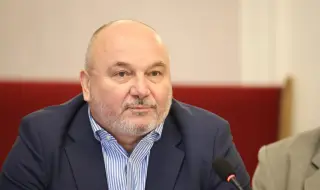
In finance, things are not artistic creations, they are always subject to some iron logic. Then, when you make and form an anticipatory growth of expenditures in the budget, then you get two options: Either you finance things by issuing more debt, or after a certain period you simply raise taxes. He said this in the program "Bulgaria, Europe and the World in Focus" on Radio "Focus" former Deputy Minister of Finance and member of the Fiscal Council Lyubomir Datsov.
The budget is a consequence of political decisions, it is not arbitrary, he explained, and according to him, if you take into account macroeconomic policy, you try to influence these processes, then you cannot distribute funds thoughtlessly, and this is not liked by a large part of Bulgarian politicians.
The state budget, in his opinion, goes beyond the limits of reason. On the one hand, it foresees revenues that are unlikely to be fulfilled, and this is a significant part of the problem, explained the economist, while at the same time, according to him, there is a generous unreasonable fiscal policy in times when there is no need to do such a thing.
"When you disrupt this balance for a fairly long period, then a moment comes when either you are forced to raise taxes, or the system collapses. breaks, as happened in Romania. If we continue with this idea for the budget, and it is widely supported, there will come a time when the rationalism of the economy will intervene and what happened in Romania will happen. Then whoever is in power will have to think about it, because they will have to raise taxes, cut expenses and all things that are absolutely unpopular“, said Lyubomir Datsov.
According to him, if the government is sincere in not supporting what has been imposed for the last 4 years as policies, it will have to propose an alternative policy when forming the new budget for 2026 and has the chance to change things.
"If it does not do so, it will be a budget of the old type, i.e. moving by the inertia of what has already gained momentum, with all the problems that it brings. You can't expect, if you do the same thing for a long enough time, to have a different result than what you get,“ said the expert and pointed out that political will is needed to eliminate automatic formulas for raising incomes and reducing the deficit to around 2%.
It is not a good idea to touch any taxes outside the framework of improving collection and higher efficiency, the economist also pointed out.
"The expenditure side needs to be optimized. Very often we emphasize the deficit, but a large part of the problem of the budget is what it spends money on, what are the mechanisms inside, what services it provides and what quality. There are a lot of things to touch on inside the budget, there is a problem with the model, with the structure, with human resources, too many people, etc.
We are not even talking about the quality and efficiency of the systems that exist, and this is something that has been unfinished for many years. "So, if there is courage and desire, reforms in every sphere are needed in the public sector, and not only there," added former Deputy Minister of Finance and member of the Fiscal Council Lyubomir Datsov.