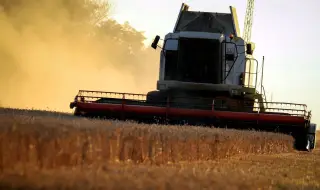
Intercompany indebtedness and bankruptcies threaten grain producers in Dobrudja due to the extremely low yields this year. The sunflower harvest confirmed the pessimistic forecasts - the harvest is up to 50% smaller than last year. The situation with corn is even worse, and in many places the harvest will be zero.
"Last year we harvested about 220-250 kilograms per decare, and this year from one harvested field we have obtained 168 kg per decare. I dare not say about the corn, because we have not yet started harvesting it. But in my opinion, the yield will be somewhere around 100-150 kg," said Iliya Iliev, chairman of the Regional Union of Agricultural Cooperatives "Dobrudzha", quoted by NOVA.
The problems are deepening due to a drop in the purchase price of wheat, which cannot compensate for losses from other crops. At the same time, banks are increasing their requirements for lending to the sector, which further worsens the financial situation of farmers.
For the fourth consecutive year, drought and high temperatures in Dobrudzha are causing irreparable damage to the harvest.
"The initial data are generally what we expected - lower yields from 2024. Dobrudja is officially harvesting 165 kg/hectare at this moment, according to statistics," emphasized Radostina Zhekova, chairwoman of the Dobrudja Union of Grain Producers and member of the Board of the National Agricultural Council.
The situation with corn is even more difficult and many areas will be declared bankrupt. "The Dobrudja Union is quite large - there are over 160 companies in it. What is currently being observed generally makes corn sowing meaningless from now on," says Zhekova.
Agricultural producers in the region are looking for alternative crops to overcome the crisis.
"Dobrudja will turn yellow. There is mass sowing of rapeseed at the moment. The areas with rapeseed have increased considerably. What we are talking about with our colleagues is that they will focus on autumn crops," explained Zhekova.
"We will focus on rapeseed. We have already planted half of the planned areas. But so far we have not had any rain in our region. We have two liters of rain in five months," said Iliev.
The trade in wheat, which is the most widely grown grain, is stagnant. Yields are 20% lower than in 2024.
At the same time, production costs are growing - fertilizer prices continue to rise, seeds are twice as expensive, and plant protection products have become more expensive by 35%. Even in cooperatives with good results, such as the one in the village of Senokos, where they harvested 700 kg of wheat per decare, the financial accounts are not coming out.
A large part of the grain producers have not yet covered the losses from last year. Neither the wheat nor the state subsidy of 20 leva per decare can compensate for the damage. A drop in rents is also expected, which according to experts in some places will be between 30 and 60 leva per decare.