The wealth of the Russian oligarchs has not only not decreased because of the war, but has increased, fueled by "blood" money. And if the authorities now expect generosity from them, there is nothing surprising in this, writes Ivan Preobrazhensky.
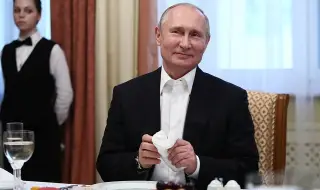
At a meeting with representatives of the Russian Union of Industrialists and Entrepreneurs - a kind of "trade union of the oligarchs" - Vladimir Putin asked representatives of the largest Russian businesses to provide funds to continue the war. At the same time, he said that its imminent end cannot be expected. Putin's press secretary Dmitry Peskov denied this report, but admitted that many businessmen "consider it their duty" to give the state large sums of money, and the president approves of their desire. Which is not surprising - it would be strange if Putin started refusing money.
Worms with money
According to the Bloomberg Billionaires Index, last year the total fortune of the twenty richest Russian businessmen increased by $ 32.8 billion. The list includes approximately the same people with whom Putin met.
For example, the ranking mentions the senator from Dagestan, businessman Suleiman Kerimov - the winner of the clash with Ramzan Kadyrov, from whom he managed to win back the largest Russian online store Wildberries. According to Bloomberg's calculations, in 2025 this businessman became richer by 3.35 billion dollars and currently his capital amounts to 10.4 billion. From then on, it is not surprising that Kerimov was the first to offer to help the Russian army. Perhaps Peskov had him in mind.
In addition, Putin's press secretary recalled that in the 1990s the state helped many of those present in the hall to start their businesses, in other words, it ceded them Soviet property at a bargain price. From there, the hint of a possible nationalization of their assets in case of their unwillingness to cooperate becomes obvious.
Business profited well from the war
It must be admitted that the Kremlin for a long time hardly bothered business, despite the growing financial and economic problems caused by the war. At first, the authorities were grateful to the businessmen for not fleeing, not renouncing their citizenship, and not condemning the Russian aggression against Ukraine.
Then they did not lay a hand on the capital returned from abroad to Russia in 2022, they even assured that this money would be there in complete safety. Nevertheless, business suffered tangible losses from the sanctions. And the authorities were understanding of the desire of the so-called oligarchs to receive compensation (so-called because, unlike real ones, Russian oligarchs cannot seriously influence the government). Big business was allowed to profit well from the war.
Then confiscations and nationalizations began. However, the "Union of Oligarchs" was not affected. Of course, additional taxes were periodically imposed on its business - in fact, taxes for waging the war. But this was done purposefully, observing minimal decency - the deductions were framed as indirect taxes.
Nevertheless, the Russian people are already close to exhausting their resources. The latest tax changes are ruining both medium and small businesses. Oil no longer brings in enough money, even considering the great fortune for the Kremlin - the war in Iran, which led to a shortage and increase in the price of energy. That is why the authorities - more precisely Vladimir Putin himself - have turned to big business and are directly or indirectly demanding that it open its purse strings.
Investments without guarantees
What is being offered to Russian business in exchange for voluntary and compulsory contributions to the war? Nothing. Putin has said that he intends to continue fighting - this is not peace in exchange for investments. He mentioned the borders of the Donetsk region, but few believe that he will stop there.
Will there be more such "taxes", given that even Moscow is already cutting its budget spending? The authorities are not making any promises that there will be none. Business, which over the decades has grown together with the state, must understand that whoever drinks must pay. And no one asks the people what they think about the innkeeper.
This text expresses the author's opinion and may not coincide with the positions of the Bulgarian editorial office and the State Gazette as a whole.