Italian Prime Minister Giorgia Meloni expressed satisfaction with the summit in Brussels, although some of the goals she had set were not achieved, notes "RAI News" and ANSA, quoted by BTA.
Meloni, along with 10 other countries, including Bulgaria, requested in a joint letter to EU leaders to review the European emissions trading scheme, but was refused, commented "RAI News".
In addition, Meloni tried to assist in the dispute between Budapest and Brussels over the unblocking of the 90 billion euro loan for Ukraine, which Hungarian Prime Minister Viktor Orban vetoed, even though he had agreed to it in principle at the European Council in December. Footage from before the joint photo of EU leaders yesterday showed Meloni talking to Orban. At the briefing after the summit, Meloni said that she had always said that the loan issue could be resolved, but that flexibility was needed to make it happen. She rejected the claims of the publication "Politico" that at the summit she had said that she understood the reasons why Hungary blocked the loan for Ukraine. Recently, in a speech to Italian deputies, Meloni stressed that any disunity in the EU is a gift to Russia.
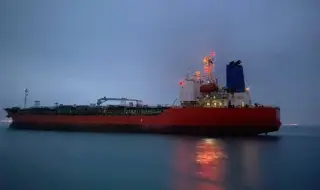
At her briefing last night, Meloni also clarified why she had joined several countries that had expressed readiness to secure traffic through the Strait of Hormuz, after a few days earlier she herself had expressed reservations about participating in such a mission. US President Donald Trump had invited other countries to help with the strait, but after receiving a refusal from some of them, he said that he did not need such help.
Yesterday, however, the office of British Prime Minister Keir Starmer published a statement saying that Britain, Italy, France, Germany, the Netherlands and Japan expressed their readiness to contribute "to appropriate efforts to ensure safe passage through the strait". Canada subsequently joined this statement, ANSA added.
"We condemn in the strongest terms Iran's recent attacks on unarmed merchant ships in the Gulf, attacks on civilian infrastructure, including oil and gas facilities, as well as the de facto closure of the Strait of Hormuz by Iranian forces. We express our deep concern about the escalating conflict. We call on Iran to immediately cease its threats, mine-laying, drone and missile attacks and other attempts to block the Strait of Hormuz to commercial shipping, and to comply with UN Security Council Resolution 2817. Freedom of navigation is a fundamental principle of international law, including under the UN Convention on the Law of the Sea. The consequences of Iran’s actions will be felt by people in all parts of the world, especially the most vulnerable. In line with UN Security Council Resolution 2817, we emphasize that such interference in international shipping and disruption of global energy supply chains constitute a threat to international peace and security. In this regard, we call for an immediate comprehensive moratorium on attacks on civilian infrastructure, including oil and gas facilities. We express our readiness to contribute to appropriate efforts to ensure safe passage through the Strait. We welcome the commitment of States participating in preparedness planning. We welcome the decision of the International Energy Agency to allow a coordinated release of strategic oil reserves. We will take other steps to stabilize energy markets, including by working with certain producing countries to increase production. We will also work to provide support to the most affected countries, including through the United Nations and international financial institutions. Maritime security and freedom of navigation benefit all countries. We call on all countries to respect international law and uphold the fundamental principles of international prosperity and security,“ said the joint statement published on the website of "Downing Street 10" and quoted by world agencies.
Great Britain, Italy, Germany, France and Japan were among the countries that refused on Monday to respond to Trump's call to assist in the security of the Strait of Hormuz at this time, Italian media recall.
Meloni said last night that there was no contradiction in Italy's position. "There is no military mission to force the blockade of the Strait of Hormuz", Meloni said, quoted by ANSA. Her accession to the document distributed by Starmer's office does not mean that Italy is grabbing weapons and going to war, the prime minister explained. According to Meloni, it confirms the opinion of Italy and Europe that measures for the security of shipping in the Strait of Hormuz can only be taken after there is a ceasefire there, and this mission must be under the umbrella of the UN. A similar opinion was expressed yesterday by Italian Defense Minister Guido Crosetto.
"Nobody is thinking about an Italian mission to break the blockade of the strait", Meloni said last night. "The question we are asking ourselves is how - when the necessary conditions are in place, but sensibly in a post-conflict phase - we can offer a contribution, coordinated with other countries, to protect freedom of navigation", she added, quoted by ANSA.
The day before the EU summit, Meloni also held a working dinner with German leader Friedrich Merz at the "Amigo" hotel in Brussels, during which they discussed current foreign policy issues, ANSA reported. Shortly before this dinner, Merz spoke there with French leader Emmanuel Macron, who, however, did not wait for Meloni's arrival, the agency added.
Yesterday, Italy and Denmark called on the EU to prepare for a sharp increase in migrant waves against the backdrop of the escalating war in the Middle East, DPA and ANSA reported. "We cannot risk a repeat of the refugee and migrant flows to the EU that we saw in 2015-2016", wrote Meloni and Danish Prime Minister Mette Frederiksen in a joint letter. The letter was addressed to the heads of the European Commission and the European Council - Ursula von der Leyen and Antonio Costa, and was sent on the eve of the EU summit. Frederiksen and Meloni call on the EC to explore mechanisms that could serve as an "emergency brake" in the event of large migrant waves. According to the two leaders, more help must be provided on the ground to prevent mass migration flows to Europe. "We can help more people better and more effectively by providing support directly in their regions," wrote the leaders of Italy and Denmark.