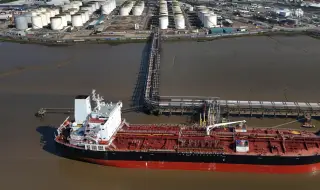
According to shipping services Kpler, Lloyd's List Intelligence and Signal Ocean, only one oil tanker and five bulk carriers have passed through the Strait of Hormuz in the past 24 hours, Reuters reported.
Before the conflict began on February 28, an average of about 140 ships passed through the strait per day. Thus, even after the ceasefire agreement between the US and Iran, traffic remains minimal.
Sultan al-Jaber, the head of ADNOC, the UAE's state oil company, said on Thursday that the strait remains closed and access is subject to conditions controlled by Iran.
“This is not freedom of navigation, but a tool of pressure“, he stressed.
Meanwhile, Tehran intends to limit the passage to no more than 15 ships per day, thus effectively maintaining control over shipping.
Against this backdrop, NATO Secretary-General Mark Rutte informed allies on Thursday that US President Donald Trump expects concrete commitments to participate in ensuring the security of shipping in the strait in the coming days, reports the ag. Reuters.
The Strait of Hormuz, roughly 34 kilometers wide, connects the Persian Gulf to the Indian Ocean and provides transit for about a fifth of the world's oil supplies. Its effective closure since late February has been a key factor in the rise in global energy prices.
Meanwhile, Iran's Islamic Revolutionary Guard Corps has published a map of alternative shipping routes in the Strait of Hormuz, designed to help transiting ships avoid sea mines, according to the Iranian news agency ISNA.
The IRGC Navy said ships must coordinate their passage with the Iranian side to avoid sea mines, which are marked on the map as a "danger zone". Previously, tankers passed closer to the Omani coast in the southern part of the strait, but are now advised to use a more northern route, closer to the Iranian coast.
Now, all ships planning to pass through the Strait of Hormuz must follow two alternative routes proposed by Tehran to avoid potential mine strikes.