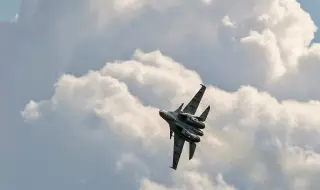
Russia is delaying deliveries of Su-35 fighters to its Air Force due to large export orders from Iran, MWM writes.
The Russian Aerospace Forces are expected to receive Su-35 fighters at a significantly slower pace in 2026 and 2027, as the production capacity of the Komsomolsk-on-Amur aircraft factory is focused on meeting orders from Tehran.
The factory has reportedly completed production of 20 fighters for the Iranian Air Force, with another 28 ordered, giving Iran a total fleet of 48 Su-35.
Russian industry was capable of producing 14 fighters per year before 2022, although United Aircraft Corporation CEO Vadim Badekha confirmed in May 2025 that work had begun to increase production.
As part of the expansion of production at the Komsomolsk-on-Amur Aviation Plant, the facility has introduced additional shifts, invested in new production equipment, and increased its workforce. Russian officials have repeatedly cited the growing fighter production as evidence of the country's ability to maintain both domestic orders and export commitments, despite the West's ongoing efforts to wage economic warfare.
Before 2025, the Su-35 looked like a failure in export markets, mainly for political reasons, including intense Western pressure on potential customers, but also due to a number of shortcomings in the aircraft's characteristics. The confirmation of the Iranian orders in 2025, however, marks a turning point for the program.
However, the delay in the deliveries of Su-35s to Russian front-line units is not expected to have a significant impact on the combat capabilities of the Aerospace Forces, as the armed forces are currently receiving Su-30SM2, Su-34 and Su-57 fighters from new production lines, and possibly MiG-31I fighters that are being repaired from storage. Domestic orders for the Su-35 are already far exceeding the program's projections, with the program initially expected to see 100 fighters produced for domestic use and another 100 for export. New orders in 2025 confirmed export orders have increased from 24 to 96, meeting the program's goal, while domestic orders already exceed 150 fighters.