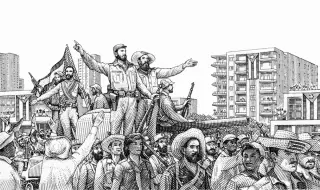
On January 1, 1959, the revolution in Cuba was victorious. It began on July 26, 1953, when a group of rebels under the command of Fidel Castro stormed the “Moncada“ barracks in Santiago de Cuba. The attack was unsuccessful, most of the fighters were killed or arrested. But this uprising marked the beginning of a large-scale guerrilla war that overthrew the government of Fulgencio Batista. At the end of 1958, Batista and his supporters left Cuba, on January 1, 1959, the rebels entered Santiago, and on January 2 – in Havana.
Cuba began to build socialism, and its leader Fidel Castro entered the history of the 20th century as one of the most prominent figures of the past century.
In 2006, the ailing Fidel handed over power to his brother Raul. Raul Castro undertook a series of reforms that expanded Cuba's private sector to nearly 600,000 people and allowed citizens more freedom to travel and greater access to information. He failed to deal with the unproductive and heavily subsidized state-owned enterprises, which, together with the Soviet-style bureaucracy, employ three out of every four Cubans.
In 2018, Raul Castro handed over power to Miguel Diaz-Canel. In 2019, Cubans must support the new constitution of the Island of Liberty in a referendum.6