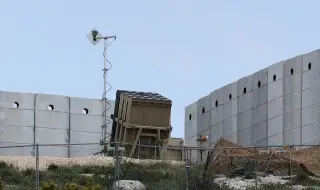
The Israeli army announced that during the 12-day missile conflict with Iran, Tehran launched around 530 ballistic missiles, most of which were intercepted by Israeli and American air defenses. The data was also confirmed by sources in the Israeli daily Haaretz, as well as by Reuters and the Financial Times and summarized by De Re Militari.
According to the army report, only 36 missiles reached populated areas, including Tel Aviv, Haifa, Beer Sheva, Rishon Lezion, Rehovot and Ramat Gan. Some of them carried heavy warheads with explosives weighing hundreds of kilograms, and at least three missiles were equipped with cluster warheads, hitting areas such as Holon, Beer Sheva and Bat Yam.
To protect its airspace, Israel used the Arrow 2 and Arrow 3 anti-missile systems, and the United States has activated its THAAD system, located in southern Israel since October 2024. The total number of interceptors used is about 200 units, with a value approaching $ 1.5 billion, Business Insider reports.
According to information from the Financial Times, the defense effectiveness was about 86-90%, with a large part of the missiles being intercepted while still over open territory or falling in uninhabited areas. However, at least 28 Israeli casualties were reported, while Iranian losses exceeded 900, including military commanders and nuclear scientists.
The Israeli military reported that 30 of the Iranian missiles were equipped with warheads carrying massive explosive charges designed to cause significant destruction. The central and southern parts of the country, including Tel Aviv-Yafo and Beersheba, were most affected.
According to Haaretz, the military has not published complete data on interception strategies or the allocation of resources during the conflict. At the same time, sources from the Washington Post indicated that joint work between Israel and the United States on air defense systems has "set a new standard for ballistic defense".