


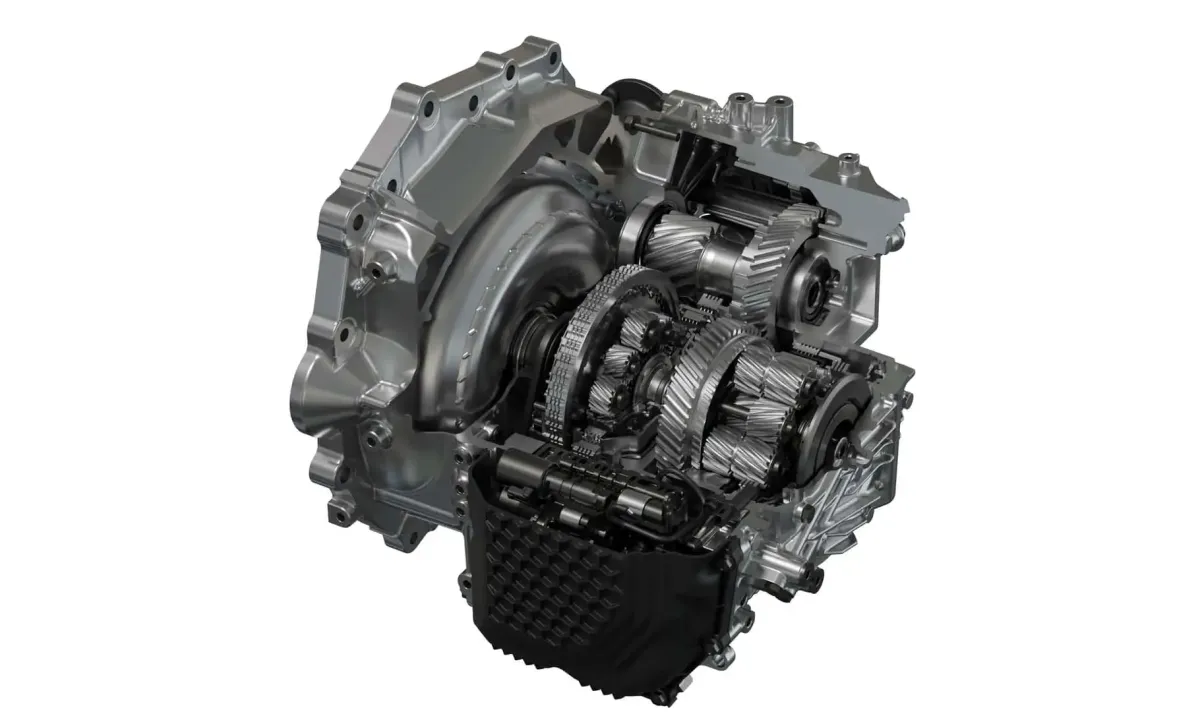

A few decades ago, four- and five-speed automatic transmissions were the usual solution. Today, more and more cars use eight-, nine- and even ten-speed transmissions. The reason is not just the pursuit of better acceleration, but a combination of fuel efficiency, engine characteristics, comfort, cost and the vehicle’s intended purpose.
An internal combustion engine operates most efficiently within a specific rev range. The transmission’s job is to keep it as close as possible to that range when starting off, accelerating and cruising at a constant speed.
Low gears provide the necessary mechanical advantage when starting off, while higher gears allow lower engine speeds when driving on the highway. This can reduce fuel consumption, especially on long journeys. An eight-speed transmission offers more choices than an older four- or five-speed design, while the smaller gaps between adjacent gears limit sharp drops in engine speed during acceleration.
However, the number of gears alone does not determine fuel consumption. Other factors also include the engine’s design, the vehicle’s weight, its aerodynamics and the transmission’s settings.
An engine does not produce the same power and torque at all engine speeds. When an automatic transmission has more ratios available, it can make smaller adjustments during acceleration and keep the engine in its useful operating range for longer.
This explains why eight- and ten-speed transmissions are used in a number of more performance-oriented vehicles. Short lower gears aid acceleration, while tall higher gears are suitable for relaxed cruising. However, ten gears do not automatically mean a faster car. Engine power, shift speed, weight and traction are also decisive factors.
More gears require more complex engineering, electronic control and manufacturing. Additional components are needed, installation-space requirements increase, and the potential benefits do not always justify the higher costs in small and affordable cars.
Manufacturers match the transmission to the specific engine and the vehicle’s intended purpose. Pickups and large SUV models can benefit from more gears when towing and driving on the highway, while a vehicle designed mainly for urban conditions may not have the same need. Other important factors include the vehicle’s size, weight, architecture, and manufacturing and maintenance costs.
More gears do not guarantee smoother shifting. If the software is not properly calibrated, the transmission may change ratios too often, hesitate during acceleration or select an inappropriate gear. This is most noticeable when climbing, overtaking and driving in heavy traffic.