


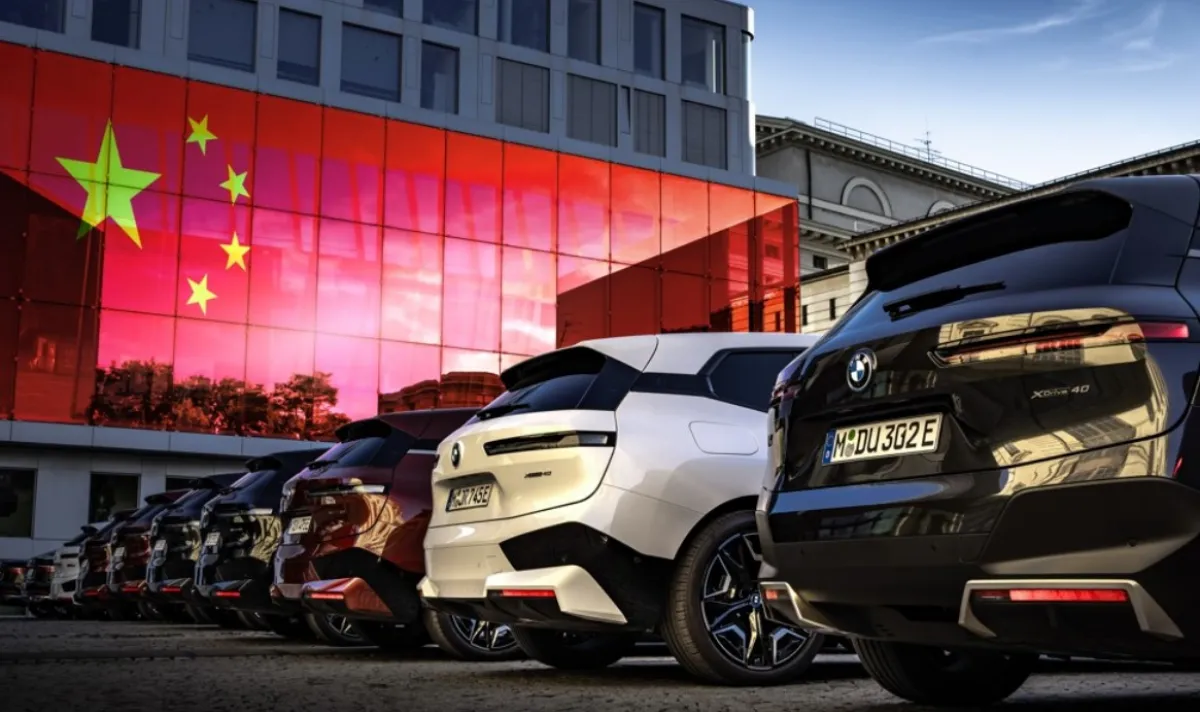

Germany is facing a major change in its economic relations with China. While for decades German companies profited from exporting cars, machinery and industrial equipment to the Chinese market, today increasing imports from China and increasing competition are questioning the advantages of this model. This is shown by data and analyses published by Deutsche Welle.
In the first five months of 2026, German exports to China fell by 14.5% year-on-year to 29.6 billion euros. Over the same period, imports from China grew by 6.2% to 72.4 billion euros. Thus, Germany's trade deficit with the Asian country reached 42.8 billion euros compared to 33.5 billion euros a year earlier.
Two of the traditionally strong German industries - automotive and mechanical engineering - were most seriously affected. Exports of cars and automotive parts to China decreased by 26.1%, and those of machinery - by 17.5% during the period under review. Already in 2025, the value of German automotive exports to the Chinese market fell by 33% to 13.6 billion euros.
The reasons lie both in the weakened domestic demand in China and in the growing competitiveness of local manufacturers. Chinese companies are now offering their own technology solutions in sectors where German industry has long held leading positions.
At the same time, the German economy remains heavily dependent on Chinese supplies. In the first five months of 2026, approximately 81.8% of notebook computers, 66.3% of smartphones and 64.1% of lithium-ion batteries imported into Germany were of Chinese origin, measured by value. For photovoltaic cells, the share reaches 86.1%.
The change in trade relations is intensifying the debate about the need for a new German strategy towards Beijing. The main challenge for Berlin is to maintain access for German companies to the Chinese market while simultaneously reducing dependence on strategic supplies and protecting the competitiveness of its own industry.
At the European level, concerns about the trade imbalance are also growing. In 2025, the European Union imported 559.4 billion euros worth of Chinese goods, while its exports to China amounted to 199.6 billion euros. This means a deficit of almost 360 billion euros.
The European Commission sees Chinese competition as a serious challenge for industry, especially in electric vehicles, batteries and renewable energy technologies. China, for its part, disputes accusations of unfair competition and insists on maintaining open trade relations.
For Germany, the situation is particularly complicated, as China remains an important trading partner and production base for German companies. Therefore, the change in strategy does not necessarily mean limiting economic ties, but seeking a new balance between trade benefits, industrial competitiveness and security of supply.