


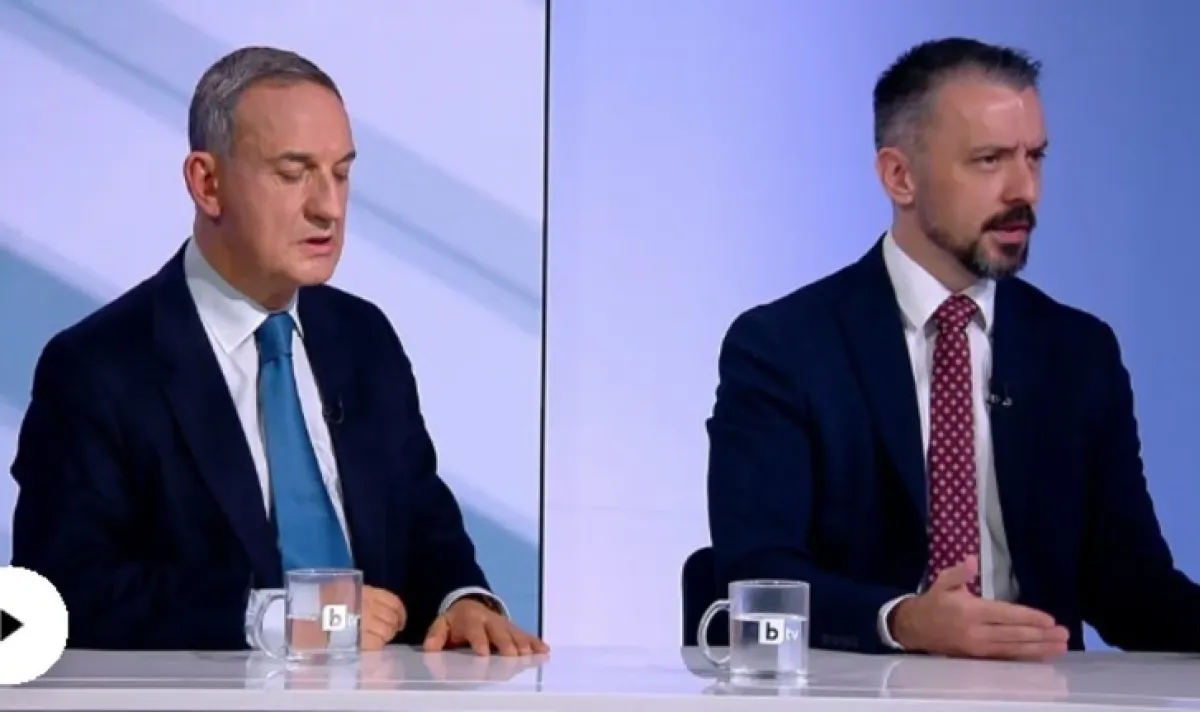

Bulgaria has effectively not signed the European declaration on Ukraine if it does not accept the fundamental principles set out in its preamble. Diplomat Stefan Tafrov said this on the bTV programme “Face to Face”.
The conversation was prompted by Prime Minister Radev’s statement that the country had expressed reservations about the document’s preamble. According to Tafrov, the declaration itself does not reflect any such clarifications on the part of Bulgaria.
“In fact, we have not signed it, in my view, because when you do not agree with the fundamental principles on which a text is based, you have not signed it,” Tafrov commented.According to him, 26 European Union countries supported the declaration without reservations, while the total number of signatory countries is 39. Tafrov said that Bulgaria remains the only EU country that does not support the fundamental principles set out in the preamble.
Dispute over the constitutionality of the decision
The diplomat described the prime minister’s actions as unconstitutional. He referred to Article 24 of the Constitution, according to which Bulgaria’s foreign policy must be based on the principles of international law.
Tafrov defended the view that adherence to international law is key to finding a solution to the conflict in Ukraine. According to him, departing from these principles could lead to new chaos, more suffering and the encouragement of a policy of conquest.
Shkvarek: A different opinion does not automatically mean isolation
Political analyst Kristian Shkvarek took the opposite position. He said that Bulgaria’s disagreement with part of a European document should not automatically be viewed as isolation.
He questioned the effectiveness of European declarations during the past five years of the war in Ukraine. According to him, Europe cannot uphold its positions through principles and documents alone if it does not have the necessary economic and military strength.
Shkvarek criticised European policy in the areas of energy and industry and said that decarbonisation had weakened the continent’s production capacity. As an example, he cited shell production and the discrepancy between Europe’s economic potential and its actual manufacturing capabilities.
Tafrov objected that Europe has the necessary economic strength, but the dispute between the two demonstrated differences in their assessment of the role of European declarations, international law and Bulgaria’s place in the European Union’s common position on Ukraine.