


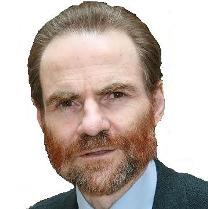
For the first time in four and a half years of war, it seems that Putin is really ready to talk seriously about peace in Ukraine. This is what British historian and political analyst Timothy Garton Ash wrote on his Substack profile.
On Saturday, the Russian president seemed to hint that the war in Ukraine "is coming to an end". Today, a Russian newspaper claims that "trying to interpret what he meant is like guessing". And will there be negotiations with Europe or not?
Maybe I could combine these two perspectives by emphasizing that I think the critical point here is that Moscow and Kiev have cooled off to the US-led peace process, but I think there is reason to believe that both sides would appreciate a European-led process.
I think that on the Ukrainian side they never really trusted Trump and they saw him as just a Russian agent trying to impose Moscow's plan on Ukraine. They were never going to accept that and they were just buying time in the negotiations with the US until the moment came when they were militarily self-sufficient so they could tell Trump to mind his own business. That moment came.
And even Moscow, I think, has lost patience with Trump and his ill-conceived and shoddy negotiation process. From Moscow’s perspective, there’s no point in forcing a bad deal on Ukraine if Trump can’t deliver on it, and promoting such a pro-Russian deal only unites Europe around Ukraine. In fact, that’s exactly what happened. I think Moscow is now even more distrustful of US intentions after the regime-toppling operations in Venezuela and Iran, against the backdrop of similar extreme scenarios in Syria and Iraq. And perhaps Moscow already thinks that Cuba and Moscow could be next.
So the US is now out of the negotiations, and I think that creates a window for Europe to step in. Putin hints at this by suggesting Schröder as a potential arbiter in the peace process, but that will never work. But I’ve heard Merkel mention it too.
The point is that Europe complained that it was being left out of the US-Russia peace talks in Ukraine, but now that the US is out, there’s a vacuum to fill. If Europe wants to influence the outcome of the Ukrainian conflict and the negotiation process, it needs to step up and start negotiations.
But why has Russia finally become interested in peace in Ukraine?
The irony is that many believed that the war in Iran would play to Russia’s advantage, raising oil and energy prices and providing Russia with a "cross-border" jailbreak pass, as there were many indications that the sanctions were finally starting to bear fruit in late 2025 and early 2026: the budget deficit was widening, the trade surplus was shrinking, and growth was slowing—the economy was in recession.
In fact, even accounting for the positive short-term oil price shock, the Russian government cut its 2026 real GDP growth forecast by almost a full percentage point, to just 0.4%. In reality, the economy is in recession, and I still expect negative growth for the full year.
The Iran war may have led to a short-term rise in oil and energy prices, but it also shattered OPEC: the UAE chose to leave the organization and promised to increase production. From Moscow’s perspective, this could signal a future price war in the oil market, with supply increasing in about a year, just as the current short-term higher oil prices are destroying demand due to the global economic slowdown. For Russia, this would be disastrous, as it could mean that a year from now, oil prices will be lower than they were at the start of the Iran war. And if Russia is still suffering from a one-third discount to the price of Urals due to sanctions, that could mean a price of $30-40 per barrel for Urals.
Meanwhile, if the prospect is for oil suppliers to fight for market share, Russia is in a dire situation, as the combination of sanctions and Ukrainian drone strikes means it has not even been able to meet its existing OPEC production quota.
Combined with years of underinvestment, Russia is unable to offset the drop in oil prices with increased production. Such a scenario with oil prices and supplies would mean a collapse of the Russian economy - remember the crisis of 1998.
In fact, I believe that this is exactly what Russian economists and Putin's advisers are telling him, hence his newfound willingness to negotiate peace.
But I think other factors are at play with Putin.
First: it is Russia’s increasingly difficult position on the battlefield. Ukraine’s use of technology and drones has stabilized the situation in its favor, but it has also inflicted huge losses on Russia every month. These losses probably still amount to tens of thousands of casualties per month, and Russia seems to be struggling to compensate for them by recruiting new mercenaries. Ukraine has used technology and drones to compensate for its human resource shortages and is now regaining territory, albeit slowly. Ukraine’s defense industry seems to be at its peak, further fueled by increasing cooperation and integration with Europe. Ukrainian innovations that have won the war of iterations are combining with European manufacturing capabilities to allow Ukraine to produce drones on a scale that surpasses Russia’s. That is the prospect, at least as seen by Moscow. Russia has lost its offensive momentum, is struggling to defend the territory it controls, and may fear a potential collapse on the front line when confronted with superior drone forces.
Second: Putin may now realize that because of his war in Ukraine, Europe is finally adjusting its defense spending and military-industrial complex. Germany plans to increase its defense spending to over 100 billion euros this year. While the average defense spending in European NATO members is 2.5% of GDP, with a European economy of $35 trillion, that’s about $900 billion, more than four times Russia’s spending. Given that Turkey spends 4% of GDP and Poland and the Baltic states around 6%, the real amount is likely much higher. And that doesn’t even include Ukraine, which currently spends perhaps $80-100 billion a year.
Note also that Russia’s defense spending has broader defense commitments to meet, including countering China in the East, as well as its own ambitions in Africa, Central Asia, and the South Caucasus.
Consequently, Russia’s ability to deploy troops in the West to counter its now even longer border with NATO (after Finland’s accession) is significantly limited. The current situation is very reminiscent of the arms race between the Soviet Union and NATO in the 1980s, which Moscow ultimately lost and which led to disastrous consequences for Moscow in the form of the collapse of the USSR. Russia’s over-involvement in the war against Ukraine has already made it impossible for it to maintain its strategic interests in Armenia, Syria, and Africa—consider the recent events in Mali. And on Russia’s front lines, its neighbors – Finland, Poland, Ukraine and Turkey – are already spending heavily on defence and already possess very powerful military equipment. Russia is losing the war in Ukraine and the war for military-industrial supremacy in Europe, and this situation will only get worse if oil prices eventually fall significantly, which seems likely. The danger for Moscow is that continuing the war in Ukraine risks defeat not only in Ukraine but also a strategic defeat in Europe, which could lead to internal unrest and regime change in Russia itself. Just as the war in Ukraine was considered existential for Putin himself from the very beginning, it now risks becoming existential for Russia as well.
According to the information I have, the UAE is finally tightening KYC (Know your client) restrictions on Russian capital operating from Dubai and other cities. I suspect this is due to irritation with Russian support for Iran, and also, I believe, in response to Russian demands. This could further tighten the general sanctions regime against Russia, making it increasingly difficult to wage this war.
Putin started a war against Ukraine of his own free will, but this war looks increasingly likely to sink the Russian economy and Putin with it.
I think this has to do with the realization in Europe that with the weakening of the American "safety net" mechanism and the existential threat posed by Russia, the key to European security lies in keeping Ukraine alive as long as possible, allowing Europe to invest in defense and develop autonomous defense capabilities. This has shifted the whole concept of Ukraine needing NATO membership to the concept that European NATO needs Ukraine for its own security.
Ukraine’s NATO membership is now practically irrelevant, as Ukraine increasingly provides Europe with defense solutions. That’s why the EU was so quick to agree to provide 90 billion euros in funding for Ukraine in December, and other countries, including Norway, the UK, Canada and others, are now writing big checks to Ukraine. Ukraine’s funding for a long war is guaranteed for at least the next 2-3 years, and Russia’s deteriorating economic prospects should reflect that.
Perhaps Viktor Orbán’s defeat in Hungary also played a role in all this, which also made Putin realize that there was no longer any way to stop funding Ukraine.
Third: the war in Iran seems to have freed Ukraine from any restrictions on striking deep blows at Russia. It should be noted that although Ukraine relied on long-range missiles (Storm Shadow, Scalp, HIMARS, ATACMS) from the US and the West, it was forced to use them within the constraints imposed on it by the West. These missiles were generally not designed to hit targets in Russia, which could affect global markets, in particular oil and energy prices and markets.
Over time, however, Ukraine developed its own long-range missile capabilities and even before the Iran war, it stepped up attacks on Russian energy infrastructure. However, these attacks were still limited by Western lobbying to limit their impact on global oil prices. However, this constraint disappeared with Trump’s attacks on Iran, as Ukraine realized that if the US was no longer concerned about its actions that were driving up oil prices, why should Ukraine care—especially when the US appeared to be acting against Ukrainian interests by lifting sanctions on Russian oil companies.
While the harsh measures were lifted, it also reflected Ukraine’s growing defense autonomy from the US and the Trump regime’s declining influence over Ukraine. As a result, Ukraine was given the opportunity to bring the war to Russia—as seen in Putin’s call for Trump to demand a ceasefire with Ukraine to ensure security for the Victory Day parade in Moscow.
Fourth: perhaps the US strike on Iranian leaders has made Putin fear that he might now become a target for Ukraine as well. This comes amid evidence that Putin is increasingly paranoid about his own security, as well as internal complaints about the Kremlin’s tightening of internet restrictions.
Fifth: Putin has probably given up on the prospect of Trump forcing Zelensky to bow to Russia’s demands. It is important to note that Ukraine is increasingly confident of this, as it has diversified its economy away from its reliance on American funding and resources, and can now tell Trump to mind his own business if he tries to impose peace on Ukraine again.
But I also think Putin may be inclined to think that the U.S. midterm elections will weaken Trump and his ability to push through any deal in favor of Russia. The next Congress is likely to be much more pro-Ukrainian. This probably means that Putin will try to make a deal before the midterm elections.
Sixth: I wonder if Putin is trying to use the US defeat in Iran as a cover for the shame of his own defeat in Ukraine. A good time to suppress bad news. And it makes the pain of Russia's defeat in Ukraine less painful if the US suffers similar humiliation at the hands of Iran.
All of the above leads me to believe that Putin finally wants to talk about peace - and means it. Obviously, the attempt to nominate Schröder as his European envoy is going nowhere - he has already accepted the forty pieces of silver from Putin. But European politicians in recent days have shown a willingness to talk to Moscow as well - see the comments of Finnish President Stubb. What is notable here, however, is the admission that the US-brokered peace process is dead - Witkoff, Kushner and others are simply not taken seriously in Ukraine, Europe and perhaps even now in Moscow.
A useful arbiter for peace talks would be Turkey - a partner still trusted by both Kiev and Moscow. It will be interesting to see some kind of revival of the peace process from Istanbul, but with a stronger European presence.
As for the form of a possible deal, I think it will probably be close to what I have long argued: the front lines remain unchanged, frozen, Ukraine's membership in NATO ceases to be an issue if it is given guarantees similar to those given to the State of Israel in terms of guaranteed arms supplies from the West - it will be provided with everything it needs to defend itself, and there will be no restrictions on its own conventional military capabilities.
And, as noted above, the discussion has shifted from what NATO can do for Ukraine to what Ukraine can do for NATO. And some kind of deal that accelerates Ukraine's accession to the EU or at least sets a timeframe (2030 is a realistic deadline), with guarantees of funding.
Moscow could get some relief from sanctions, but with strict provisions for re-imposition of sanctions in the event of a violation of the peace agreement. And Russia should be forced to pay reparations - $330 billion in frozen CBR assets in Western jurisdictions would be a good starting point. On this issue, Politico suggests that the Dutch government is seeking to revive the debate in the EU about using these assets to support Ukraine.
The debate on this issue is worth following - why should European taxpayers pay for Putin's war on Ukraine when Russian taxpayers' money is sitting idle in Western jurisdictions?