


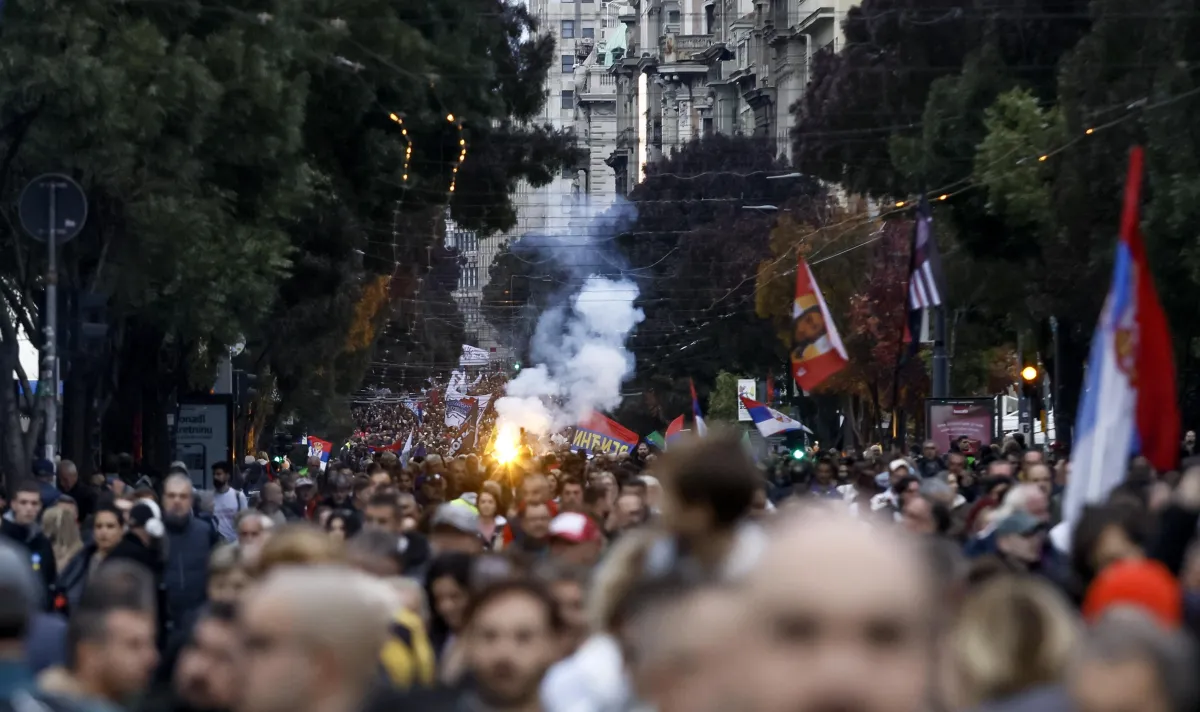

Serbia is voting in early parliamentary elections, described as the most serious test of Aleksandar Vucic's rule in more than a decade. Voting begins at 7:00 a.m. and ends at 8:00 p.m., and 6,450,523 voters in the country are eligible to vote.
There are 18 valid electoral lists at the polls. Nine of them represent parties of national minorities. The main political battle is between the ruling Serbian Progressive Party and the new “Student List – Students win“, raised by the university student movement.
According to data from the independent organization CRTA, the elections are being held in 8,392 polling stations - 8,270 in Serbia, 93 abroad and 29 in prisons. 102,147 voters are registered abroad in 37 countries, which is more than twice the number in the 2023 parliamentary elections.
Here it is after nearly two years of protests
The parliament was dissolved on September 9 by decree of President Aleksandar Vučić, who scheduled the elections for October 25. He resigned as head of state on September 27 to lead the Serbian Progressive Party's campaign and seek the post of prime minister.
The early vote was called after almost two years of protests that began after the collapse of a canopy at the Novi Sad railway station on November 1, 2024. The incident killed 16 people. The students are demanding full accountability for the case, an anti-corruption campaign, and changes in government.
The student list has no formal leader. Among its leading candidates is cardiologist Ilija Srdanović. On the eve of the election, he told H1 television: “This energy is unstoppable.“ At the same time, Vucic said he expected his party to win by a margin of several hundred thousand votes.
Disputed result and international attention
The only public survey cited by Reuters in the final days of the campaign gave the student list a slight advantage - 44.5% against 42.7% for the Serbian Progressive Party. However, the result remains uncertain, as the data comes from a single survey and voter turnout could be decisive.
The election campaign was marked by accusations of pressure, media control and irregularities. International observers and the European Union expressed concern about the safety and fairness of the vote. The student movement said it would send representatives to polling stations to monitor the counting.
First estimates of the result are expected after the polling stations close. In the event of a close result, the distribution of mandates and the position of the smaller lists will determine whether the ruling camp will be able to form a government or whether Serbia will enter prolonged coalition negotiations.
Sources: apnews.com, d2233.cms.socastsrm.com