


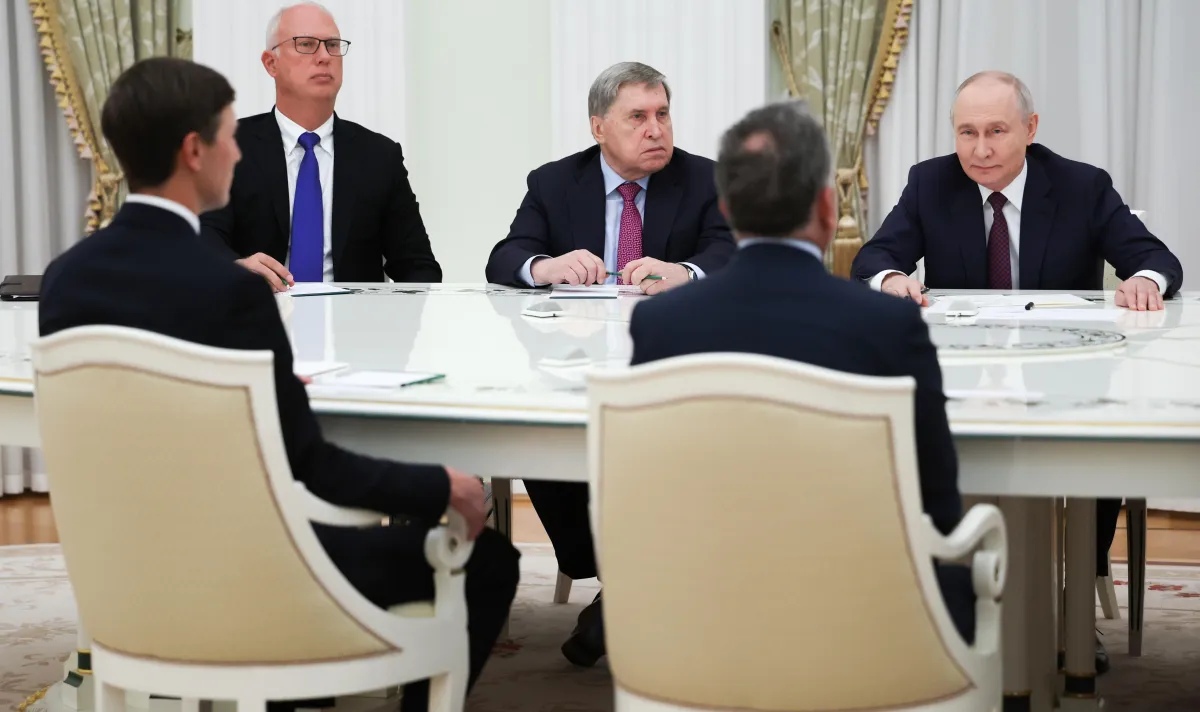

US President Donald Trump's special envoys – Steve Witkoff and Jared Kushner – have helped Russia strengthen its position in negotiations over Ukraine by raising the issue of the future architecture of European security before a ceasefire is reached. This is the assessment of Financial Times in an analysis of diplomatic efforts to end the war.
The publication notes that such a sequence of events coincides with Moscow's long-standing demands. Russia insists that the so-called „root causes“ of the war be eliminated, including what it describes as the current European security system – a network of international organisations, treaties and rules that the Kremlin presents as a threat to Russian sovereignty.
Europe insists on a ceasefire first
European leaders support a different sequence of actions. In their view, a ceasefire in Ukraine must be agreed first, and only then should discussions begin on future security guarantees and arrangements.
Financial Times points out that discussing these issues before a ceasefire could amount to adopting the Russian approach to negotiations. Trump's representatives, however, say that an agreement on Ukraine cannot be reached without Europe's participation. They expect European countries to join the next round of talks, while Moscow continues to oppose their involvement.
„They helped Putin, and that will only make him bolder,“ said John Lowe of the analytical centre Nest Centre, quoted by Financial Times.Risk to support for Ukraine
According to the analysis, launching talks on restructuring European security before a ceasefire is reached could give the Kremlin additional opportunities to pressure European countries. The risks identified include attempts to limit long-term financial and military support for Ukraine, as well as opposition to the possible deployment of European troops on Ukrainian territory.
Such a process could deepen differences between Europe and the United States. This is happening against the backdrop of Washington preparing to reduce its contribution to European defence and questions surrounding Trump's readiness to follow the principle of collective security within NATO.
At the same time, Financial Times suggests that European countries retain room for independent decisions. According to the analysis, it is difficult to expect Russia to force them to dismantle the existing security system. The question remains open as to whether Moscow can further weaken Trump's commitment to NATO.
Following talks between the US representatives and Vladimir Putin in Moscow, Russia's position on the war remained unchanged. Moscow continues to insist on its own conditions for ending the conflict. During the negotiations in Abu Dhabi, Witkoff and Kushner supported an approach under which all issues related to the war and Ukraine's future are discussed simultaneously, without a predetermined sequence.
Sources: obozrevatel.com