


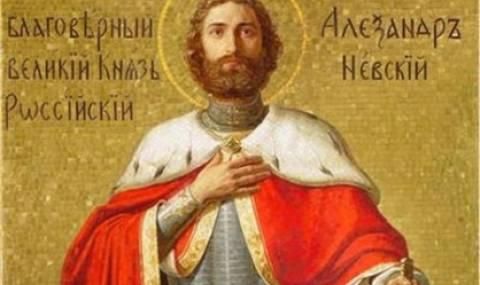

On April 5, 1242, the Novgorod prince Alexander Nevsky defeated the Teutonic Knights in a battle on the ice of Lake Peipus, ending the so-called Northern Crusades. Along with the Battle of Grunwald in 1410, it was one of the most resounding defeats of the knights and effectively ended the campaign against the Orthodox Russian principalities.
The battle came after the Teutons tried to exploit the weakness of the Russians, who were under attack by the Mongols and the Swedes. They occupied Pskov, Izvorsk and Koporye in succession in the autumn of 1240 and reached the outskirts of Novgorod.
Seeking salvation, its inhabitants called on the 20-year-old Prince Nevsky, who had been exiled to Pereyaslavl months earlier. He organized troops and in 1241 regained control of Pskov and Koporye and reached the borders of the Teutonic possessions in Estonia.
In the spring of 1242, the Novgorod troops faced the Teutonic Knights, led by Prince-Bishop Herman, on the ice of Lake Peipsi near the Estonian city of Dorpat (present-day Tartu), on whose side Danish, Swedish and Estonian volunteers fought.
However, numerical superiority and terrain were on the side of the Russians. After hours of close combat, the knights were pushed to the edge of the lake, where the ice was thinner, and after it cracked, many of them drowned.
Historians agree on one thing - there is not enough information to create an absolutely reliable image. The era in which Alexander Yaroslavich lived was one of the most difficult. He was born in May 1221 or on May 30, 1220/ into the family of the Pereyaslavl prince Yaroslav Vsevolodovich. He was the grandson of Vsevolod III Yuryevich the Big Nest, whose descendants ruled Russia until the Years of Troubles. Alexander's father, Yaroslav Vsevolodovich, fought both with the Lithuanians, who claimed the western Russian lands, and with his own brothers, who were desperately fighting for the grand duchy.
Alexander was initiated into a warrior through a special rite when he was 4 years old. At the age of 7, together with his brother Fyodor, who was only 1 year older, they were left by their father in Novgorod as governors. In 1230, Novgorod wished to have its own prince again, and therefore Yaroslav, busy with the struggle for higher positions, placed the two younger brothers in the princely position. However, Fyodor died at the age of 13, and Alexander was left to rule alone. Of course, the princely retinue stood behind him, but in the internecine struggles sometimes the enemies managed to find traitors even among the people closest to the prince.
In 1236, Yaroslav Vsevolodovich became the prince of Kiev, and the 15-year-old Alexander finally became an independent political figure.
In the middle of the 13th century, the prince of Kiev was not the main figure among the Russian princes. This role was assigned to the Grand Prince of Vladimir-Suzdal. But Yaroslav Vsevolodovich did not claim this role, the struggle for supremacy was waged between his older brothers.
The big change came with the invasion of the Mongol-Tatars. The end of independent Rus was put on March 4, 1238, when the army of Vladimir Prince Yuri II Vsevolodovich was defeated in the battle near the Sit River. The prince himself died in the battle, and his family was almost exterminated when the Tatars captured Vladimir.
During the Mongol invasion, Russia lost many warriors, including quite a few princes. But neither Yaroslav Vsevolodovich nor Alexander Yaroslavich were among the dead. The young prince fought with the Lithuanians, defending the lands of Novgorod, while his father waited.
Alexander Yaroslavich risked sharing the fate of his uncle, who died near the Sit River, but the Mongols did not reach Novgorod. Why this happened is still unclear, but for the Novgorod prince it can truly be considered a miracle.
From the vast expanses of the defeated Rus, each of the princes made his own choice - some decided to resist the Tatars to the end, seeking an alliance with the Pope and accepting a royal crown and title from him. Such was Daniil Galitsky. Others became loyal vassals of the Tatars.
This is exactly what Alexander's father did - Prince Yaroslav. Alexander Yaroslavich. On July 15, 1240, he defeated the Swedish troops in the battle on the Neva River (where Nevsky comes from). Very little is known about the battle itself. Only the fact that Alexander won is reliable, but everything else is mostly legends and folklore. In 1242, in the battle of Lake Peipus, he defeated the knights of the Teutonic Order.
In 1251, Pope Innocent IV, through his ambassadors, twice suggested to Alexander Nevsky to change his faith, offering him in return moral and military support in the fight against the Golden Horde. Alexander's brother, Andrei, became his most sworn enemy in the fight for the "Tatar charter", and was ready to accept the pope's offer. However, Prince Alexander Nevsky refused and in 1252 received the "charter", with which he became the head of the Grand Principality of Vladimir. His ascension to the princely throne coincided with the defeat of all his rivals for it. The Golden Horde sent a punitive expedition, which defeated Andrei and Alexander's other brother - Yaroslav. He was no less ruthless in suppressing the rebellions and forcing the inhabitants of Novgorod, who refused to obey the Golden Horde and pay taxes, to submit.
In 1262, a wave of rebellions against Tatar rule broke out throughout Russia. The prince had a hard time dealing with these unrest. In addition, the Tatars asked the prince to provide them with troops for the war that the Horde was waging with Iran. Alexander Nevsky set out to pay off the debts and negotiate terms with the Golden Horde. He managed to appease the Tatar khans and significantly soften what was demanded of him. But on the way back, he fell ill and on November 14, 1263, Alexander Nevsky died in Gorodets.
After his death, following their father's example, his sons began a fierce battle for the inheritance of the princely title. At the same time, they did not hesitate to use the help of the Tatar conquerors in their struggle with each other.
Among the sons of Alexander Nevsky, there was one who tried to reconcile his brothers and end the feuds - the youngest, Daniil. When his father died, he was only 2 years old. And he received the most unenviable inheritance - the small, remote town called Moscow.