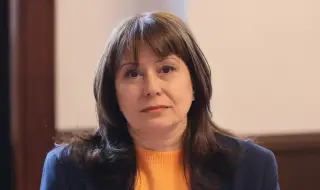
What is it like to be an ombudsman, what problems do people have, what help are they looking for... The new Ombudsman of Bulgaria Velislava Delcheva speaks in front of FACT.
- Ms. Delcheva, how did you imagine the work of the ombudsman before you were elected to the position and how do you view the position now, when you are already expected to help people?
- When I ran for this position, I was not deceived that the job would be very responsible and that I would be expected to be expert, dialogical, persistent, and to be a good human rights defender. But, of course, when I started working for real, and this happened literally from the second day, I realized how significant the institution of the Ombudsman actually is for citizens. For each person, their case is the most important and cannot be postponed, they want help and assistance immediately, if possible right away.
For two months now since I have been a national public defender, I have been faced with various problems. Citizens have been contacting me with cases across the spectrum of violated rights. They determine the agenda of the institution, as well as my work. In addition to individual complaints about a delayed TELK/NELK decision or about checking an inflated bill, or dissatisfaction with a poor-quality water or electricity service, I am often contacted by large groups of people – in signatures or petitions.
You know, in the summer – July, August, and so far, in many settlements of the country there is a water crisis, people are on a regime, I received and continue to receive many complaints and various petitions on the problem, which is due to the drought, but also to decades of mismanagement - an outdated water supply network, a lack of investment in the sector, water losses reaching somewhere up to 70-80%. We see that the state has harnessed all its resources to find a solution to a problem that has long been neglected and neglected. Drillings are being done, alternative sources of water are being sought, a National Water Board has been established, following a decision of the National Assembly of September 3. The idea is to coordinate with the association of municipalities and identify measures to overcome the water crisis in the long term.
What I did in August, at the height of the problem, was to ask the regional minister Ivan Ivanov to give written instructions to all municipalities and water supply operators to strictly implement the regulation, which obliges all mayors and water supply companies to jointly provide alternative drinking water to people - water carriers, cisterns, bottles of mineral water. It may not seem like much to someone, but at a basic level and at that moment, when temperatures were chasing 40 degrees, it was, to paraphrase the expression, “a breath of air“ -a breath of water. The big infrastructure decisions, the vision for the water strategy is the job of the state. As an ombudsman, I try to help with ideas and recommendations in the short term.
Regarding the municipality of Breznik, you know that the water there is still prohibited by the RZI for both drinking and washing. I insisted, while the restrictive measures are in place - not to charge a price for the "water delivery" service or to reduce the price, as well as to provide enough water carriers to the affected population, because only 6 were not enough.
- How big is the step from the post of ombudsman to acting prime minister, because you are part of the possible choice of President Rumen Radev?
- For me, there is no step in this direction, there is no change in my position that the institution of the ombudsman should not be politicized. The public defender of citizens is a person with a different profile, who is unsuitable to be part of the so-called “house book“, from which the president could choose a future caretaker prime minister.
- You already have your deputy in the person of Maria Filipova. Is the ombudsman institution already administratively staffed?
- Yes, since September 10 this year, the institution already has a deputy ombudsman, you know, for more than a year my colleagues have been working without leadership, but thanks to the expert potential I found a well-organized administration. I also organize competitions, they are announced on the institution's website, I want to bring in fresh blood from young people with empathy, new energy, I will build on what the ombudsmen have achieved before me.
- What is the nature of the complaints that citizens send to you?
- Traditionally, the most complaints are from users of public services. 2/3 of all complaints received by the institution during the year are against water and sanitation companies, against electricity companies, mobile operators, banks, including fast loans, collectors, etc.
- What can the ombudsman do to solve a given problem. You forward the signals to the people in charge, but do the institutions respond adequately to your letters?
- If a person wants to help and solve a given case, he finds a way. I use all my powers and tools for influence, I rely on persuasion, activity, public speaking, publicizing the problems. This is an important lever in my arsenal, but direct contact is extremely important, whether with deputies or with local or state authorities, I approach respectfully, with arguments and with the necessary insistence. Since 2018, with a change in the Ombudsman Act, the institution has the authority to consider signals and complaints against private entities. And the recommendations that the Ombudsman sends under his competence, even if they are not mandatory, make many institutions and bodies comply and implement them. In addition, as an ombudsman, I have the right to indirect legislative initiative, as well as to refer to the Constitutional Court a request to establish the unconstitutionality of a law when the rights and freedoms of citizens are violated.
- Why is the topic of “heating and district heating“ a “favorite“ for every ombudsman and do citizens receive adequate protection against district heating…
- The topic is definitely not among my “favorites“, as you put it, albeit figuratively, because it is one of the most burdened with problems.
You know, summer is the season of equalization bills for heat energy, and they are largely incomprehensible to people. We check every complaint and when it is justified – for example, in the event of an error in the readings of radiator devices, hot water meters, the equalization bill is corrected. However, the deadline for complaints on the equalization bills expired on August 31. And now, many people from the "Druzhba" neighborhood in Sofia, where the network will be repaired, have turned to me. I received over 200 complaints in just one day. On this occasion, I sent an official request to the Energy Committee in parliament, to the Energy and Water Resources Regulatory Commission. I also sent a letter to the mayor of the capital, in which I called on him to exercise control over the schedules for the implementation of the repair activities and the readiness of the managements of nurseries, kindergartens, schools, and medical institutions to work when heating and hot water are suspended. I also emphasized that support is needed for the affected socially disadvantaged people for alternative heating, for example in the form of financial assistance and/or provision of heating appliances.
During inspections, we also pay special attention to the "small print" in the equalization bills, which sometimes remains unnoticed by consumers. For example, when the heat accountant has given an instruction within one month to replace a water meter with an expired metrological inspection period or to replace a device with a dead battery.
In order to protect their rights, citizens must first of all have information. We often explain to consumers the requirements of the regulatory framework in heat supply, so that they can take appropriate action against high bills.
- A really acute problem is the false positive results of field drug tests performed by traffic police. We have heard prime ministers swear that there will be more laboratories to perform them so that we don't have to wait for months, but nothing is happening at the state level. Why is this so and what will you do…
- I have notified the two ministers - Minister of Internal Affairs Daniel Mitov and Minister of Health Dr. Silvi Kirilov due to the significant increase in the last two months in complaints from drivers of motor vehicles who complain about false positive results from field drug tests.
The practice of the Ministry of Internal Affairs for the purpose of a preventive effect is to use the DrugTest5000 field tests, and they often give false positive results. You understand that this creates a lot of inconvenience for people, especially for those of them for whom this is a profession - taxi drivers, suppliers of various types of goods, etc. The problem is that this happens even to citizens who have not used drugs, and the result is due to the intake of legal, popular and very often prescribed drugs - painkillers, cough and cold medications, etc.
Thus, these drivers find themselves in a situation of real offenders and pre-trial proceedings are initiated against them, their driving licenses are temporarily taken away, as well as their motor vehicles, they are detained for 24 hours. The most paradoxical thing is that people complain about the fact that they themselves have undergone these tests.
The big problem at the moment is that there is no official list of drugs that can give a false positive result in a drug test on the road.
Therefore, I have asked the Ministry of Health, together with medical experts and the National Council on Narcotic Drugs, to prepare an official list of all trade names of medicinal products that contain narcotic substances and can affect drug tests, with the list being publicly available and regularly updated.
But the most urgent measure, in my opinion, is to speed up the analysis of blood samples by expanding laboratory capacity and improving coordination between institutions, so that the results are provided within short and reasonable deadlines.
The delay in performing laboratory analyses of blood samples creates prolonged legal uncertainty. There are cases where the results of the blood samples are delayed for months, even more than a year, which leaves people without a real opportunity to prove their innocence in a timely manner and restore their violated rights.
You understand that this situation is disproportionate and disproportionate to the objectives of the control and violates the presumption of innocence, which is at the heart of the legal order. And the only option for citizens who have suffered false positive results is, after they have a blood sample that rejects the presence of alcohol and drugs, to seek compensation in court under the ZODOV for the material and moral damages suffered.