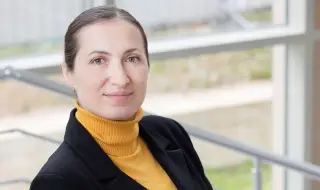
Every year we notice how temperatures in Sofia are rising. Lots of construction, lots of concrete, lots of asphalt… Where does this lead… Climatologist Dr. Eng. Lidia Vitanova spoke to FACT.
- Dr. Vitanova, you study urban climate. It is getting warmer in big cities. You recently published an analysis of Sofia and how the city is warming. Is this a reversible or irreversible environmental problem?
- The warming of cities is a consequence of both global climate change and local factors related to the way we plan and build the urban environment. Globally, the process is essentially irreversible and will continue for decades to come, even if we immediately limit greenhouse gas emissions. At the local level, however, we have the opportunity to mitigate the effects – through better urban planning, more green spaces, water resource protection and sustainable architectural solutions. In other words: we cannot stop warming, but we can significantly reduce its most severe consequences.
- After 1990, the warming of the capital sharply accelerated because…
- Then the intensive overbuilding of the city began. More and more residential and business complexes are being built in Sofia at the expense of green spaces. This leads to an increase in the areas covered with concrete and asphalt, which retain heat. In parallel, population growth, more intense car traffic and industrial activities contribute further to the rise in temperatures.
- We cause the "urban heat island" effect because the city is overbuilt. But is that all?
- No, the factors are complex. Overbuilding is important, but not the only factor. The use of materials such as concrete and asphalt increases heat accumulation, the lack of shaded spaces and water areas makes natural cooling difficult, and intense car traffic and industrial activities contribute additional anthropogenic heat. In addition, the density and height of buildings change air circulation and facilitate heat retention in the city.
- How do more frequent heat waves affect us, the capital's residents?
- Heat waves, combined with the "urban heat island" effect, have serious consequences.
As doctors can confirm, the health risks come first - more frequent cases of heatstroke, exacerbation of cardiovascular and chronic diseases.
The elderly, children and patients with chronic conditions are most vulnerable. There are also socio-economic effects: higher cooling costs, reduced work capacity and higher mortality associated with extreme temperatures. Additionally, heat waves worsen air quality, which aggravates the condition of people with respiratory diseases.
- At GATE Institute, you are developing a city digital twin, simulating different scenarios when we talk about warming. What does the data show, what awaits us?
- Our simulations show that if no measures are taken, temperatures in Sofia will continue to rise, and the number of extremely hot days will increase. The most affected will be areas with dense construction, industrial zones and central parts of the city. The data clearly highlight the need for urgent adaptation policies - more green areas, sustainable building materials, improved urban ventilation through open spaces and the integration of “blue“ and “green“ infrastructures.
- How many “hotspots“ in Sofia and who are they?
- In our analyses, we found several key “hot spots“ in Sofia. In the central part – around the Russian Monument, Macedonia Square, the areas around the “St. Nedelya“ church and Lion's Bridge, as well as in the residential complexes Zone B-5 and B-3, the ground surface temperature is 3-6°C higher than in the green and peripheral neighborhoods such as “Boyana“, “Dragalevtsi“, “Simeonovo“ and “Benkovski“. Similar values are also observed in the industrial zones. The main reasons are dense construction, large areas of asphalt and concrete, and the lack of sufficient green spaces, which lead to the accumulation and slow release of heat.
These areas are particularly vulnerable during heat waves and should be a priority for cooling strategies - planting trees, creating green and blue spaces (parks, water areas, green roofs), using light and reflective pavements, and improving urban ventilation through well-planned open spaces and street orientations.
------------------------------------------
Dr. Eng. Lidia Vitanova is a researcher at GATE Institute in the direction of “Cities of the Future“, developing a Digital Twin of Sofia. She is a doctor of climatology and an environmental engineer, actively involved in the fields of urban climate and heat islands, ecology and environmental protection, renewable energy and smart technologies. She graduated from the Master's degree at the Moscow State University St. Ivan Rilski, Sofia, majoring in “Ecology and Environmental Protection”. She defended her doctoral thesis at the University of Tsukuba in Japan, majoring in “Climatology”. She is the author of numerous international scientific publications related to urban climate, modeling and urban planning. She is a lecturer at authoritative forums in Europe, Asia and America.