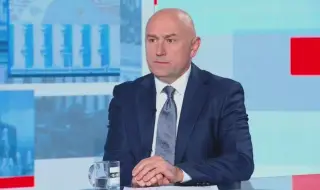
A high-level conference was held in Sofia today, dedicated to Bulgaria's upcoming accession to the eurozone. Among the participants were the Managing Director of the International Monetary Fund Kristalina Georgieva, the President of the European Central Bank Christine Lagarde, the European Commissioner for Economics and Productivity Valdis Dombrovskis, as well as other key figures from the world of finance. On this occasion, Lyubomir Karimanski - a member of the Governing Council of the BNB, commented in the studio of "Osche ut dnyan" on BNT on his impressions of the statements of the leading economic leaders.
"Rather measured realism, to the extent that it can be relevant and adequate for Bulgaria" - this is how Karimanski defined the statements of Christine Lagarde and Kristalina Georgieva.
"What is observed from the outside for Bulgaria cannot always be felt in the kitchen of things inside the country itself", he said and added:
"I mean the sustainability and stability of public finances, as well as the catching-up development with the average Europeans in the eurozone. The geopolitical situation and instability make us still have one thing in mind."
According to him, this does not mean doubting the country's readiness, but an awareness of the real challenges facing the state when changing the national currency.
"When we replace one currency with another, this hardly solves the main issue of the country – what we are striving for, what vision we have for the governance of the state and what transformational policies are ahead," he added.
Karimanski also commented on the need for a stable economic environment for investors:
"If we want investors to be in Bulgaria, they must have predictability and security. How can they have predictability when in just less than seven months the government changes the policy in progress?"
According to him, frequent changes in insurance rates and pension contributions negatively affect the business climate and undermine investor confidence:
"Business plans are not made in six months. They are made for one, three years and their sustainability is extremely important", specified Karimanski.
He stressed that the flat tax in itself is not enough to attract investments and must be supported by an effective judicial system, stable social policies and a clear vision for development.
During the conference, ECB President Christine Lagarde emphasized the need for fiscal discipline and structural reforms.
"If the President of the European Central Bank appeals for fiscal discipline and reforms, we do not see such set in the current budget forecast", commented Karimanski.
He pointed out that despite meeting the criteria for entering the eurozone, the question remains how economic stability will be maintained in the long term.
"Inflation has been above 5% in recent months, and the deficit as of the ninth month is 2.7%. The government must spend over 5 billion leva more in capital expenditures by the end of the year," Karimanski warned.
He defined the draft budget for 2026 as a document that lacks fiscal consolidation and a vision of sustainability:
"I can call this budget in one word – abstract, but politically convenient for everyone. If you want, with the inflated expenses, the lack of consolidation and the refusal to look for other sources."
And he gave an example of the revenue from concessions, which according to him over five years have been only 0.1% of the budget.
In the context of the eurozone, Karimanski pointed out that new members will have to strictly comply with the rules on deficit and debt:
"Anyone who enters the eurozone must very strictly comply with the rules, especially the excessive deficit and debt – it should not exceed 60%. Otherwise, all possible restrictions will be applied."
In his words, the stricter requirements for Bulgaria are not discrimination, but part of the stability mechanism.