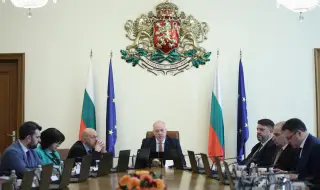
The government proposes to the National Assembly the withdrawal of Budget 2026 after the procedure for its adoption was paused due to mass dissatisfaction with its parameters and the many thousands of protests across the country, Nova TV reported. On November 26 and December 1, tens of thousands of citizens took to the streets to express their indignation at the government and the first plan-account in euros.
After the budget procedure was frozen, the dialogue was renewed - social partners - employer organizations and unions, new talks with the authorities began. Their representatives were at a meeting at the GERB headquarters, and then at the finance ministry.
However, the government cannot in practice withdraw the budget because it was voted on at first reading in the plenary hall, and the small fiscal frameworks - of the DOO and NHIF - at second reading in the Budget Committee.
In such a case, the rules of procedure require a vote in the National Assembly. The submitter of the bill can withdraw it until the first vote begins, and then - only with a decision of the parliament.
The plans of the government were to start the procedure from the beginning with new revenue and expenditure accounts and new negotiations. According to the prime minister, all this could happen in December, so that the budget would enter into force on January 1. Now, however, a new fiscal framework will be drawn up, which almost certainly means that the budget extension law will be activated.
We recall that on November 20, the budgets were adopted at first reading. The deadline for proposals for amendments was shortened from 7 to 4 days. The parameters in the NSSI budget were the reason for employers to twice refuse to attend a meeting of the National Council for Tripartite Cooperation. And on November 21, the deputies adopted the 2026 budget at first reading after 5 hours in the plenary hall.
The budget plan envisaged revenues of 51.4 billion euros and expenditures of 55.09 billion euros. The deficit was expected to be 3%, and the minimum wage to be 620 euros. The pension contribution was increased by 2%, and the dividend tax was increased from 5 to 10 percent. The last two parameters would be changed, according to the GERB leader.
The deadline for proposals for amendments was shortened from 7 to 3 days. The parameters in the budget caused mass discontent, which led thousands to protest in several cities.