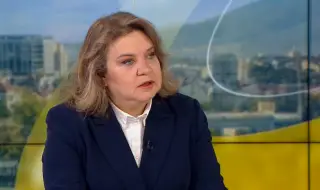
Against the backdrop of preparations for the upcoming elections and after the first sociological surveys, political forces are already outlining their positions on key topics - from the judiciary to the organization of the vote. In the studio of "The Day Begins" on BNT, the chairman of the parliamentary group of "BSP - United Left" Natalia Kiselova commented on the actions of the caretaker cabinet and the case of the election of the acting prosecutor general.
Regarding the initiative of the acting Minister of Justice Andrey Yankulov to convene a plenary session of the Supreme Judicial Council this Thursday to determine an acting prosecutor general, Kiselova commented:
"Even before becoming minister, Mr. Yankulov expressed his position that in his opinion, not the Prosecutor's College, but the Supreme Judicial Council - the Plenum is the competent body to elect the acting prosecutor general. And in this sense, he implemented this understanding. My personal opinion was also when Ivan Geshev resigned and was dismissed, that the competent body that elects for a permanent term of office is the body that must elect the acting prosecutor."
According to the chairman of the parliamentary group of "BSP - United Left" Yankulov's effort should be supported.
"Whether he will succeed is difficult for me to say, but this is an effort that I think should be supported. For no other reason than because last year, when changes were adopted in the Judiciary Law, it was said that this was so that there would be no eternal temporary or non-mandated bodies."
"Personnel are at the foundation of governance and yesterday showed it. Within the framework of the norms and procedures created more than 10 years ago, when the Constitution was changed, it was clear that it would be very difficult to find a qualified majority. And if at that moment a majority was formed to elect a composition, then with the next attempt it is already clear that such a result cannot be achieved. We are faced with two options - either compromises are made between the different parliamentary groups in order to gather a majority of 160 deputies and these compromises are in what kind of people to be nominated, in terms of personnel issues I mean, or the norm is changed. To have a smaller majority. These are the options. It is an illusion to claim that a list can receive 160 or more votes."
Regarding the personnel decisions of the new caretaker government, she noted that the change of regional governors is not a surprise:
"There are two types of caretaker governments - expert and those that are closer to certain parties and coalitions. For more than 10 years, we have been witnessing more of the second type of caretaker governments. They have a political physiognomy, very often it is right-wing. We can draw the logical conclusion that the change of certain positions within the executive branch or close to it was expected. I don't see why anyone should be surprised. We are reaping the fruits of the 2023 reform."
Commenting on the possibility of convening the National Security Advisory Council, Kiselova stated:
"The President has only one way out - to convene a National Security Advisory Council. This is her option. Regarding the reshuffle in the Ministry of Internal Affairs and in connection with a possible election, a proposal rather for the head of the National Security Agency."
"We on the left also have criticism of some personnel decisions, not only for the Minister of Foreign Affairs, but also for the regional governor of Sofia - city. To elevate this lady to this position again, I think that in the coming days there will be criticism against her as well."
Kiselova also commented on the president's veto on the changes to the Electoral Code, which limit the number of sections abroad. It is expected that the final position of the "BSP - United Left" group will be taken after internal discussions.
"There is no unified opinion within society whether our compatriots who are outside the country should be involved in life in this way. My personal opinion is based on the good practices of the Venice Commission that one year before elections no changes should be made. This argument is valid not only at the moment, but also in the past. Only when there is democracy in the parties, there can be democracy in the country."