Continued….
- There was a round of negotiations recently to achieve an end to the war in Ukraine in Geneva. Can the diplomatic process go in parallel with an escalation of hostilities, or do the intensified strikes indicate an attempt to improve positions before a possible agreement?
- First of all - absolutely yes. This often happens: when there is no breakthrough in the negotiations and the parties do not reach an agreement, the war continues, with each side striving to achieve its maximum goals. If the negotiations do not yield results, there is no point in reducing the pressure. And vice versa - if the negotiations succeed, but in the meantime you have managed to seize something, this can become a fait accompli in the final agreement. From Russia's point of view, this logic is obvious.
There is also something else: there is a feeling that, although there is no real breakthrough in the negotiations, American pressure is being exerted on Ukraine for concessions to which it would not otherwise agree.
The Ukrainians also see the risk of reducing American support or weakening the sanctions pressure on Russia.
For their part, Russia is also afraid, I think, although many would disagree, of angering Trump excessively. Therefore, Russia is imitating a negotiation process, taking its time, believing that it has at least another year to achieve its goals - in whole or in part. On both sides of the negotiations, the main task seems to be not so much to make mutual concessions as not to anger Trump. We do not see any desire for concessions from Russia at this point, and Ukraine is not ready to give in either.
- You mentioned Donald Trump. How do you interpret his position that Ukraine should cede territories - is this a realistic approach from a military point of view or a signal of a change in the strategic framework of support for Kiev?
- First of all, Trump has a completely different attitude towards support for Ukraine. This became obvious as soon as he came to power. In addition, he has made very sharp statements, including those that turn the situation upside down - for example, when he spoke about Zelensky and who is to blame for the war. The United States is not currently providing Ukraine with weapons for free – they are selling them. Yes, Trump continues to provide intelligence. Ukrainians receive intelligence and weapons under a plan approved back in the Biden era – both from the United States and from other countries, including, as far as I know, Bulgaria. This armament continues to flow. That is, we can say that American aid continues, but in a significantly smaller volume.
It seems that Trump wants to end the war, but he is not particularly interested in it as a cause. As a result, Ukraine finds itself in a disadvantageous position.
If he angers Trump and continues the war without change, under the current conditions – in terms of US aid and pressure on Russia – the situation could worsen. Theoretically, Trump could even lift sanctions against Russia, while Ukraine would not be able to compensate for such a change. This would put Russia in an even better position on the front and would lead to greater results for it. Trump is not particularly predictable in his support for Ukraine - he is less inclined to support it, and sometimes not at all. At the same time, he has also taken steps that to some extent even anticipate Biden's actions - for example, tightening sanctions against the largest Russian oil companies, fighting the so-called "shadow fleet", pressuring India not to buy Russian oil, as well as allowing Ukraine to strike certain objects, which was previously not allowed. That is, there are such signals.
However, in general, Trump's policy regarding support for Ukraine is significantly more negative compared to Biden's.
- Does the fact that Volodymyr Zelensky is already talking about possible territorial concessions mean a change in Ukrainian military doctrine or rather a tactical move in the negotiations?
- It is difficult to explain. It must be said that Zelensky makes contradictory statements. I agree that in some of them, when he talks about referendums, he hints at the possibility of Ukraine conceding territories - albeit in a different context. However, sometimes he states that this is impossible.
As far as I understand, theoretically, an option is being discussed in which Ukraine could cede territories in the Donetsk region, and Russia - to return part of the occupied territories in the Kharkiv, Sumy or Dnipropetrovsk regions.
Russia annexed Kherson, Zaporizhia, Luhansk and Donetsk regions, as well as Crimea. And what it seized in the Sumy, Kharkiv and Dnipropetrovsk regions could be the subject of an exchange. Yes, Zelensky speaks contradictory and there is no complete clarity here. Moreover, he understands perfectly well that Ukrainian society does not accept the possibility of territorial concessions. But this is a matter of policy and strategy, not military doctrine. Ukraine's military doctrine has not changed - this is defense, maximum detention of the enemy on the front line and inflicting maximum losses at acceptable ratios for Ukraine. Of course, and counterattacks, when possible. Is this successful? Not completely. There are difficulties with counterattacks too. But the approach to the ratio of losses and military decisions has not changed. Zelensky is maneuvering, including under very strong pressure from the United States, trying not to anger Trump and to demonstrate at least a formal readiness for concessions.
- The intensified Russian strikes on Odessa in recent days – what is their main goal: disruption of logistics, pressure on the Black Sea corridor or psychological impact on Ukrainian society?
- All of this taken together. The strikes are not only on Odessa – it must be seen in the context of the general Russian strategy of last winter -
massive strikes on the economic and energy infrastructure of Ukraine.
The goal is to deprive Ukrainians of electricity, to make life as uncomfortable as possible and to create difficult conditions.
- Yes, we see what is happening in Kiev and what Mayor Vitali Klitschko is saying...
- I have first-hand information about what is happening in Kiev and elsewhere. The situation in Kiev is similar to that in Odessa. Russia has a general strategy - strikes on energy infrastructure, on the electricity system, in order to cause maximum economic damage and undermine the will to resist. The message is: we can destroy your economy and create difficult living conditions if you continue the war for months or years. This is being demonstrated in practice. In addition, huge material damage is being inflicted, which Ukraine and its Western partners must compensate for - at the expense of resources that could otherwise be used on the front.
As for Odessa specifically - firstly, it is located near territories controlled by Russia, which allows the use of means that cannot be used in other cities, including anti-ship missiles "Bastion".
Secondly, Odessa and its surroundings are the most important seaport of Ukraine. The Black Sea corridor, imports and exports - all this is related to the country's economic revenues. The strikes are aimed at paralyzing the southern routes - including the Danube ports - from which Ukraine receives income.
This also includes causing damage to various industries - for example, a sunflower oil plant was recently hit and everything leaked. Great damage. And such objects have been hit, including in the Odessa region, with significant damage caused. In Odessa, we see strikes not only on Ukrainian energy, but also on such structural objects and large factories that are important for Ukraine. Plus, Odessa can be fired at with any weapon that can be launched from Crimea. Odessa can be very conveniently attacked with drones from the sea. In an attack on Odessa, there are some specifics, in an attack on Kiev, the specifics are different, but all this is united in one plan, which aims to inflict maximum damage and create the most difficult living conditions for Ukrainians, so that they can become more compliant during negotiations.
- Given the current dynamics - is a “frozen conflict“ more likely on the model of other post-Soviet territories or a full-fledged peace treaty with security guarantees?
- It is too early to talk about such possibilities - about a full-fledged peace treaty and security guarantees. I am skeptical about the concept of a "security guarantee". In my opinion, a "security guarantee", if we speak from the point of view of the West, because we should not consider Russian promises of a security guarantee as a security guarantee, is one thing. From the point of view of NATO, at the moment such guarantees can only be the position that NATO will intervene if Russia attacks Ukraine again at some future stage. However, the Western countries, the NATO countries, are afraid of this. Throughout the war, they have avoided direct participation in military actions with Russia. They have avoided even the slightest possibility of escalating relations with Russia and are trying to avoid it in every possible way. It is difficult for me to imagine that the Western countries will change their policy and course of action and will give such guarantees to Ukraine that "... "we will fight on your side if Russia attacks you". But if the West does not give such a guarantee, we cannot say that there are any guarantees at all. Promises of military assistance, intelligence, or simply economic assistance are one thing, which is important in itself. Thanks to such assistance, Ukraine can create and maintain its own combat-ready armed forces. But... What is the main guarantee of security when no one promises you anything? When no one promises you that they will fight for you, the only guarantee of your security is your own armed forces, your own military-industrial complex and the will to resist. And in my opinion, this is the only thing Ukrainians can count on for sure. Everything else they can get is a bonus, which is important, but does not provide a guarantee.
--------------------------------
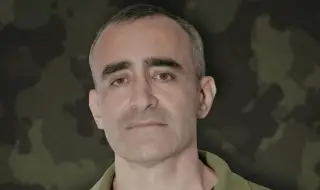
David Sharp was born in 1974 in the USSR, on the territory of present-day Ukraine. He served 3.5 years in the Israeli army. For many years he has been a regular contributor to leading Russian and Ukrainian-language media outlets as a military commentator and analyst. In addition, he has worked as a military analyst for various media outlets in Israel for over 20 years.
Link to main version
Feb 25, 2026 09:00 791
Israeli military expert David Sharp told FACT: Russia is imitating a negotiation process to achieve its goals
Trump is not particularly predictable in his support for Ukraine - he is less inclined to support it, and sometimes not inclined at all, the expert says
Снимка: Личен архив